
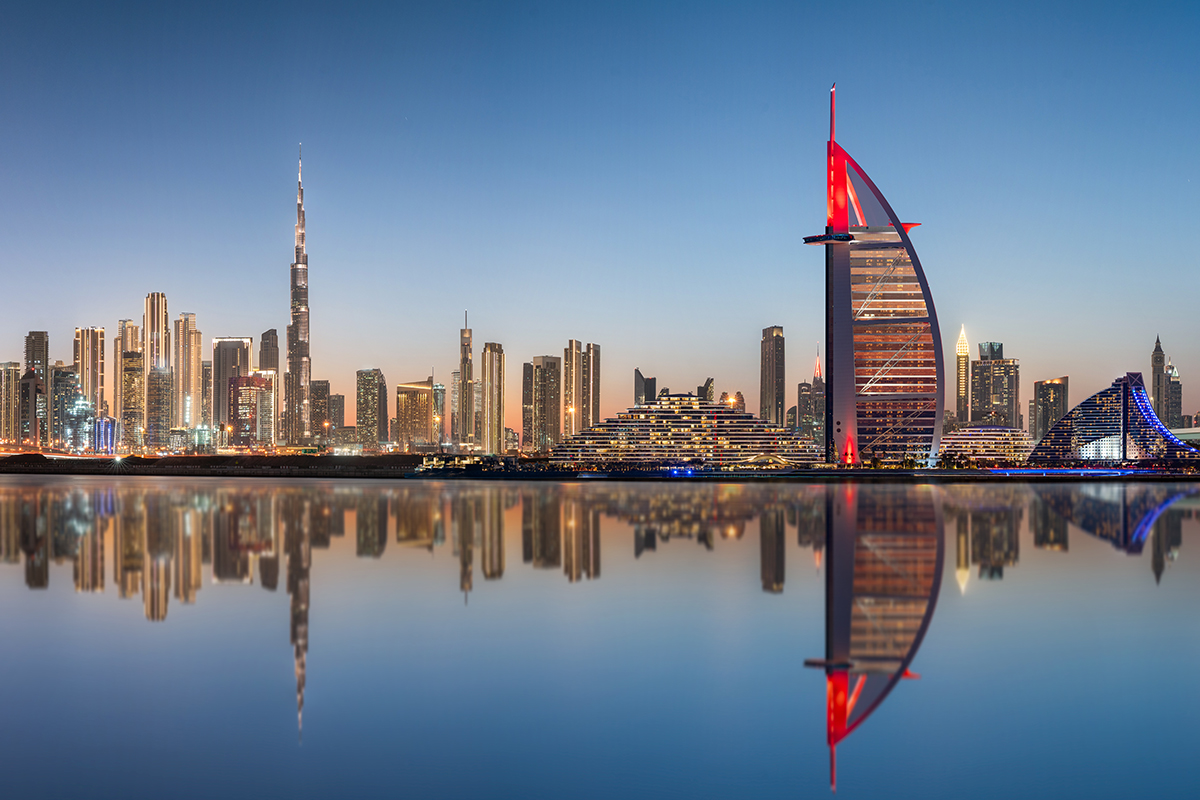
The Gulf real estate markets are poised for significant growth, as robust sales figures emerge from Dubai, Saudi Arabia, and Kuwait. A recent report from Kuwait Financial Centre “Markaz” highlights double-digit increases in sales activity across these regions, reflecting a positive trajectory in the sector. As the second half of 2025 approaches, the continued surge in demand across residential, commercial, and hospitality sectors seems set to dominate the market landscape, ensuring the Gulf real estate markets power ahead amid favorable economic conditions.
Strong Growth in the GCC
According to the Markaz outlook, strong demand has driven prices and transaction activity in the first half of 2025, supported by lower interest rates and ongoing government spending initiatives. This combination is expected to sustain momentum in Gulf real estate markets throughout the remainder of the year.
“The overall outlook for the GCC real estate sector remains positive,” Markaz indicated in its report, emphasizing that robust investor interest and various diversification projects continue to enhance performance, even in the face of fiscal pressures in some markets.
Dubai Shines on the Global Real Estate Stage
The UAE has emerged as a frontrunner in the Gulf real estate markets, with Dubai leading the charge. In the first quarter of 2025, property transactions reached AED 239 billion ($65 billion), with Dubai alone accounting for AED 142 billion from 45,077 transactions, marking a remarkable 30 percent increase year-on-year.
Notably, the entire year of 2024 saw Dubai achieve AED 761 billion in real estate sales, reflecting a 20 percent increase compared to the previous year. There were also 226,000 transactions—a substantial 36 percent rise—alongside over 110,000 new investors, an impressive 55 percent increase.
In rental markets, Dubai and Abu Dhabi have consistently outperformed global benchmarks. As of May 2025, Dubai’s rental yields reached 7.6 percent, significantly higher than cities like New York (5.3 percent), Singapore (3.2 percent), and London (3.1 percent). Markaz anticipates that strong demand, lower borrowing costs, and rising tourism will continue to bolster the residential, commercial, and hospitality sectors in Dubai during the remaining months of the year.
Saudi Arabia’s Real Estate Sector Flourishes
Saudi Arabia’s real estate market is also experiencing notable growth, driven by the Kingdom’s ambitious diversification agenda. In early 2025, the country’s property price index recorded a year-on-year increase of 4.3 percent, while total real estate sales surged by 37 percent during the same period.
Residential property prices rose by 5.1 percent, and commercial property values saw a 2.5 percent increase. Demand for commercial space remains robust, fueled by growth in the non-oil economy.
However, Markaz has indicated that Saudi Arabia’s fiscal deficit could expand to 4.9 percent of GDP in 2025, up from 2.8 percent in 2024, primarily due to declining oil revenues. Despite this, the Riyadh government shows a commitment to maintaining investment levels in diversification projects, which should continue to support the real estate sector.
Kuwait’s Property Market Recovers
Kuwait’s real estate market has shown signs of consistent recovery as well, with positive trends reported in the first quarter of 2025. Land prices and rental values in both the investment and commercial segments have risen significantly.
Real estate sales in Kuwait reached KD 896 million ($2.9 billion), representing a 45 percent increase from the same period a year earlier. This growth was evident across all market segments, with investment sales climbing by 49 percent, residential sales increasing by 38.5 percent, and commercial sales up by 22.9 percent.
The overall number of transactions improved by 20.9 percent, driven by a dramatic rise in commercial deals, which soared by 163.6 percent. Driven by an expanding expatriate population, transactions in the investment sector also grew by 29.7 percent.
Markaz projects Kuwait’s real GDP will grow by 1.9 percent in 2025, rebounding from a contraction of 2.8 percent in 2024. The firm anticipates that project activity, increased consumer spending, and legislative reforms will further boost demand in the commercial and industrial real estate markets.
As the Gulf real estate markets power ahead, a combination of macroeconomic indicators, strong investor interest, and continued government-led initiatives position the GCC property sector for further growth in the latter half of 2025. While challenges remain, particularly in Saudi Arabia, factors like reduced interest rates and ongoing demand make the region’s real estate markets increasingly appealing to investors and developers alike.