
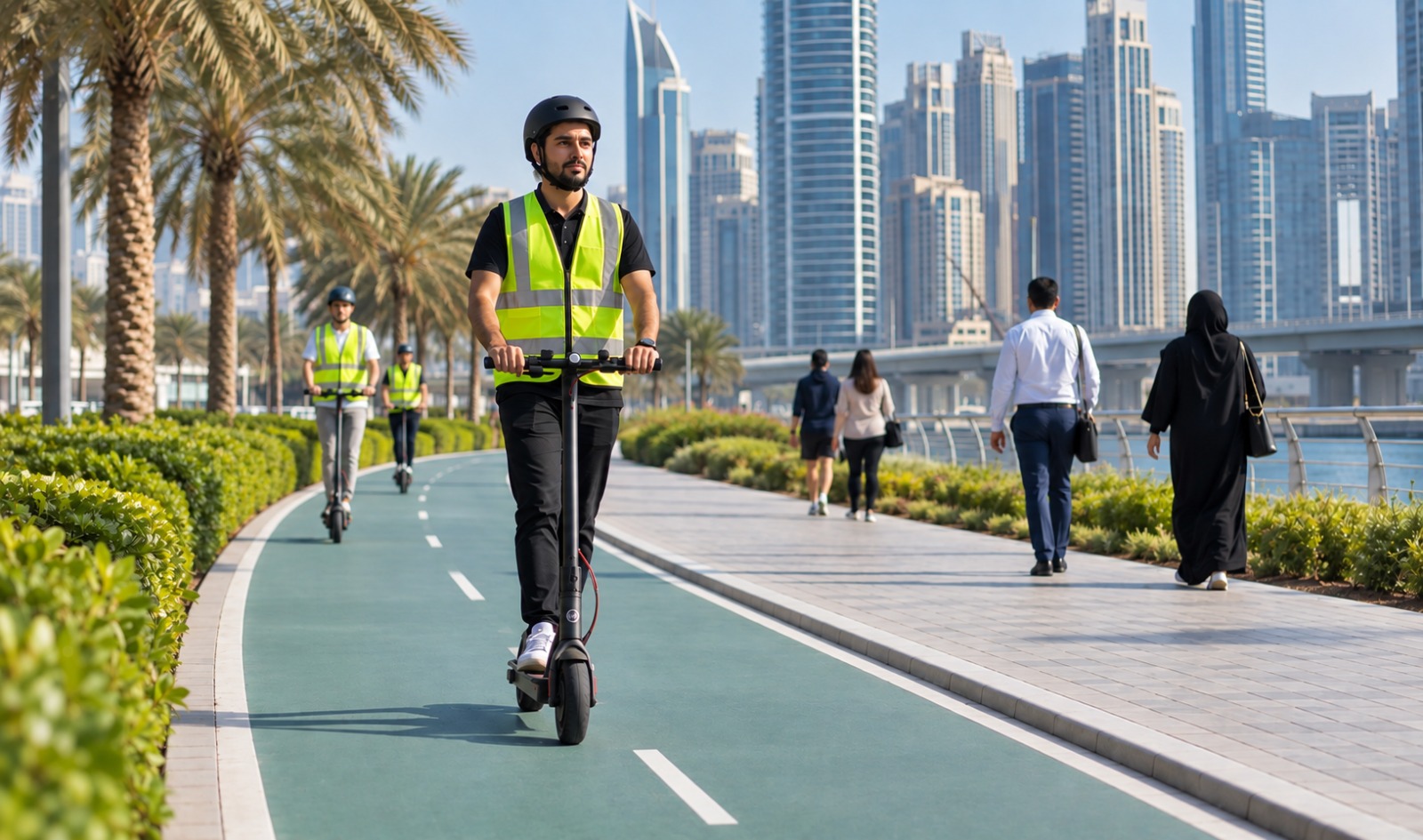
Starting from January 1, the new executive regulations for the Traffic and Roads Law will come into effect, establishing a comprehensive framework for personal mobility devices used on the roads in the country. The regulations classify these devices into six primary categories, which will be subject to registration and permits required for their use on designated paths.
Categories of Personal Mobility Devices
The six categories defined include bicycles, electric bicycles, electric scooters, mopeds, skateboards, and mobility devices for the elderly and persons with disabilities.
Permit Types and Conditions
Under the new regulations, three types of permits will be required for using electric scooters, electric bicycles, and mopeds. An essential requirement for obtaining a permit is that applicants must be at least 15 years old, with permits valid for three years and renewable thereafter.
Specifications and Standards
The regulations classify personal mobility devices based on specific criteria and standards. Bicycles are defined as those operated solely by the rider without motor assistance. Electric bicycles are equipped with a supporting energy unit that aids pedalling. Electric scooters function on electric motor power and can be ridden in either a standing or seated position. Mopeds, which may have either an electric or petrol engine, cannot exceed a cylinder capacity of 50cc and a speed limit of 45 kilometres per hour. The classification also includes skateboards designed for personal transport, which can be propelled by user power or an engine, as well as mobility devices for the elderly and disabled, characterised by motorised seats or user-propelled operation.
Safety Requirements
In terms of safety and technical specifications, the regulations mandate four core requirements to ensure the safe use of personal mobility devices on the roads. These include equipping devices with a front light for night visibility and a rear light with a red signal linked to the brakes. Additionally, a sound horn must be installed on the handlebars, and at least a rear brake is required. It is also specified that tires should be secure and in good condition, wheel spokes must be intact and properly tightened, and all vehicle parts must be robustly secured to guarantee safe operation, adhering to any additional conditions set by the licensing authority.
User Obligations
The new regulations outline six key obligations for users of personal mobility devices to safeguard their safety and that of pedestrians and vehicle operators on the roads. Article six stipulates that personal mobility devices must be registered according to the procedures established by the licensing authority or traffic control authority, and cannot be operated without securing the appropriate driving permit in accordance with the specified provisions.
Additionally, users are prohibited from riding personal mobility devices on roads designated for vehicles and should follow informative instructions while adhering to traffic rules to ensure safe operation that does not endanger their lives or those of pedestrians and drivers. Users must also operate devices on routes designated by the licensing or traffic control authorities and comply with speed limits set by these authorities. The regulations stress the importance of adhering to safety requirements for using these devices, whether for personal use or in rental scenarios provided by commercial establishments.
Traffic Signal Guidance
The regulations have clarified traffic light indicators for controlling the crossing of pedestrians and personal mobility device users as follows:
- Red Light: Pedestrians and users of personal mobility devices are entirely prohibited from crossing the road when illuminated.
- Green Light: Passage is permitted for pedestrians and users of personal mobility devices when illuminated.
- Flashing Green Light: Pedestrians and users are not permitted to commence crossing when illuminated, but those who have already begun may complete their crossing.