
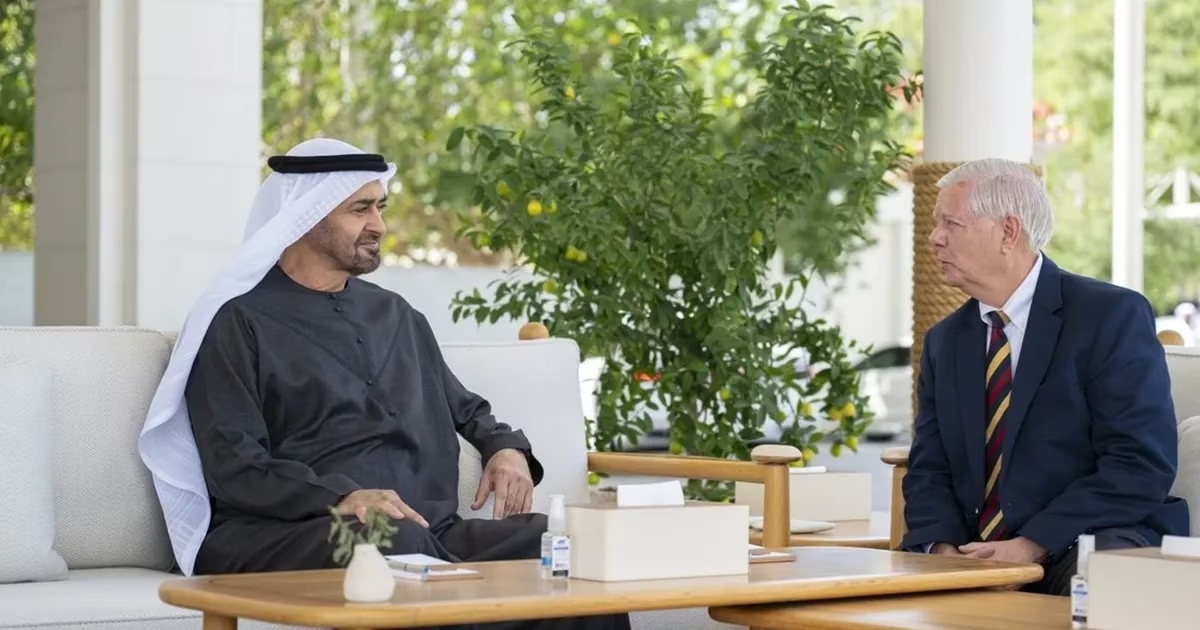
In recent discussions surrounding the complex dynamics of Gaza, Republican Senator Lindsey Graham made headlines with his remarks on Israeli occupation through Israeli media outlets. His comments center on the assertion that the Israeli military cannot manage Gaza effectively on its own in the long run. Graham emphasized that transforming the current reality in the region necessitates direct intervention from powerful regional forces, notably referencing the United Arab Emirates and Saudi Arabia due to their political weight and economic resources. This article delves into Graham’s views and the implications for a potential new Gaza under Arab influence, highlighting the necessity of broad cooperation among Arab states in rebuilding and rethinking educational frameworks.
Changing the Landscape in Gaza
Graham argued that creating what he termed ‘a new Gaza’ fundamentally hinges on the engagement of Arab nations in reconstruction and governance efforts. He stressed the necessity for significant reforms within the educational system in Gaza, aiming to replace what he described as a ‘culture of hatred’ with values of tolerance and coexistence. He believes this cultural shift is essential for achieving stability in the region.
The Role of Key Arab Leaders
In his outlook for resolving the issues at hand, Graham labeled UAE President Sheikh Mohammed bin Zayed Al Nahyan as ‘a tremendous ally’ for Israel and a crucial player in regional affairs. He proposed a model inspired by the Emirati experience in development to be applied in Gaza, asserting that bin Zayed represents ‘the real key’ to transforming the area into a stable and economically thriving environment, distancing it from current ideologies.
Regional Security and the Iranian Threat
On the Iranian issue, Graham delivered a stern message, urging adherence to a maximum pressure strategy against Tehran. He warned that any American retreat in this regard would lead to a strategic catastrophe lasting for generations, asserting that the fallout from such inaction would be worse than the withdrawal from Afghanistan. He anticipates significant developments in the Iranian nuclear issue in the near future, potentially reaching resolutions in a matter of weeks rather than months.
The Ongoing Situation in Gaza
Regarding the operational landscape in Gaza, Graham asserted that Hamas would not voluntarily disarm through negotiations. He posited that Israel remains the only entity capable of imposing a military reality that could disarm Palestinian factions, which he views as a prerequisite for any discussions about a sustainable political or civil administration in the post-war period.
Graham’s comments come at a pivotal time when international discourse intensifies around the ‘day after’ the war in Gaza, amidst ongoing Israeli military operations. His perspectives reflect a broader inclination in Washington to integrate Arab forces into security and political arrangements aimed at curtailing the influence of armed factions and establishing a new administrative system that aligns with Israeli and American visions for the region.