
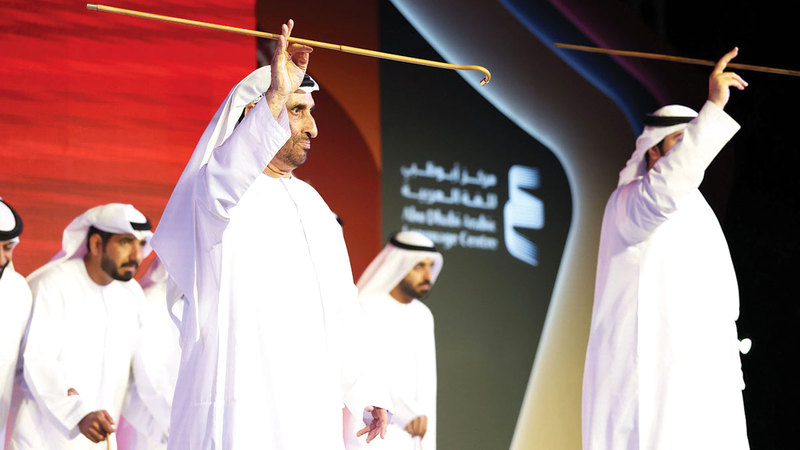
The Abu Dhabi Arabic Language Centre has launched its first research project dedicated to documenting the poetic art of “Al Razif”, in a move that underlines its commitment to preserving the UAE’s cultural heritage and recording its authentic elements through rigorous academic methods. The initiative forms part of a wider series of documentation projects overseen by the Centre under the “Kanz Al Jeel” Award, reinforcing the presence of this heritage in the national memory and strengthening its place in the cultural landscape locally and internationally.
The project reflects the Centre’s leading role in safeguarding intangible cultural heritage and building sustainable knowledge references that help preserve the national legacy and make it accessible to future generations, in line with the UAE’s vision of protecting national identity and turning culture into a driver of sustainable development and the creative economy.
A living cultural asset
The initiative focuses on documenting “Al Razif”, one of the UAE’s most prominent poetic and performance arts, and highlighting its historical and cultural value as a living cultural asset. It reflects Emirati values and preserves the presence of Nabati poetry, which serves as a mirror of society and carries its memory, language and inherited traditions.
The project will culminate in the publication of a comprehensive reference book as part of the Abu Dhabi Arabic Language Centre’s publications, offering the first integrated scientific documentation of “Al Razif”. The book will examine its origins, development and rules, along with performance styles, poetic repertoire and its social and cultural meanings, making it a trusted knowledge reference for researchers and those interested in Emirati heritage and culture.
Scientific documentation for future generations
Saeed Hamdan Al Tunaiji, Executive Director of the Abu Dhabi Arabic Language Centre, said: “This project embodies a new strategic milestone in the Abu Dhabi Arabic Language Centre’s journey towards building sustainable knowledge and cultural assets, based on the scientific documentation of national heritage in accordance with the highest research standards”.
He added: “This project builds on the success achieved by the Kanz Al Jeel Award in launching a regional and international cultural and creative movement around Nabati poetry and its rich legacy, and establishes a comprehensive scientific reference that serves researchers, scholars and specialists. It is expected to be completed by the second half of 2027, and will also help consolidate the status of Al Razif as one of the most prominent symbols of Emirati cultural identity, presenting it to the world as an authentic and living component of the human cultural heritage”.
Field research across the UAE
The project is being carried out by a specialised research team under the supervision of academic researcher Dr Hamad bin Saray. The team includes Ali Al Mughni, Jameel bin Salem Al Dhaheri and Saif bin Obaid bin Huwail, and will implement a comprehensive field research programme covering the مختلف emirates of the UAE, with the aim of documenting “Al Razif” and recording the diversity of its practice, performance styles and the methods of poetry recitation and chanting associated with it.
The project relies on a research methodology that combines fieldwork and scientific documentation through interviews with performers and narrators, the collection of oral accounts, the documentation of personalities associated with the art, and the recording of its rules, origins and transformations over time. This will contribute to building an integrated academic reference that preserves the heritage and documents its elements for future generations on solid scholarly foundations.
A recognised element of world heritage
“Al Razif” is regarded as one of the UAE’s most important performing and poetic arts, embodying values of courage, chivalry, pride and social cohesion. It is performed on national and social occasions.
The art gained international recognition when it was inscribed in 2015 on UNESCO’s Representative List of the Intangible Cultural Heritage of Humanity.