
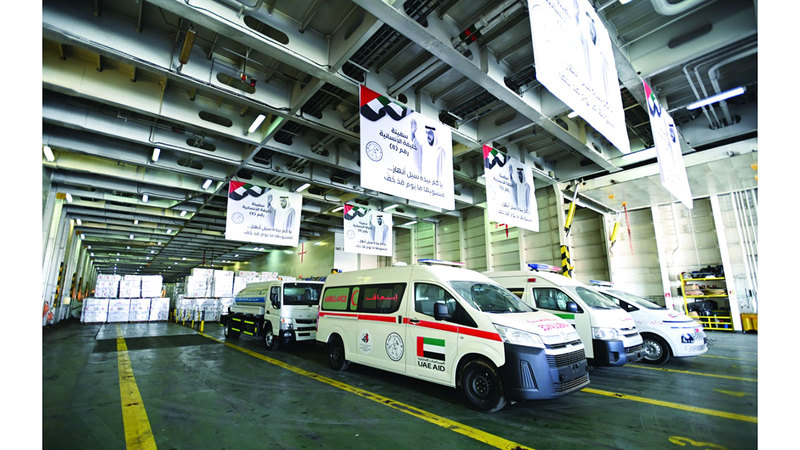
On a significant humanitarian mission, the “سفينة خليفة الإنسانية” has successfully transported 7,166 tons of essential aid to Gaza, marking an important chapter in the ongoing efforts to support the Palestinian people. As part of the endeavor named “الفارس الشهم 3,” this eighth aid ship from the UAE reaffirms the nation’s unwavering commitment to humanitarian assistance, especially during times of crisis.
Arrival at Al Arish Port
Two days ago, the “سفينة خليفة الإنسانية” docked at the Egyptian port of Al Arish, where it was warmly welcomed by a delegation including representatives from humanitarian organizations and the Emirates Red Crescent. Ahmed Sari Al Mazrouei, the Secretary-General of the Emirates Red Crescent, alongside Egyptian officials, was present to receive the vessel. The arrival of the “سفينة خليفة الإنسانية” underscores the UAE’s persistent dedication to providing relief and support to its Palestinian brothers.
Contents of the Shipment
The journey of the “سفينة خليفة الإنسانية” commenced from Khalifa Port in Abu Dhabi, carrying a diverse array of humanitarian supplies. With a total of 7,166 tons, the shipment includes vital food items, medical supplies, and essential relief materials aimed at addressing the pressing needs of the Palestinian population in Gaza. Among the cargo are 4,372 tons of food, 1,433 tons of shelter materials, 860 tons of medical supplies, and 501 tons of health-related items.
Broader Humanitarian Efforts
This latest mission has contributed to a staggering total of over 80,000 tons of aid sent to Gaza. The “سفينة خليفة الإنسانية” is not only a vessel of supplies; it symbolizes the enduring solidarity and support from the UAE to the Palestinian community during challenging times. Through these initiatives, the nation aims to provide relief and comfort to those in dire need.
As the situation in Gaza continues to evolve, the role of humanitarian aid ships like the “سفينة خليفة الإنسانية” becomes increasingly crucial. The efforts of the UAE, alongside other international support, highlight a collective responsibility to assist vulnerable communities facing hardship.