
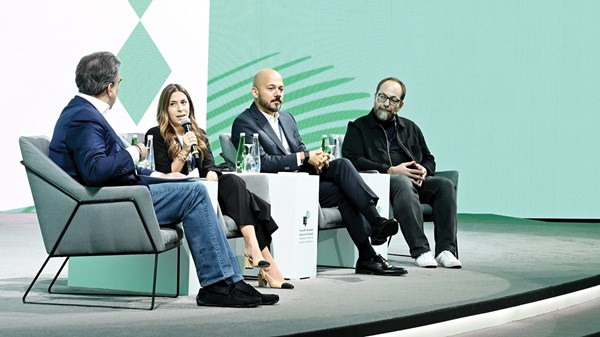
The Arabic Congress: The Language of Al-Dhad at the Heart of the Future
In a fast-paced world where heritage intertwines with technology, the topic of “The Arabic Congress: The Language of Al-Dhad at the Heart of the Future” emerges as a vital space for genuine discussions among academics and specialists. During the events, the future of the Arabic language and its impact across various sectors were explored, emphasizing the importance of cultural and technological innovation and aligning the language with the digital age, which opens new horizons for the creative economy and the digital content market.
The Impact of the Arabic Language on the Creative Economy
The second day of the Arabic Congress and Creative Industries featured rich dialogues, discussing numerous topics related to the transformation of the digital economy. The events began with a distinguished session addressing “Content Creators, Capital, and the Balance of Power,” featuring leading figures such as Mon Baz, Global Partnerships Director at Meta, and Basel Anabtawi, Head of Content Operations at TikTok for the Middle East.
The discussion focused on the significance of digital content and intellectual property, where participants affirmed that the Arabic language is not a barrier but an opportunity to connect with a broader audience. Basel Anabtawi also pointed out that success is linked to providing authentic and engaging content, noting that entrepreneurs who started on social media platforms have become leading examples showcasing the power of the Arabic language in executing ideas and projects.
Language Transformations and Cultural Identity
In the session addressing “The Arabic Language and the Anticipated Transformation,” a group of experts, including Dr. Ali bin Tamim, Head of the Abu Dhabi Center for the Arabic Language, and Dr. Hanada Taha Tamir, discussed the relationship between Modern Standard Arabic and local dialects. The discussions highlighted how these transformations affect creative production and cultural identity.
Participants emphasized that the Arabic language, in all its forms, is capable of adapting to new technological changes, making it a rich language that reflects a history and culture that continuously enhances literary and artistic creativity in the Arab world.
The Role of Artificial Intelligence in Enriching Arabic Content
The session “Large Language Models (LLMs) in Arabic: Can Artificial Intelligence Keep Up with the Language of Al-Dhad?” addressed the challenges and opportunities facing the development of Arabic content through artificial intelligence. Participants, including Nour Al-Hassan and Dr. Hakim Hasid, discussed the importance of expanding Arabic data to achieve better outcomes in the field of artificial intelligence.
The session reviewed the pivotal role of human expertise in ensuring the delivery of accurate and high-quality content, demonstrating that artificial intelligence can be a tool to enhance the Arabic language in the future.
Finding Opportunities in the Audiobook Market
The session “Audiobooks: Opening Market Horizons in the Arab Region” was dedicated to discussing growth opportunities in this sector and its need for innovation. The session featured experts such as Irina Alvarez, Vice President at Penguin Random House, who were astonished by statistics showing that the audiobook market still holds many opportunities despite the challenges it faces.
Participants stressed the urgent need to understand listening patterns and develop content that aligns with the needs of the Arab listener, contributing to the enhancement of Arabic content in the audio realm.
Ultimately, “The Arabic Congress: The Language of Al-Dhad at the Heart of the Future” reflects the growing importance of the Arabic language in light of technological advancements, encouraging everyone to explore more opportunities and initiatives to support this great linguistic heritage in a new era filled with challenges and innovations.