
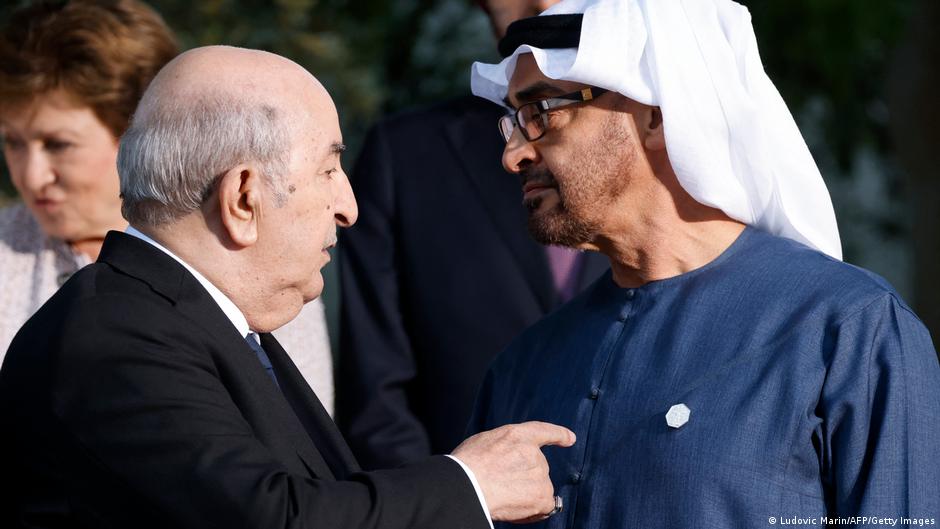
On Thursday, September 10, 2026, Algeria’s Ministry of Foreign Affairs announced a significant diplomatic shift, declaring the severance of relations with the United Arab Emirates (UAE). This decision came after what the Algerian government described as the exhaustion of all means to preserve bilateral ties.
Later that evening, Algeria’s Ministry of Defence announced the closure of its airspace to all aircraft registered in the UAE, both civilian and military. The statement from the Ministry of Foreign Affairs noted that the UAE ambassador was summoned and officially informed of this development. He was given a 48-hour deadline to comply with the decision. The statement highlighted Algeria’s previous restraint in the face of increasing provocative or hostile actions from the UAE.
The UAE’s Official Response
In response to Algeria’s announcement, the UAE’s foreign ministry adopted a diplomatic tone, expressing hope that the decision would be temporary to preserve the fraternal ties between the two brotherly nations. They underscored their commitment to maintaining and enhancing these connections for mutual benefit.
Emirati researcher Mohammad Baharoun, head of the Dubai Public Policy Research Centre, suggested that Algeria’s decision would ultimately be against its own interests, isolating itself in an era where it needs economic and commercial outlets. He argued that Algeria is depriving itself of access to international markets.
Algerian President Abdelmadjid Tebboune had previously threatened to cut relations with the UAE, referring to it as a “small state” and warning of its negative influence. In a media interview in July, he expressed concerns about the ramifications of the UAE’s actions, suggesting that their involvement often leads to violence. In a February interview broadcast by the official Algerian television, President Tebboune accused this “small state” of undermining Algeria’s stability and referenced a popular Algerian saying about regretting becoming acquainted with them, which was widely interpreted as a direct nod towards the UAE.
Allegations of Internal Interference
The tensions between Algeria and the UAE have escalated since Tebboune’s first presidential term began in 2020. These tensions intensified following the UAE’s participation in the Abraham Accords and normalisation of relations with Israel, which Algeria publicly disapproved of. In May 2025, Algerian historian Mohamed Amin Belghith commented on a satellite channel that the recognition of the Amazigh identity is a “French-Zionist project.” This remark came in the context of Algeria officially recognising Amazigh as a language in 2016 and adding “January,” the Amazigh new year, to the national holidays in 2017.
The official state television channel has accused the UAE of transforming into a “factory of discord and ideological poison.” A particularly dangerous media escalation from the UAE was cultural criticism concerning Algeria’s identity, which Algerian officials felt crossed a line. Furthermore, reports in the newspaper “El Khabar,” closely aligned with the Algerian authorities, indicated suspicions surrounding the UAE’s support for the Movement for the Self-Determination of Kabylie (MAK), a separatist group classified as a terrorist organisation in Algeria.
Competing Regional Agendas
Experts believe that a significant reason behind the discord lies in the conflicting foreign policies of both nations in North Africa and the Sahel region. The UAE has been supportive of Morocco regarding the Western Sahara issue, even opening a consulate there. Additionally, Algeria accuses the UAE of backing the Libyan warlord Khalifa Haftar against the internationally recognised Government of National Unity in Tripoli, which is supported by Qatar, Turkey, and other nations.
Algeria also alleges that the UAE has provided military support to the ruling military council in Mali, which has strained its relations with Algeria. In Sudan, the UAE supports the Rapid Support Forces, while Algeria backs the Sudanese army. Jeff Porter, an expert from North Africa Risk Consulting, indicated that while Algeria strives to maintain stability in the Sahel, the UAE’s actions threaten that stability directly, posing a security risk to Algeria.
Distinguishing Between Rhetoric and Reality
On February 3, 2026, Anwar Gargash, an Emirati presidential advisor, responded to allegations regarding the UAE’s regional role, emphasizing the need to separate noise from reality. He maintained that the narrative against the UAE is a blend of various justifications, asserting that “diplomatic relations should be managed with clarity and a focus on interests.” Following Algeria’s cut of diplomatic ties, Gargash tweeted, urging that diplomacy functions best with clear positions and effective management of interests and differences.
The diplomatic relationship between Algeria and the UAE dates back to the mid-1970s, with ties solidifying during Abdellaziz Bouteflika’s presidency (1999-2019), who spent time in the UAE after being ousted from power following the death of former President Houari Boumediene in late 1978.
With the severance of these relations, the future of diplomatic and economic exchanges between these two nations remains deeply uncertain.