
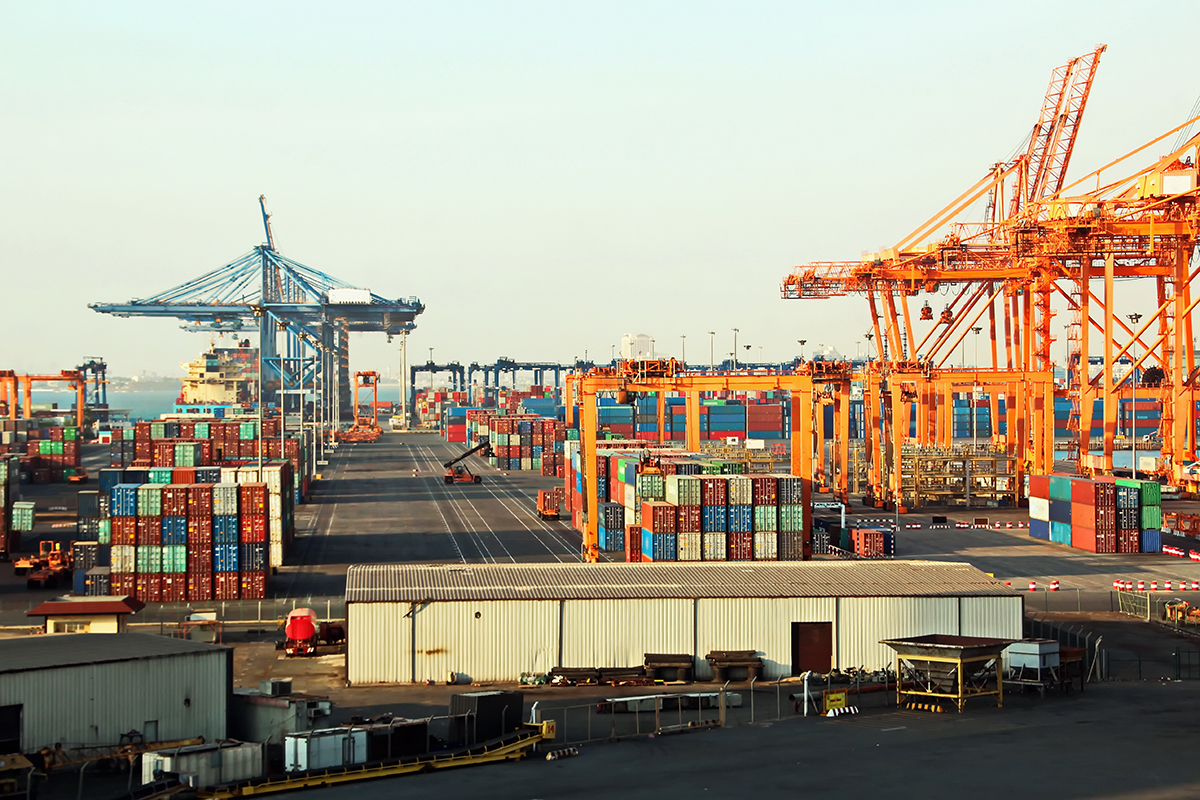
The Saudi logistics market is experiencing unprecedented growth, with demand for specialized facilities driving rental rates to record highs. As tech and retail giants scramble for scarce warehouse space, the industrial sector is witnessing a surge in occupancy levels despite an influx of new builds. This trend reflects the broader ambitions of the Kingdom to become a global leader in logistics, supported by government reforms and investment strategies.
Recent findings from Knight Frank’s Saudi Arabia Industrial and Logistics Market Review – Autumn 2025 reveal that the appetite for specialized logistics facilities, such as cold storage warehouses and data centers, is driving rental growth across the Kingdom. With occupancy rates nearing full capacity, the report highlights that over 1.3 million square meters of new warehouse space was introduced in the first half of 2025. Notably, industrial rents in Riyadh surged by 16 percent year-on-year, reaching SAR 208 per square meter. The capital’s occupancy rate now stands at a remarkable 98 percent, driven chiefly by the expansion efforts of technology and retail giants in the Gulf region.
“Despite this influx of new supply, average rental rates across Riyadh, Jeddah, and the Dammam Metropolitan Area have risen significantly, underscoring persistent growth in demand, especially for high-quality modern facilities,” said Faisal Durrani, Partner and Head of Research, MENA at Knight Frank.
Saudi Arabia’s logistics sector hits new heights
Leading global technology and e-commerce companies, including Google, Oracle, Huawei, Apple, and Shein, are playing a crucial role in transforming the logistics landscape of Saudi Arabia. The newly developed 3 million square meter Special Integrated Logistics Zone at King Salman International Airport has emerged as a prime destination for international tenants. Additionally, districts like Taibah are projected to experience significant growth, with forecasts suggesting a 50 percent increase over the next three years.
This growth trajectory follows Saudi Arabia’s introduction of its regional headquarters mandate, which requires multinational corporations seeking government contracts to establish their Middle Eastern base in the Kingdom. As a result, Riyadh continues to solidify its status as the Kingdom’s primary logistics hub, with total warehouse stock increasing by 3.5 percent to reach 28.9 million square meters, while industrial and manufacturing space saw a 1.4 percent rise to 16.2 million square meters.
Jeddah has also demonstrated steady momentum, with rents climbing by 8 percent and occupancy rates at 97 percent. The city’s industrial expansion has been significantly bolstered by DP World’s SAR 3 billion investment in the South Container Terminal, which has doubled port capacity and improved freight flows through Jeddah Islamic Port.
In Dammam, located along the Gulf coast, average lease rates have risen by 9 percent to SAR 231 per square meter, with occupancy reported at 96 percent due to a persistent shortage of modern warehouse spaces. Although plans are underway for 2.4 million square meters of land designated for future developments by Mawani and MODON, Knight Frank indicates that supply issues are likely to continue in the near term.
Saudi Arabia’s robust industrial growth is fueled by Vision 2030 and associated national strategies aimed at tripling industrial GDP and doubling industrial exports to SAR 557 billion by the year 2030. The logistics sector is projected to increase its contribution to GDP from 6 percent to 10 percent within the same timeframe.
Government reforms, including the expansion of the 10 percent White Land Tax to include undeveloped industrial and commercial properties, are designed to mitigate land banking and expedite the availability of serviced plots for development.
In the first half of 2025 alone, the Kingdom issued 585 new industrial licenses, attracting SAR 13.5 billion in capital investment. The number of licensed factories now totals 12,840, with projections estimating that this figure could reach 36,000 by 2035, according to Knight Frank.
The influx of foreign investment continues to support large-scale industrial and logistics initiatives. Notable projects include a new car manufacturing plant established by the Public Investment Fund and Hyundai in King Abdullah Economic City, a rare earth partnership between Ma’aden and MP Materials, and an industrial IoT initiative involving Aramco Digital, Armada, and Microsoft.
“Saudi Arabia’s industrial and logistics sector is in a phase of dynamic growth driven by ambitious diversification policies and significant foreign investment,” said Amar Hussain, Associate Partner – Research, MENA at Knight Frank. “The rapid rental growth across all three major cities points to a fundamental transformation of the market, moving away from older stock towards the modern specialized facilities essential for the Kingdom’s future as a global industrial and logistics leader.”