
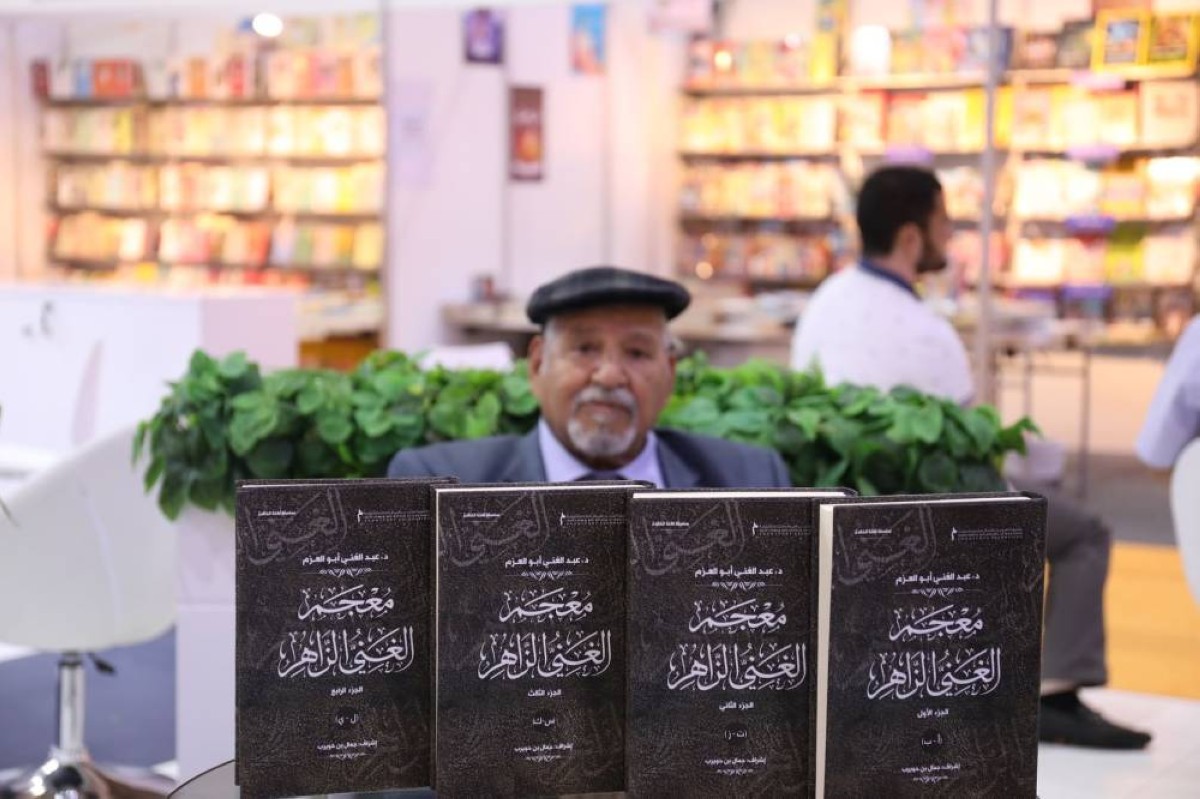
The Mohammed bin Rashid Al Maktoum Knowledge Foundation continues its exemplary journey to enrich the Arabic language with the launch of the “Al-Ghani Al-Zahir” dictionary. This modern Arabic dictionary stands as a pioneering model, intelligently blending tradition with innovation. It adeptly addresses the evolving knowledge, scientific, and social transformations, providing comprehensive lexical content that serves researchers, students, and Arabic language enthusiasts alike.
A Revolutionary Lexical Resource
Introduced during the Abu Dhabi International Book Fair in 2019, “Al-Ghani Al-Zahir” took several years to complete. It is built on a holistic scientific vision that positions the dictionary as more than just a tool for defining words; it serves as a knowledge reference that documents the evolution of the Arabic language. By linking meanings with their contexts, it enhances the understanding of both literary and scientific discourse through precise definitions and carefully selected examples that clarify meanings and enrich the linguistic content.
Continuous Development for the Arabic Language
Jamal bin Huwaireb, the Executive Director of the Mohammed bin Rashid Al Maktoum Knowledge Foundation, articulated that the dictionary embodies the institution’s ongoing developmental approach to serving the Arabic language. It reflects the foundation’s continuous efforts to keep pace with modern updates in contemporary Arabic dictionaries. The author’s methodological approach merges traditional and innovative practices, deriving words from their roots and systematically organising entries according to an established morphological framework, thus facilitating access to their meanings and usages.
Comprehensive Coverage of Modern Lexicon
“Al-Ghani Al-Zahir” distinguishes itself by embracing both ancient and modern Arabic vocabulary, including loanwords and newly coined terms. The dictionary comprises religious, scientific, technical, and philosophical terminologies, whilst also placing special emphasis on idiomatic expressions and collocations. Notably, it traces loanwords back to their original forms using Latin script, showcasing the evolution of Arabic and its interaction with various fields of knowledge.
Literary Contextualisation in Lexical Entries
Its expansive linguistic database features literary texts from various periods, making literary examples a fundamental aspect of its lexical material. Drawing upon Qur’anic verses, prophetic traditions, and historical and modern literary texts, the dictionary connects words to their natural contexts, providing readers with a clearer understanding of meanings and usages.
Adapting to Linguistic Innovations
Furthermore, the dictionary stays abreast of linguistic innovations and modern terminology, emphasising the belief that a dictionary should be a continually evolving project. It aims to align with scientific and technological advancements while retaining the authenticity and cultural legacy of the Arabic language. This focus enhances the language’s role in supporting scientific research, education, and the creation of Arabic content.