
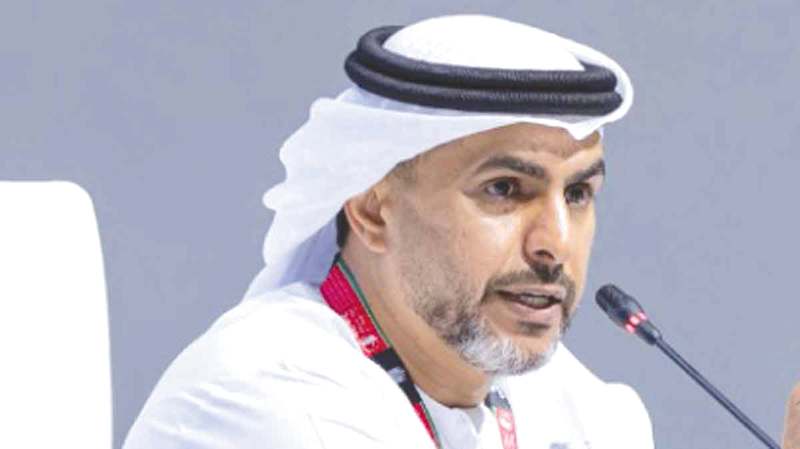
In a significant revelation, Abdullah Sultan bin Awad Al Nuaimi, the Minister of Justice and Chairman of the Federal Judiciary Council, announced a remarkable surge in judicial cooperation requests directed to the United Arab Emirates. Between 2021 and 2025, requests for mutual legal assistance soared by 244%, while extradition requests increased by 235%. This growth underscores the high level of trust international partners place in the UAE’s legal and judicial systems.
Record Numbers of Extradition Requests
Last year, the UAE received a total of 576 extradition requests, with its courts adjudicating on 178 cases. The remaining requests are currently under review or awaiting the completion of additional information. In addition, the country processed 547 requests for mutual legal assistance and issued 710 reminder notices to expedite pending applications.
Commitment to Judicial Cooperation
Minister Al Nuaimi highlighted the UAE’s establishment of a comprehensive international judicial cooperation framework that integrates legal structures with direct partnerships and rapid response capabilities. This integration aims to prevent criminals from evading justice or safeguarding the proceeds of their crimes by crossing borders.
Insights from the UN Conference
His remarks were delivered during the thematic session titled “Enhancing International Judicial Cooperation: The Experience of the UAE and Global Partnerships,” part of the high-level segment of the 15th United Nations Congress on Crime Prevention and Criminal Justice—taking place in Abu Dhabi until October 1, 2026.
The Global Challenge of Transnational Crime
Addressing the issue of transnational crime, Al Nuaimi stressed that crime nowadays does not respect national borders, as perpetrators, assets, and evidence move across various jurisdictions. He firmly stated that no single country can tackle cross-border crime alone. “Our message in the UAE is clear: borders should not become a shield for criminals or criminal assets,” he asserted. The aim is to ensure that effective judicial cooperation can trace, freeze, seize, and recover the gains of crime through established judicial procedures that uphold the rule of law.
Legal Framework and Agreements
The UAE’s strategy focuses on expediting international cooperation, enhancing direct communication with central authorities, and developing long-term international judicial partnerships, all while aligning procedures with the principles of the rule of law. The Minister elaborated on the legal framework for international judicial cooperation, grounded in multilateral and bilateral agreements as well as national legislation. The UAE is a signatory to 16 global and regional agreements and has established over 140 binding bilateral agreements with 53 countries, covering areas such as extradition, mutual legal assistance, asset freezing and confiscation, evidence gathering, and the transfer of convicts.
Recent Developments in Bilateral Agreements
Notably, nearly 30% of these bilateral agreements have been signed in the past five years. Currently, four agreements are poised for signing before the year’s end, while two are under negotiation, and eight are in the drafting phase. The federal legislation lays a robust foundation for cooperation in combating money laundering, terrorist financing, and the proliferation of arms, with the country adhering to the principle of reciprocity in cases lacking agreements.
Coordinated National Efforts
According to Al Nuaimi, effective cooperation begins with a well-coordinated national framework involving federal and local prosecutions, courts, as well as the ministries of foreign affairs and interior. This includes collaboration with central authorities, judicial bodies, and international organisations. In 2026 alone, the UAE hosted over 35 bilateral meetings with counterpart central authorities worldwide.
Exemplifying Success Through Collaboration
The Minister provided a practical example of successful cooperation with the Republic of Ireland, highlighting the swift arrest of Daniel Kinahan, a prominent figure in the Kinahan organised crime group, within just 48 hours of receiving an extradition request. The case underwent a thorough judicial review, culminating in a final ruling by Dubai’s Court of Cassation prior to Kinahan’s extradition on August 9. Additionally, a partnership with France involved uncovering and seizing 82 properties linked to criminal activities in the UAE last November.
Efficiency and Digital Transformation
Al Nuaimi stated that the average time for voluntary extradition has decreased to just five days, while a complete mutual legal assistance request is processed in about 35 days, significantly shorter than the international guideline of 60 to 180 days. He noted that the International Cooperation Assistance System (ICAS) has been fully digitalised, simplifying some procedures from seven days to five minutes, reducing staff workloads by approximately 80%, and improving certain processes by as much as 90%.
Future Commitment to Global Partnerships
In conclusion, Minister Al Nuaimi affirmed that the UAE will continue to expand its network of agreements, deepen legal and judicial partnerships, and accelerate the exchange of information and evidence. This will further solidify its status as a trusted global partner in the fight against organised and transnational crime, reinforcing justice and the rule of law.
