
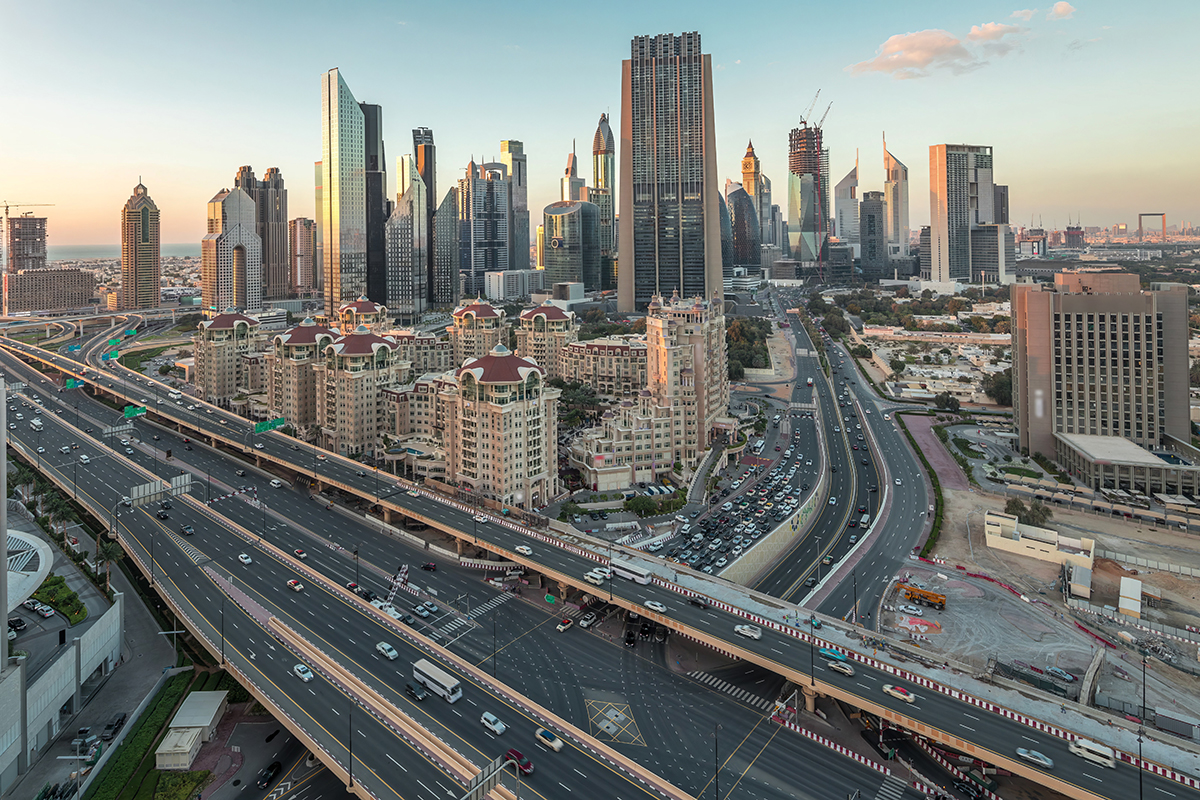
The Dubai real estate market has experienced a remarkable surge, with property market sales increasing by 46% and the total market value reaching an impressive $41.3 billion in the second quarter of 2025. This growth reflects the ongoing appeal of Dubai as a prime destination for both local and international investors. The city’s robust economic performance and investor-friendly environment continue to position it as a leader in the regional real estate sector.
Transaction Volumes and Market Growth
Transaction volumes climbed 25% to hit 50,485 units during this period, as reported by Betterhomes in their Shaping Skylines | Q2 2025 Dubai Residential Real Estate Market. This increase follows a strong first quarter, with quarter-on-quarter jumps of 33% in value and 19% in volume, underscoring Dubai’s significance as a prominent property hub in the region.
Year-on-Year Performance
“Dubai’s real estate market maintained its momentum in Q2, with transactions up 25% year-on-year and total value rising 46%. Apartments and off-plan properties led activity, while the luxury segment hit record highs. Even during June’s regional unrest, the market remained resilient, reinforcing Dubai’s position as a safe, stable destination for capital and lifestyle buyers alike,” stated Louis Harding, Chief Executive Officer at Betterhomes.
Apartments accounted for 80% of total transactions, resulting in over 40,000 units sold and generating AED81 billion in sales value. This segment saw a 21% growth year-on-year across both secondary and off-plan transactions. Off-plan apartment sales surged 30% quarter-on-quarter, while secondary apartment sales increased by 23% in value to AED21.17 billion.
The off-plan transactions totaled AED60.15 billion, representing a 37% growth compared to Q2 2024. Notably, Jumeirah Village Circle emerged as the leading performer for off-plan apartments, contributing 12.2% of total off-plan transactions.
Villa Sales and Market Dynamics
In a noteworthy trend, secondary villa and townhouse sales skyrocketed by 80% year-on-year, reaching AED62.4 billion, while observing a quarter-on-quarter growth of 49% from Q1 2025. Conversely, off-plan villa and townhouse sales fell by 2% year-on-year to AED8.06 billion and declined 32% quarter-on-quarter.
“With approximately 20,000 new units delivered in the first half of 2025 and a further 70,000 expected by year-end, Q3 is shaping up to be an exciting phase for Dubai’s property market,” added Christopher Cina, Director of Sales at Betterhomes. The Valley was a key area, accounting for nearly 30% of off-plan villa and townhouse transactions, with townhouses representing 75% of the off-plan value in this segment.
Rental Market Trends
Dubai’s rental market also showed positive signs, with total rental contracts reaching 107,830 in Q2 2025, marking a 2% year-on-year increase. Although new rental contracts saw a decline, renewed contracts rose by 4% year-on-year. “Leasing activity at Betterhomes grew by 33% quarter-on-quarter, highlighting the sustained demand across Dubai’s rental market,” noted Rupert Simmonds, Director of Leasing at Betterhomes.
The city saw a significant increase in demand for villas and townhouses, with rises of 30% and 98%, respectively. Betterhomes recorded a staggering 111% year-on-year growth in total leasing transactions across all property types, signaling continued confidence in Dubai’s real estate sector.
International Investment and Future Growth
The international demand for Dubai properties has been robust, particularly from UK buyers, who topped the list of investors with a 56% increase in activity quarter-on-quarter. Dubai’s population has also grown, now totaling over 4.1 million residents, which further reinforces the market’s attractiveness.
“As we move into Q3, the fundamentals remain strong. Population growth is steady, infrastructure continues to expand, and while more supply is coming online, demand is still outpacing it in most areas,” Harding concluded, highlighting the vibrant potential of the Dubai real estate landscape as it continues to evolve and adapt to changing market demands.