
The Ministry of Culture, in collaboration with the Dubai Culture and Arts Authority and Alserkal Consulting, has announced the inclusion of Dar Al Ittihad in the National Register of Modern Architectural Heritage, in a move that underscores the UAE’s commitment to strengthening national identity and deepening younger generations’ connection to the country’s history through the preservation of landmark sites of historical, cultural and architectural value.
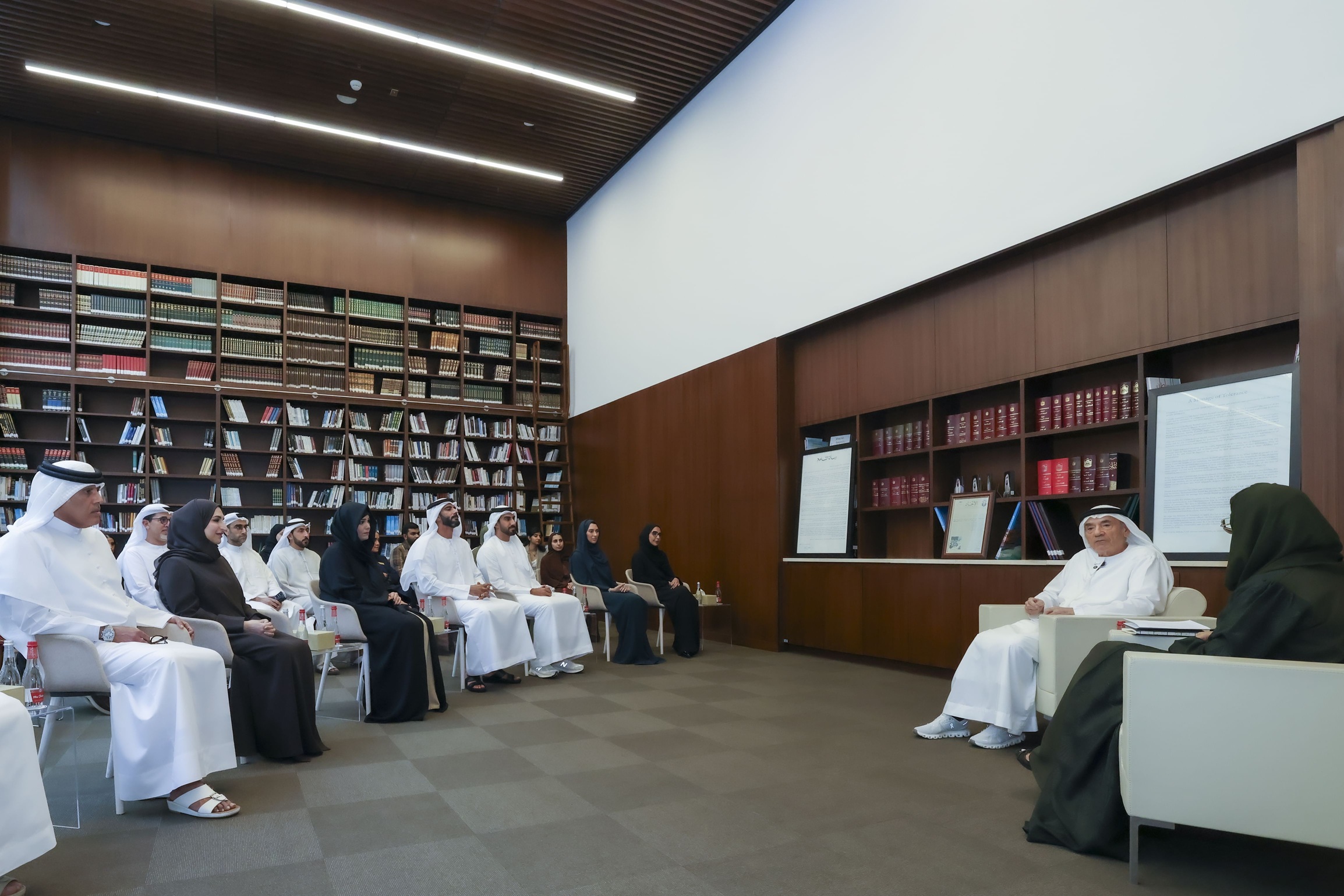
The announcement was made during a visit to the building by Her Highness Sheikha Latifa bint Mohammed bin Rashid Al Maktoum, Chairperson of the Dubai Culture and Arts Authority, and Sheikh Salem bin Khalid Al Qasimi, Minister of Culture. The visit also saw the unveiling of the official plaque marking Dar Al Ittihad’s inclusion in the register, which was launched by the Ministry of Culture to document and protect buildings and sites of architectural and historical importance across the UAE, while highlighting their role in shaping national memory and reinforcing the country’s cultural identity.
A national landmark with a defining role in the Union
During the tour, Her Highness Sheikha Latifa and Sheikh Salem bin Khalid Al Qasimi visited the halls of Dar Al Ittihad and learned about the key milestones that led to the founding of the Union, and the pivotal role the site played in the UAE’s history. The building hosted the meetings that paved the way for the declaration of the Union on 2 December 1971, and remains a national symbol embodying the values of unity, cohesion and the shared vision of the founding fathers.
The visit also included a dialogue session with the Cultural Adviser to the President of the UAE, Zaki Nusseibeh, titled “Dar Al Ittihad: Celebrating Modern Architectural Heritage”, attended by a number of national figures who lived through the Union’s founding era and witnessed its historic events. Participants shared memories and experiences linked to Dar Al Ittihad, affirming its status as a living witness to one of the most important milestones in the nation’s history.
Preserving memory and reinforcing identity
Her Highness Sheikha Latifa bint Mohammed bin Rashid Al Maktoum affirmed that Dar Al Ittihad stands as a prominent national and cultural beacon and a witness to the nation’s memory and journey. It is the place that brought together the founding fathers and witnessed the birth of the UAE, which placed people at the heart of development and made ambition its path to achievement.
She said: “Dar Al Ittihad is unique in our memory, as it is a bridge connecting the past with the present and an important national symbol associated with the historic moment created by the founding fathers, who laid the foundations of the Union to embody our society’s aspirations for unity and excellence. Under this roof, a dream became reality, and from it began the journey of building a nation that, thanks to the vision of its wise leadership, has offered the world a unique model of development, leadership and foresight, ensuring that the values of the Union, upon which our journey was founded, remain a source of inspiration guiding our present and shaping our future.”
She added that she takes pride in Dar Al Ittihad being the first site to be listed in the National Register of Modern Architectural Heritage, in recognition of its historical importance and architectural value, contributing to a stronger public awareness of national landmarks and the safeguarding of the UAE’s cultural legacy.
She further said that this step reflects the UAE’s commitment to preserving landmarks that safeguard collective memory, with their human stories and authentic values, documenting the story of the Emirates, immortalising the efforts of the founding fathers who built the nation and helped shape its identity, showcasing the richness of the nation’s heritage, and enhancing its presence among future generations.
A symbol of unity and a source of knowledge
For his part, Sheikh Salem bin Khalid Al Qasimi said that Dar Al Ittihad’s inclusion in the National Register of Modern Architectural Heritage reflects the significance of this exceptional national landmark, which is linked to one of the most important moments in the UAE’s journey. He noted that preserving buildings and sites of historical and architectural value is a fundamental pillar in efforts to protect national identity and strengthen future generations’ ties to the history of their country.
He said: “Dar Al Ittihad is an enduring symbol that embodies the story of unity on which the UAE was built and the foundations of its development and civilisation. By including it in the National Register of Modern Architectural Heritage, we affirm our commitment to protecting sites of exceptional national and cultural value, ensuring their sustainability as sources of knowledge and inspiration, and as living witnesses to the achievements made by the UAE since the Union was established.”
He added that “the National Register of Modern Architectural Heritage helps document and celebrate the buildings and sites that formed part of the urban, cultural and social transformations witnessed by the UAE over the past decades, supporting research and documentation efforts and enhancing the status of modern architectural heritage as one of the key components of national cultural identity”.
Dar Al Ittihad’s place in modern heritage
The inclusion of Dar Al Ittihad in the National Register of Modern Architectural Heritage comes in line with the Ministry of Culture’s efforts to document the country’s cultural and architectural heritage and to raise awareness of the importance of modern buildings linked to defining moments in the history of the UAE.
Built in 1965, Dar Al Ittihad is one of the UAE’s most prominent historical landmarks. It was used by the late Sheikh Rashid bin Saeed Al Maktoum, may he rest in peace, to host official meetings that helped lay the foundations of the Union.
On 2 December 1971, the building hosted the signing ceremony of the UAE Constitution and the declaration of the Union, immortalising one of the most important moments in the region’s history. It also hosted a number of Gulf meetings and official visits by senior leaders during the 1960s and 1970s.
Originally known as “Qasr Al Dhyafah”, Dar Al Ittihad is distinguished by its unique architectural design, which combines simplicity and authenticity and reflects the aesthetic features of local architecture in the early second half of the twentieth century.
The building consists of two interlocking sections, one surrounding the other, and is supported by cylindrical concrete columns. Its facades were executed entirely in glass and aluminium, with the exception of the roof and floor, which were completed using modern building materials. It is now part of the Etihad Museum, where it continues to document the founding journey of the state, preserve national memory and introduce new generations to the story of the Union and its values.
A first group of ten landmark buildings
The National Register of Modern Architectural Heritage, launched recently alongside the first meeting of the National Identity Committee under the National Identity Strategy and the National Policy for Modern Architectural Heritage, includes in its first phase 10 selected buildings representing key milestones in the development of modern architecture in the UAE.
These are Dar Al Ittihad in Dubai; the Burj Rashid, which marked a turning point in the emergence of Dubai’s modern commercial and economic landscape since its opening in 1979; the Deira Clock Tower in Dubai, one of the city’s oldest urban symbols; the National Consultative Council at Qasr Al Hosn in Abu Dhabi, associated with the beginnings of institutional and legislative work since 1968; the Cultural Foundation in Abu Dhabi, a leading platform for cultural and artistic activity since 1982; the Islamic Institute at the United Arab Emirates University in Al Ain, reflecting the development of modern educational and religious architecture since 1976; Khalid bin Mohammed School in Sharjah, a prominent example of educational architecture linked to the planning of residential neighbourhoods; Al Qasimia School in Sharjah, representing an advanced stage in the design of modern government schools since the 1980s; the Special Education Support Centre in Sharjah, as an example of specialist educational services architecture in the post-Union period; and Saqr Hospital in Ras Al Khaimah, which embodies the development of modern healthcare infrastructure and its central role in the UAE’s social memory since 1981.