
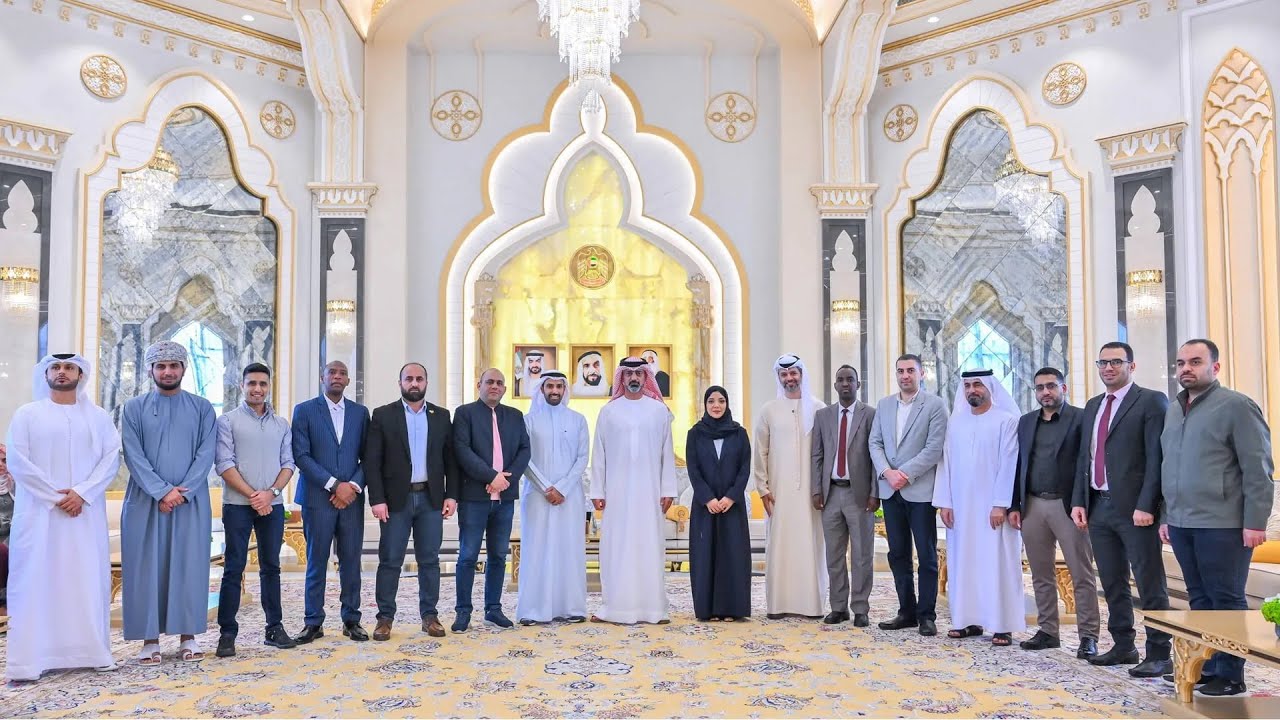
Today, Sheikh Ammar bin Humaid warmly welcomed leaders from over 15 Arab countries who are part of the third batch of the “Future Governments Leadership Program in the Arab World.” Launched in February 2023, this program serves as an essential platform for developing capable government leaders equipped with the skills necessary to navigate the complexities of modern governance. The initiative, a collaborative effort of the UAE government and the Arab Administrative Development Organization, aims to foster a new generation of leaders ready to adapt to changing dynamics and seize emerging opportunities.
Welcoming Future Leaders
Sheikh Ammar bin Humaid Al Nuaimi, the Crown Prince of Ajman and Head of the Executive Council, received these distinguished participants at the Ajman Emiri Court. During the meeting, he emphasized the UAE’s commitment to establishing a progressive government model that prioritizes future readiness, agility in decision-making, and accelerated achievements. He expressed that investing in human capital is pivotal to sustainable development.
Insights into Government Work
In attendance were Sheikh Abdul Aziz bin Humaid Al Nuaimi, Chairman of the Department of Tourism, Culture, and Media in Ajman, along with several senior government officials. They reviewed the program’s objectives and outputs, discussing the diverse educational tracks and field visits to various government sectors, including the federal government and local authorities in Abu Dhabi, Dubai, Sharjah, Ajman, and Fujairah. This exposure allows participants to observe diverse models of government operations and learn about the integration between federal and local levels.
The Importance of Training Leadership
The program brings together governmental leaders from various domains, including public policy, service development, strategic planning, and governmental transformation, highlighting the richness of participants’ practical experiences. Sheikh Ammar bin Humaid reiterated that nurturing young leadership capabilities is essential for crafting more efficient and adaptive governments. He pointed out that shared experiences among Arab leaders contribute to developing governmental frameworks capable of foreseeing the future and transforming challenges into actionable developmental opportunities.
A Vision for the Future
Sheikh Ammar emphasized that at the core of effective governance lies the human element. He underscored that every leader’s ultimate goal is to serve the public and simplify their lives through responsive government services. The essence of successful leadership, he noted, rests on humility and continuous learning, stressing that every experience—be it success or challenge—presents a constant opportunity for development.
Engaging with the Community
He advocated for direct engagement with the community, highlighting that effective leadership requires proximity to the public, allowing leaders to listen and engage in discussions focused on collective work rather than individual recognition. He emphasized the vital role that such engagements play in maintaining the value of any operational system.
Sharing Best Practices
Additionally, the Ajman government shared insights into its “Ajman Vision 2030” during a workshop that showcased the strategic directions of this vision, key focus areas, and notable features of governmental transformation in the emirate. The workshop fostered significant interaction, allowing participants to engage in open discussions and share experiences regarding best practices in governance and community engagement in shaping policies.
A Platform for Shared Leadership and Experience
The inclusion of Ajman in the program’s itinerary was intended to highlight its governmental transformation experience and showcase Ajman Vision 2030 as a model that places humanity and quality of life at the forefront of government work. This program represents an advanced Arab platform for educating young governmental leaders through comprehensive knowledge and field experience in the UAE, focusing on best practices in government readiness, future foresight, and building leadership capabilities.