
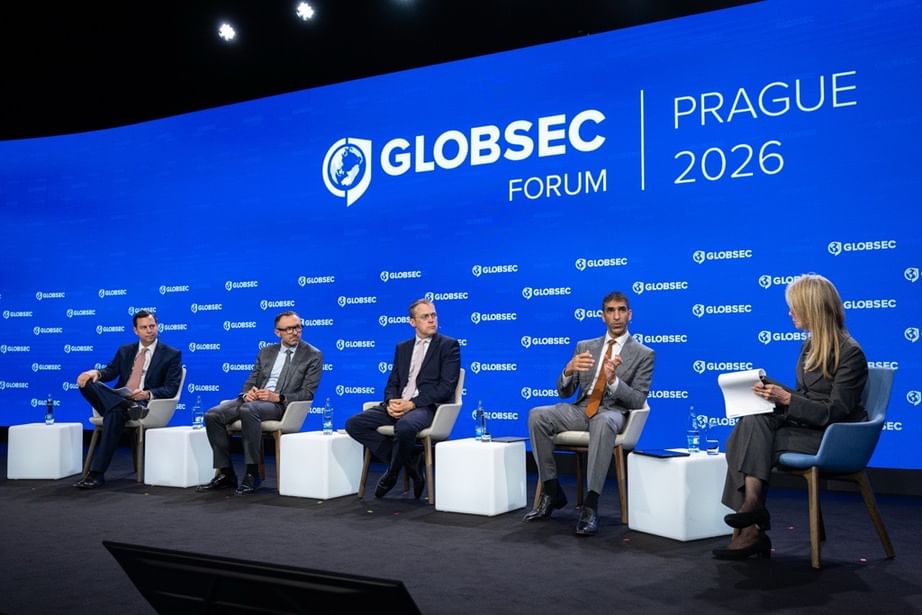
In a significant event held in Prague, Dr. Thani bin Ahmed Al Zeyoudi, the Minister of Foreign Trade of the UAE, showcased the nation’s successful experience in navigating the challenges posed to its foreign trade amid the ongoing regional crisis. The dialogue, titled “The Ripple Effect: How the Conflict with Iran Shapes Global Economies and Policies,” explored the UAE’s proactive measures to mitigate disruptions in global trade routes and its commitment to maintaining its position as a stable and resilient global trading hub.
Addressing Global Trade Disruptions
During the discussion, Al Zeyoudi emphasized the necessity of keeping the Strait of Hormuz open as an international waterway. He stated that “no party should be able to dominate it, use it as leverage, or turn it into a weapon against the global economy.” He outlined the immediate actions taken by the UAE in response to Iranian aggression against Gulf Cooperation Council countries, particularly following Iran’s attempts to close the Strait to disrupt global energy supplies.
Strategic Measures and Alternatives
Al Zeyoudi highlighted several strategic measures the UAE has implemented since the escalation of hostilities. These strategies include activating alternative trade corridors to bypass the Strait of Hormuz, utilizing the ports of Fujairah and Khor Fakkan, establishing air bridges for prioritized cargo transport—particularly for essential supplies like medicines and food—and creating a green trade corridor with Oman, along with a new trade link between Sharjah and Dammam.
Economic Support Initiatives
In addition to diversifying trade routes, the UAE has initiated a billion-dirham economic support fund aimed at ensuring business continuity and providing targeted assistance to small and medium enterprises. The Central Bank has also introduced a package comprising five key areas to enhance the resilience of financial institutions, which is essential for stabilizing credit flows amidst the challenging environment.
Long-term Vision for Trade
Reflecting on the future, Al Zeyoudi stressed that the UAE’s long-term trade vision remains essential in maintaining a vibrant economy. The country’s Comprehensive Economic Partnership Agreements (CEPA) continue to serve as crucial instruments, enabling the UAE to generate positive momentum in its foreign trade. To date, 35 agreements have been concluded with partners across six continents, projecting the non-oil foreign trade to reach $1.03 trillion by 2025.
Al Zeyoudi concluded with a note of optimism, stating that “our achievements over the past five years are firmly in place. The UAE remains a bridge to high-growth markets across the Gulf, Africa, and Asia, and a reliable global partner in trade, logistics, investment, and technology.” This underscores the UAE’s evolving role in a shifting global landscape, marking its importance in ensuring stability in foreign trade amidst regional challenges.