
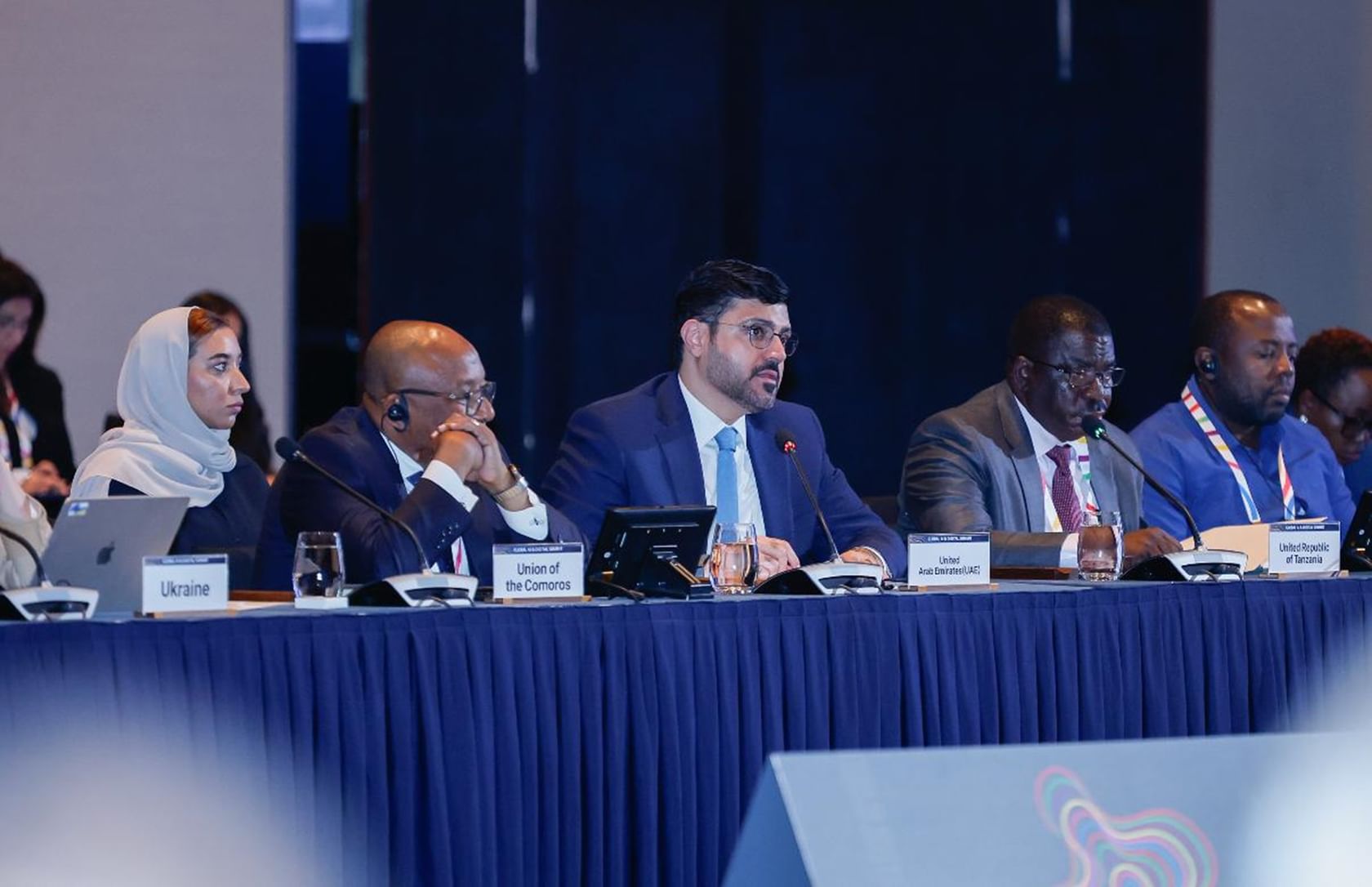
At an international summit held in Seoul, South Korea, the United Arab Emirates government showcased its innovative use of artificial intelligence (AI) and assisted AI to enhance government services and improve institutional performance. Organised by the World Bank in collaboration with the Ministry of Finance and the Ministry of Science, Technology and Information Communications, the summit drew participation from government officials, experts, international leaders, and private sector representatives from around the globe.
Facilitating International Cooperation in AI
The UAE’s participation aimed to foster international collaboration and knowledge exchange in the realms of AI and digital transformation. It presented the country’s pioneering experience in enhancing government efficiency and proposed opportunities for employing advanced technologies to streamline processes, improve efficiency, and enhance the experiences of individuals and businesses.
Insights from UAE Leadership
Mohammed bin Taliah, the Assistant Minister for Cabinet Affairs for Government Knowledge Exchange, took part in several key meetings and sessions at the summit, discussing the future of AI and digital transformation, as well as the role of international partnerships in refining government operations and sharing successful initiatives. He emphasised that the UAE government’s participation signifies its commitment to enhancing collaboration and knowledge sharing on a global scale, in order to harness the potential of AI for tangible societal outcomes.
He stated, “The true benefit of AI does not solely rest on adopting new technologies but also involves redesigning government processes, enhancing services, and simplifying procedures to increase efficiency and save time and effort for individuals and businesses.” This acknowledges the importance of international cooperation and sharing successful experiences to expedite the development and adoption of effective technological solutions.
Insights on Bureaucracy Reduction and Sustainable Development
During the ministerial meeting on AI and digital transformation, discussions revolved around global trends in employing digital technologies for development, enhancing cooperation between governments and development partners, and improving service delivery and institutional performance. Bin Taliah showcased the UAE’s experience in the “Zero Bureaucracy” programme. This initiative seeks to eliminate unnecessary procedures and requirements, consequently redesigning services and government processes to enhance efficiency and support a better business environment.
In a high-level roundtable session titled “AI for Development: Unlocking Global Partnerships to Expand Local Impact,” he highlighted the significance of fostering effective partnerships comprising governments, development institutions, and the private sector. Bin Taliah advocated for translating the potential of AI and assisted AI into practical, scalable solutions that respond to actual needs and contribute to sustainable development goals.
Strengthening Collaboration and Knowledge Exchange
Alongside the summit, Bin Taliah engaged in bilateral meetings with ministers and officials from partner countries involved in the Government Knowledge Exchange Programme. He also held discussions with officials from the Republic of Korea to explore opportunities for collaboration and knowledge sharing in AI and government development.
Among the discussions was a meeting with Ha Jong-Woo, the Vice President of the Presidential Council for the National AI Strategy in South Korea. They deliberated on opportunities for exchanging knowledge and experiences in the development and application of AI strategies in government operations.
Shaping the Future of Government Services
The UAE’s participation in the summit is part of its broader collaboration with the World Bank, stemming from a partnership initiated during the World Bank and International Monetary Fund meetings in April. This alliance aims to leverage the Government Knowledge Exchange Programme to share experiences that enhance governmental management, boost efficiency, simplify procedures, and improve quality of life.
As an international platform, the summit facilitated discussions on how to harness AI and digital technologies to support economic growth, enhance productivity, and expand developmental opportunities. Key areas of focus included developing infrastructure and digital capabilities, preparing governments to effectively utilise modern technologies, and establishing necessary partnerships to translate technological advancements into superior services and more inclusive and sustainable developmental outcomes.