
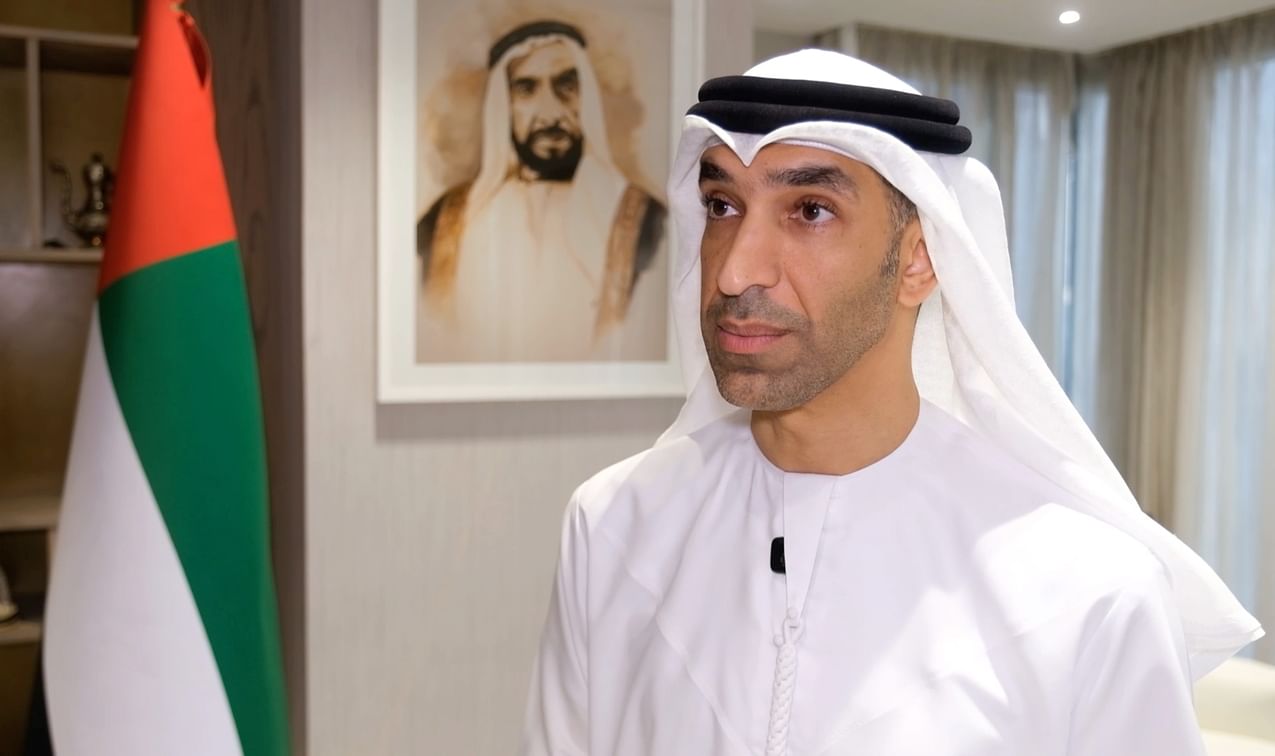
UAE Minister of Foreign Trade Dr Thani bin Ahmed Al Zeyoudi said the United Arab Emirates has completed 37 Comprehensive Economic Partnership Agreements so far, 18 of which have already entered into force, as the country continues negotiations with about 20 new markets alongside plans to develop logistics infrastructure and trade corridors that strengthen the resilience of foreign trade and reinforce the UAE’s position as a global trade hub.
More deals set to take effect
In a statement, Al Zeyoudi said a new set of agreements will come into force over the next two or three months, including deals with Eurasian Group countries. He also said work is under way with the Philippine government to complete the process of bringing the signed agreement into effect before the end of the year.
He expected negotiations with between five and seven additional countries to conclude before year-end, noting that talks with Canada are nearing completion.
The minister added that the UAE has reached the final stages of negotiations with Rwanda, Ghana and Zambia, while discussions with Bangladesh and Peru are making good progress. He said the seventh round of talks on the trade agreement with the European Union has ended, although the pace remains slower than expected compared with bilateral negotiations with other countries.
Logistics system proves resilient
Al Zeyoudi said the UAE’s logistics sector has demonstrated high efficiency during recent geopolitical challenges, thanks to integration between airports, ports and the land transport sector, as well as the role played by major national companies active in port management, logistics services and customs clearance.
That integration, he said, helped absorb a sharp increase in container traffic, improve the smooth flow of trade and support flexible updates to procedures that make truck movement inside the country easier.
He noted that DP World has announced projects to strengthen fast connectivity with East Coast ports, in addition to expanding land transport capacity by increasing its truck fleet. Abu Dhabi Ports Group, he added, has announced an increase in the capacity of the transport route between Basra, Türkiye and Syria, a project that began last year and continues to make tangible progress.
He said the latest developments have underscored the importance of these projects in providing alternative trade routes for pathways that may be affected by geopolitical conditions, and in supporting expected trade growth with Syria and Türkiye in the coming period.
He added that development plans also include port expansions, improvements to the land transport network and Etihad Rail, which will enhance cargo movement from eastern regions to major ports, raise the country’s handling capacity and help close logistics gaps.
Non-oil trade continues historic growth
In parallel, Al Zeyoudi said the UAE’s non-oil foreign trade continued to post historic results in the first half of this year, approaching AED2 trillion, with growth of about 13.1% compared with the same period last year.
He added that the country has proven its ability to manage the impact of geopolitical developments, maintain the flow of trade and reduce their effect on the economy. Non-oil exports reached about AED453 billion in the first half, marking growth of nearly 24%.
He explained that the private sector’s priority over the past period was not limited to maximising profits, but focused on ensuring the smooth flow of supply chains, the availability of goods and greater efficiency and connectivity between different logistics sectors, whether land, sea or air transport.
Al Zeyoudi said the UAE has benefited from the flexibility of its logistics system by shifting part of commercial operations from the Arabian Gulf to East Coast ports and linking them with different ports and terminals, helping improve efficiency despite challenges linked to higher insurance and logistics costs.
He also said trade in a number of strategic goods recorded growth, led by gold, as well as electronics, iron, copper and aluminium, driven by the benefits of the Comprehensive Economic Partnership Agreements and the continued development of logistics corridors that enhance the competitiveness of the country’s foreign trade.