
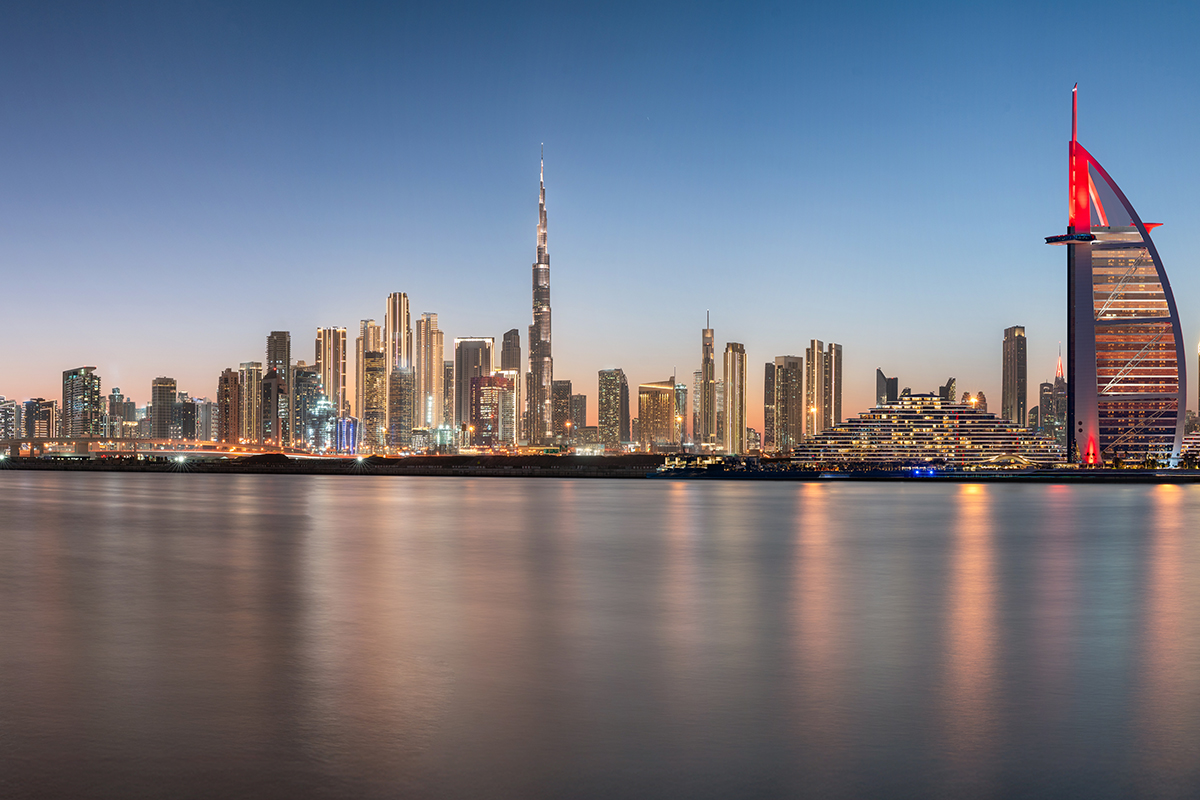
The report indicating that the UAE real estate market outperformed global markets in H1 2025 reveals a robust landscape for investors and homebuyers alike. With ongoing demand and strategic developments, the UAE’s property sector is emerging as a beacon of resilience amid global economic uncertainty. The latest insights from Cushman & Wakefield Core highlight key trends that demonstrate why the UAE real estate market is experiencing significant growth, making it an attractive option for institutional investors and local buyers.
Cushman & Wakefield Core’s mid-year commentary emphasized that scarcity continues to shape the real estate market, even as capital deployment becomes more selective across a range of asset classes.
PP Varghese, Head of Professional Services at Cushman & Wakefield Core, stated: “Institutional capital still sees the UAE as one of the few global markets offering yield, visibility, and long-term upside – but underwriting assumptions are shifting. Scarcity remains, but pricing power now belongs to assets with the right ESG profile, location, and covenant strength.”
Office Occupancy and Rental Trends in the UAE
In Dubai, office occupancy has surged to 92%, with Grade A assets reaching an impressive 95% occupancy. Average rents have jumped by 22% year-on-year to AED 190 per square foot, with the Dubai International Financial Centre (DIFC) leading in rental premiums.
Looking ahead, new supply for 2025 is limited to just 0.89 million square feet, while a substantial 6.4 million square feet is anticipated to come online from 2026 onwards. Interestingly, many of these future developments are already generating significant pre-leasing interest.
Abu Dhabi mirrors this trend, boasting a Grade A occupancy of 97% and an overall occupancy rate of 90%. Rental prices have climbed 11% year-on-year to AED 160 per square foot. More than 830,000 square feet of new office space is expected to be delivered in the second half of 2025, primarily in Masdar City and The Link, with most of it already pre-committed.
Diverging Trends in the UAE Residential Market
The residential market in Dubai is showing signs of moderation. In Q2 2025, average sales prices reached AED 1,822 per square foot, reflecting a 14% increase from the previous year. However, rental growth has slowed to 7%, as nearly 43,000 new units are projected for 2025—the highest figure since 2019. Demand in the mid-market segment has softened, while villa communities show greater stability.
Conversely, the Abu Dhabi residential market has experienced more vigorous growth, with sales prices rising 18% year-on-year. Notably, Saadiyat Island saw prices soar by 30%, reaching AED 4,172 per square foot. Rental growth in this sector stood at an impressive 27%, bolstered by healthy demand across various apartment segments.
Support for continued expansion is evident, with over 3,600 units set to be completed on Yas Island in 2025, driven by strong pre-sales and structural demand.
Retail Sector Insights: Trends in Rents and Strategy
The retail sector in the UAE is thriving, with occupancy levels surpassing 95%. Rents at super-regional malls in Dubai, such as The Dubai Mall and Mall of the Emirates, have seen increases of 12-15% year-on-year. This growth is driven by landlords transitioning from a strict focus on occupancy rates to creating engaging and curated destinations. There is a noticeable shift toward supporting homegrown food and beverage brands alongside established international names that resonate with local markets.
Retail strategies are becoming more nuanced, tailored to specific communities—differentiating approaches for Emirati neighborhoods versus expat areas. Community retail hubs and hybrid lease models are gaining traction, aligning with the Urban Master Plan 2040 and the dynamic shifts in consumer preferences.
The Industrial Sector: Challenges and Opportunities
In the industrial real estate market, sustained demand combined with limited supply has driven rents upwards. Vacancy rates for Grade A warehouses remain notably low, with robust demand stemming from the e-commerce, manufacturing, and chemical industries. Notably, assets that meet ESG criteria and exhibit climate-ready infrastructure are commanding significant pricing premiums.
The UAE benefits from impressive infrastructure, excellent multimodal logistics access, favorable energy costs, and a skilled workforce—all of which continue to attract occupiers despite rising rental prices. Furthermore, Abu Dhabi and Dubai lead globally among emerging data center markets, with over 750 MW of capacity currently under development. The UAE’s data center market is expected to reach a value of $3.3 billion by 2030, supported by advantageous land availability and economical power.
Hospitality Sector Performance in Dubai and Abu Dhabi
Hospitality in Dubai is experiencing notable growth, welcoming 8.68 million visitors from January to May 2025—a 7% year-on-year increase. Full-year projections estimate total visitation will reach 20.8 million, indicating a 21% rise compared to 2024. Current citywide occupancy sits at 83%, with an average daily rate (ADR) of AED 620 and a revenue per available room (RevPAR) increase of 7%.
Abu Dhabi has also shown strong performance, recording 1.52 million occupied guest nights, with hotel occupancy at 87% and an ADR of AED 614. Notably, domestic travelers contributed nearly 20% of demand, propelled by the development of new cultural and cruise-related infrastructure.
Visitor demographics in Dubai reveal that 78% of international guests originated from the CIS, GCC, MENA regions, Western Europe, and South Asia. Both emirates are witnessing longer guest stays and evolving patterns in global leisure and business travel, showcasing the growth potential for the UAE hospitality sector.
“From tourism infrastructure to industrial zones, the UAE is demonstrating that growth and resilience are increasingly tied to planning, execution, and tenant alignment. The market has matured, and that means performance will come down to asset-level detail,” Varghese noted.
As the second half of 2025 unfolds, the market will be tested by deeper segmentation, with a substantial delivery of residential units, new offices, and continued growth in the data center sector. While capital remains active, the real performance will hinge on disciplined asset management. The UAE real estate market outperformed global markets in H1 2025, establishing itself as a compelling option for both local and international investors.