
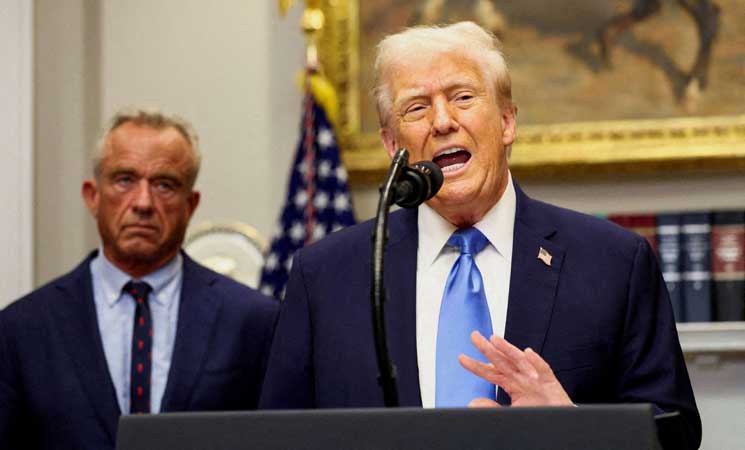
In a controversial move, former President Donald Trump has expressed support for a recent study conducted by the Department of Health and Human Services that recommends reducing the number of vaccinations recommended for American children. The study suggests that the U.S. proposes more vaccines than many comparable countries, igniting a national debate regarding childhood immunization policies. Trump’s request for compliance with this study, which advocates a significant policy overhaul, is sure to influence discussions on public health and vaccination practices moving forward.
The Study’s Findings
On Friday, Trump voiced his endorsement of the January study, which argues for a reduction in the number of vaccines recommended for children. The report highlights that the U.S. offers more immunizations than several peer nations, prompting concerns about the appropriateness and necessity of such an extensive vaccine schedule. As part of this initiative, Trump has signed an executive order directing federal agencies to align their policies with the study’s recommendations.
Previous Actions by the Trump Administration
The Trump administration had previously attempted to reduce the number of recommended childhood vaccinations based on similar findings from earlier reports. However, these efforts faced a setback when a federal judge in Massachusetts blocked the proposed changes, ruling that proper protocols had not been followed. Despite the legal challenges, the administration moved forward with an appeal, emphasizing its commitment to revisiting the vaccination guidelines for children.
Recommended Vaccines and Implications
The study recommends that children be vaccinated against a total of 11 diseases. Additionally, it limits many other vaccinations to at-risk groups or encourages a more collaborative decision-making process between parents and healthcare providers—often referred to as “shared decision-making.” Vaccines for influenza, rotavirus, hepatitis A, and B, among others, may be administered based on individual circumstances, reflecting a tailored approach to childhood immunizations.
Public Reaction and Future Considerations
The endorsement of the study by Trump has sparked significant public discourse on vaccination practices. Advocates for vaccinations worry that reducing the number of recommended vaccines could place children at greater risk for preventable diseases. Conversely, some parents and organizations advocate for more customizable vaccination schedules, viewing the study as a step toward more individualized healthcare. As the nation navigates this critical health issue, the repercussions of Trump’s support for reducing the number of vaccinations will likely reverberate through policy discussions and parental choices for years to come.