
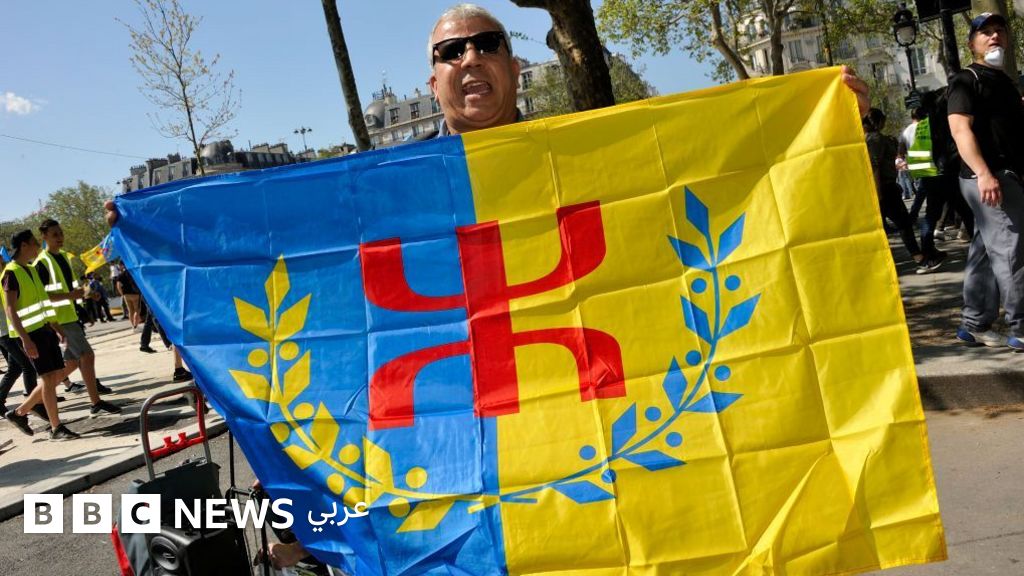
In recent months, tensions have escalated between the United Arab Emirates (UAE) and Algeria, culminating in Algeria’s announcement to sever diplomatic ties with the UAE and close its airspace to all flights registered in the UAE. This decision has been controversial, attributed to various factors, one of which is the movement known as the “Self-Determination for Kabylie” (MAK), which Algeria classifies as a terrorist organisation. The Algerian government accuses the UAE of supporting this separatist group.
On 14 December, during a declaration from Paris, MAK announced the independence of the Kabylie region from Algeria, proclaiming the establishment of a “secular and democratic federal republic of Kabylie”. This unilateral move was met with widespread condemnation from various Algerian political parties, which reiterated their commitment to the unity and territorial integrity of Algeria.
Makers of the Kabylie Region
The Kabylie region, located east of Algiers, is renowned for its mountainous terrain and proximity to the Mediterranean Sea. It encompasses provinces and parts of provinces such as Tizi Ouzou, Béjaïa, Boumerdes, Bouira, Sétif, Bordj Bou Arreridj, and Jijel. The Amazigh people are the original inhabitants of this region, with unofficial estimates of their population ranging between 10 to 15 million, accounting for nearly a quarter of Algeria’s total population.
The term “Amazigh” means “free man”, and historians describe Kabylie as a region with a rebellious spirit, having witnessed various uprisings, including the 19th-century revolt led by Lalla Fatma N’Soumer and the 1871 uprising by Mohamed El-Mokrani. It also saw the establishment of Algeria’s oldest opposition party, the Socialist Forces Front, just a year after the country gained independence from French colonial rule in 1962.
Due to the region’s poor soil fertility and high population density, many Kabyles sought employment opportunities in France, fostering increased educational efforts in the Kabylie Mountains. This educational push has given Kabyle voices prominence both domestically and internationally, according to reports by The Economist.
The Kabyle people have long aspired to promote their language and achieve greater autonomy, a pursuit that has placed them at odds with the Algerian state, which is heavily rooted in Arab identity. In 1980, protests erupted in Kabylie and spread to Algiers, demanding official recognition of the Amazigh language as a “national language”, marking the beginning of the “Amazigh Spring”.
Further protests erupted in April 2001, resulting in violent clashes with security forces that left dozens dead and hundreds wounded, a period now known as the “Black Spring”. In response, the Algerian authorities recognized the Amazigh language as a national language in 2002, followed by a constitutional reform in 2016 making it an official language alongside Arabic.
In 2019, massive protests in Kabylie against then-President Abdelaziz Bouteflika’s bid for a fifth term evolved into broader demands for dismantling the long-standing regime that had been in place since independence.
Understanding the MAK Movement
The Movement for the Autonomy of Kabylie (MAK) emerged as a political force following the upheavals of 2001. Initially known as the “Movement for the Independence of Kabylie”, its early objectives centred around achieving self-governance for the Kabyle region. By 2013, the movement’s aspirations shifted towards independence, culminating in the declaration of independence from Algeria in Paris in December 2025.
Ferhat Mehenni, the founder of MAK and a prominent singer and political activist, was born in Tizi Ouzou in 1951 and has been a key figure in advocating for Kabyle rights. During his studies in political science in Algeria, he helped establish the Algerian League for the Defence of Human Rights. His political activities have led to multiple arrests and sentences in absentia, amounting to prison terms of 15 to 20 years for charges related to belonging to a terrorist organization and threatening national unity.
Mehenni, now residing in France, argues that after Algeria’s independence, Kabylie has become “a colony within the Algerian state”, calling for an end to what he perceives as Algerian dominance over Kabyle territory. Following the declaration of independence, he has assumed the role of president of the self-styled “Temporary Kabyle Government in Exile”.
A Distinct Identity
Analysts view the idea of Kabylie’s independence as largely unrealistic, arguing that the prospects of its fruition are minimal to non-existent. Critics of the separation claim that the region was not occupied in a manner that would warrant independence and that many Kabyles consider discussions of separation as betrayal, especially given the sacrifices made by their ancestors in the liberation struggles against French colonialism.
Conversely, advocates for Kabyle independence argue that the “Kabyle issue” transcends mere political or cultural disputes, framing it as a matter of identity and the right of a people with a distinct heritage to determine their fate. They assert that the existence of the Kabyle people predates the establishment of the Algerian state in 1962.
International reactions to MAK have varied; the movement is not classified as a terrorist organisation in the United States and Canada, where it is viewed as a political entity. In contrast, in Israel, MAK is considered a potential partner in external strategy, due to its democratic and secular outlook and opposition to political Islam, raising speculation about future cooperation regarding normalisation agreements.
Algerian reports have indicated that MAK may receive financial support from Morocco, a claim denied by both the movement and the Moroccan government.