
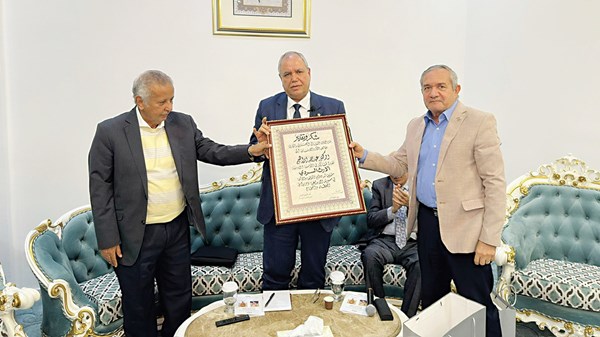
The Arabic Cultural Club recently engaged in a compelling discussion surrounding “الإرث السردي,” led by Dr. Abdullah Ibrahim, a distinguished professor of narrative studies. This event provided a platform for exploring the intricate relationship between cultural phenomena and their inherent concepts, emphasizing the importance of understanding these ideas within their specific context. The dialogue underscored the challenges faced by Arab scholars in studying narrative phenomena, particularly the tendency to impose foreign concepts that may not align with the essence of Arab storytelling traditions.
During the session, hosted in Sharjah and introduced by Dr. Saleh Hweidi, Dr. Ibrahim articulated how foreign terms and frameworks often fall short in grasping the true nature of the Arabic narrative landscape. He asserted, “The Arabic narrative is rich and complex, yet often misunderstood or oversimplified by using inappropriate concepts.” This assertion resonated with the audience, which included Dr. Omar Abdulaziz, the Chairman of the Cultural Club, along with various intellectuals and media representatives.
Dr. Ibrahim elaborated on the significance of the term “الإرث السردي,” tracing its linguistic and conceptual roots. He highlighted the essence of storytelling as an art form that intricately weaves words and ideas, creating a tapestry of meaning. By turning to the rich literary heritage of the Arabic language, he emphasized that the phenomenon of storytelling is deeply embedded in its culture, requiring an understanding that appreciates its unique narrative traditions.
Referencing verses from the Qur’an, Dr. Ibrahim illustrated the mastery within the construction of events and narratives as exemplary models of storytelling. He pointed out that the Qur’anic narratives, together with Hadith literature, serve as foundational pillars of Arab storytelling prowess. Additionally, he discussed the evolution of Arab narratives through history, encompassing biographies, historical accounts, geographic studies, and literature, revealing the breadth and depth of the “الإرث السردي.”
Shifting focus to the pre-Islamic era, Dr. Ibrahim reflected on narratives that shaped Arab culture and beliefs during that time. He noted that many stories were lost due to the influence of pagan beliefs and customs that Islam later challenged. In contrast, poetry, recognized for its emotional resonance, managed to endure, as it did not carry doctrinal weight. This distinction highlights the richness of Arabic narrative, showcasing how “الإرث السردي” evolved in response to cultural shifts and societal changes.
In closing his enlightening discussion, Dr. Ibrahim emphasized that the term “الإرث السردي” encapsulates a long journey of creativity and contribution within Arab culture. His insights underscored the importance of reclaiming and celebrating this narrative legacy, ensuring that the complexities of Arab storytelling are recognized and appreciated in both contemporary discourse and academic study.