Initial Stability in Dubai’s Rental Market as Demand Surges by 15%
The residential rental market in Dubai has shown preliminary signs of stability in September 2026, coinciding with continued demand growth and a wider array of choices for tenants. According to Property Finder, inquiries from renters rose by 15.4% year-on-year.
Moreover, there was an improvement in the number of inquiries per listing for both apartments and villas, with the average required rent for apartments increasing from AED 100,000 in August to AED 105,000 in September.

Sharif Suleiman, Chief Revenue Officer at Property Finder, noted that the asking rents in Dubai have undergone a correction in the third quarter of 2026 compared to the same period in 2025, resulting in significantly more options for renters.
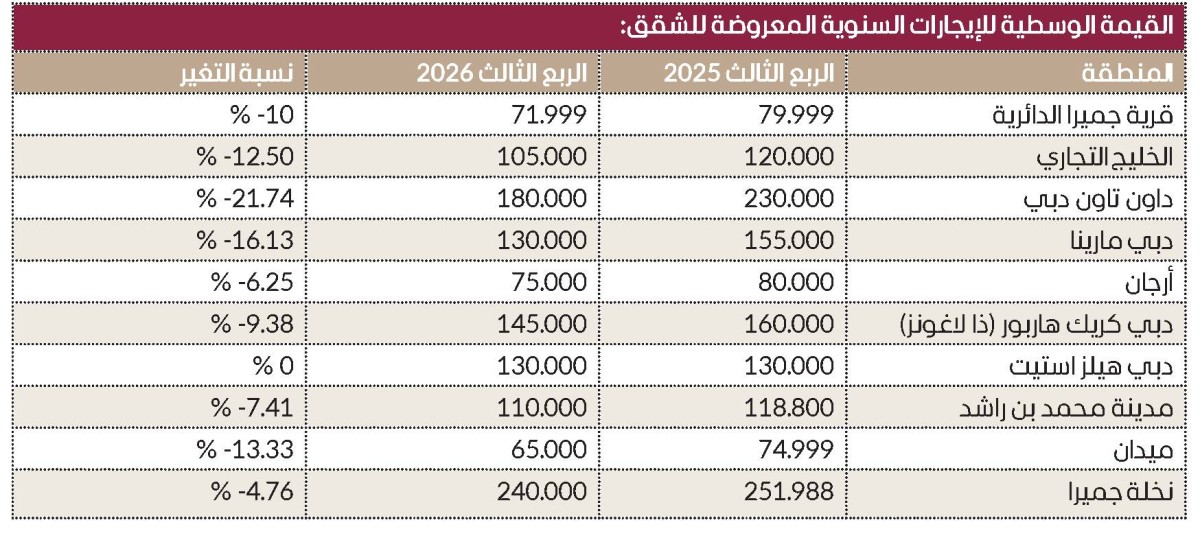
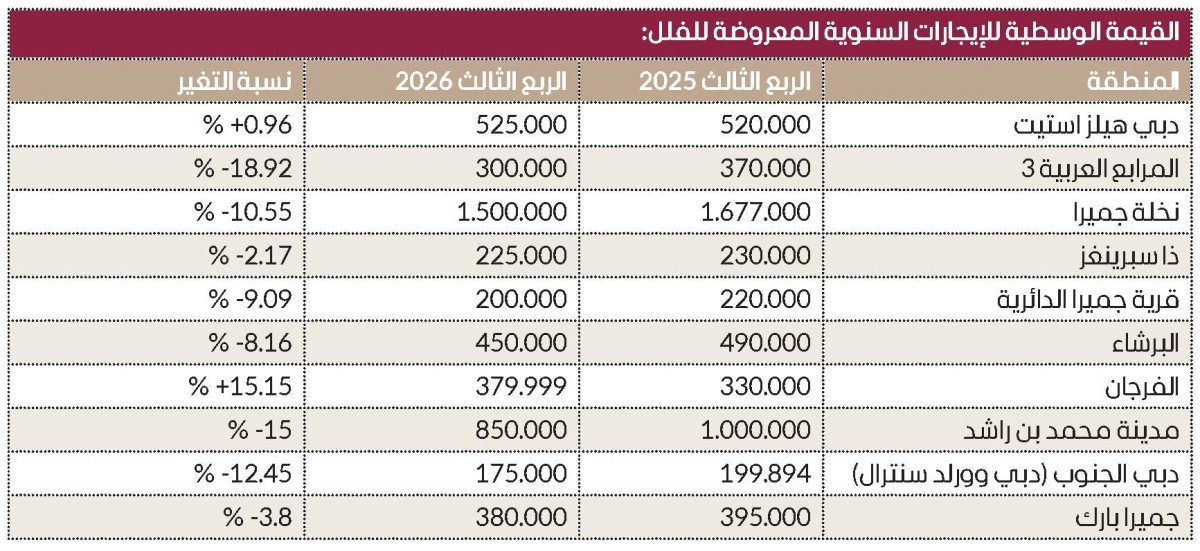
He stated, “Among the ten main areas for apartments we monitor, average asking rents decreased in nine areas between the third quarter of 2025 and the third quarter of 2026, remaining unchanged in one area. Villas experienced a similar trend, albeit at a slower pace, with eight out of ten regions showing corrections in asking rents.”
Suleiman explained that the most notable insight from the data is the increase in available listings. In September 2026, the average number of apartments available for rent on Property Finder rose by 55.1% compared to September 2025, while tenant inquiries increased by 15.4%. As a larger number of units compete for each tenant, landlords were compelled to adjust their pricing. On average, each apartment listing received 23% fewer inquiries than the previous year.
This adjustment occurred gradually rather than as a sudden correction. Over the monitored areas, the average required rent for apartments peaked at AED 135,000 in December 2025 and then steadily declined during the first half of 2026, reaching AED 100,000 by June.
The most significant reductions in pricing were seen in Downtown Dubai, where asking rents fell by 21.74%, and in Dubai Marina by 16.13%. Notably, in Downtown Dubai, asking rents across all apartment sizes dropped, indicating a genuine repricing rather than merely the introduction of smaller units into the market.
Suleiman also highlighted that demand is increasingly concentrated on smaller and more affordable units. In seven out of the ten monitored apartment areas, studio or one-bedroom apartments accounted for the highest share of tenant inquiries.
For instance, in Business Bay, one-bedroom apartments make up 43.1% of the available listings but attract 48.7% of inquiries. In eight out of ten villa areas, three- or four-bedroom villas drew the majority of tenant inquiries.
While the numbers for villas require careful interpretation, Al Furjan was the only area that exhibited a notable increase of 15.15%, partly due to the influx of more five-bedroom villas into the market. Four-bedroom villas, which represent the largest share of inquiries in the area, saw rents rise by 9.4%.
Conversely, rents for three out of five comparable villa categories in the area declined, and while Dubai Hills Estate remains generally stable, five out of six comparable villa categories there recorded declines or stability in their rents.
According to Suleiman, now is an opportune time for tenants to compare options and negotiate, while landlords may need to consider that merely lowering prices may not suffice. Given the current abundance of options in the market, the quality of listings, visibility, and landlord responsiveness have become more critical than ever.
September has shown initial signs of stability, with the average required rent for apartments rising slightly from AED 100,000 in August to AED 105,000 in September, and improved inquiry numbers per listing for both apartments and villas. Although one month is insufficient to confirm a trend, it does represent an encouraging indicator.