
In an era marked by rapid urban growth and increasing vehicle volumes, the UAE is advancing its national plan to tackle traffic congestion through a comprehensive strategy that allocates an impressive 170 billion AED for expanding road networks by 2030. This initiative aims not only to improve road capacity but also to introduce innovative technologies, such as artificial intelligence, to enhance traffic flow and safety across the nation.
National Council Discussions on Traffic Policy
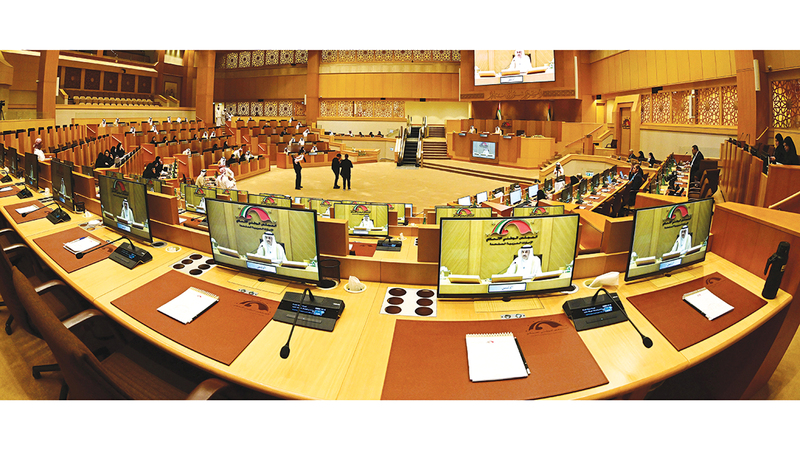
Yesterday, the National Council discussed the government’s approach to ensuring traffic safety and fluidity. The council adopted several recommendations stressing the importance of learning from both local and international experiences while integrating intelligent systems during peak traffic times on major federal roads. The recommendations highlight the need for better collaboration among relevant stakeholders to support sustainable road planning and effective management of incidents and traffic jams.
The aim is to fulfill safety requirements, reduce carbon emissions, and accelerate the creation of a unified platform to ease coordination between federal and local entities. Initiatives will include awareness campaigns to educate drivers on managing their emotions on the road and utilizing real-life accident videos for impactful training.
Framework for Smart Transportation
One recommendation points to the necessity of establishing a unified regulatory framework that sets technical standards and operational guidelines for smart transportation technologies. This framework will govern service providers and licensing conditions for infrastructure, aligning with artificial intelligence systems. Additionally, it requires addressing vehicle ownership regulations to efficiently manage the forecasted increase in trips during peak periods.
Minister of Energy and Infrastructure, Suhail Mohamed Faris Al Mazrouei, stated that the plan to address traffic congestion through 2030 emphasizes expanding road networks and enhancing their capacity. This initiative involves a series of projects worth 170 billion AED, which include 11 billion AED for federal roads, 95 billion AED for local road projects, and 64 billion AED for the “Union Railway” projects, along with the establishment of a fourth federal corridor.
Innovative Transportation Initiatives
The traffic congestion remediation plan will see a significant expansion of federal corridors. This includes increasing the number of lanes from 19 to 33, leading to a 73% efficiency improvement for federal roads. The expected cost of the fourth federal corridor is estimated at 6 billion AED, featuring four overpasses, 120 kilometers of road construction, and providing 12 lanes connecting five emirates, including Abu Dhabi and Dubai. These enhancements aim to elevate daily capacity to 360,000 trips.
Furthermore, the strategy includes the development of mass transit systems, highlighted by the introduction of a high-speed electric train. The “Union Railway” is designed to operate at speeds of 350 km/h, cutting travel time between Abu Dhabi and Dubai down to just 30 minutes. By 2030, the railway sector aims to handle 60 million tons of freight annually, decreasing transportation costs by 30% and diverting around 5,600 truck trips daily to rail services.
Integrating Diverse Transport Networks
The mass transit ecosystem will feature 21,591 shared transport vehicles and include 40 marine routes and 74 stations for public transportation and sea travel. It also encompasses 11 trains and tram stations within light rail networks, alongside 129 metro trains and 53 metro stations within heavy rail systems, complemented by 393 dedicated bus routes. Plans are underway to construct a metro system within Abu Dhabi as well.
Moreover, there’s a commitment to creating an integrated public transport network linking Dubai, Sharjah, and Ajman across ten major routes, alongside a targeted increase in bus utilization by 45% and a boost in marine transport’s share to 35%.
Addressing traffic congestion will focus on five main pillars: enhancing interconnectivity, providing diverse transport options, transitioning to smart mobility, ensuring institutional integration and traffic management, and promoting awareness through effective communication. Minister Al Mazrouei emphasized the importance of regulating vehicle ownership and addressing the growth in vehicle numbers yearly, stressing that legislation is crucial to complement infrastructure projects. Discussions are ongoing to propose new regulations to the Cabinet aimed at managing vehicle ownership effectively.
In addition, the discussions highlighted goals to reduce road accidents and improve overall traffic flow. The Ministry of Interior and the Traffic Council will monitor speed regulations to ensure safety on the roads.
Director General of Legal Affairs at the Ministry of Interior, Brigadier Dr. Rashid Sultan Al Kheder, underscored the existence of bicycle-related challenges, which pose safety risks on roads. He confirmed that regulatory measures are being enforced stringently, aiming to reduce accident rates and fatalities, asserting that the UAE continues to work towards establishing itself as one of the safest countries globally.
The strategic national initiative for addressing traffic congestion is a robust step toward future-proofing the UAE’s transportation infrastructure, ensuring safety and efficiency for all road users while fostering sustainable growth in mobility.