
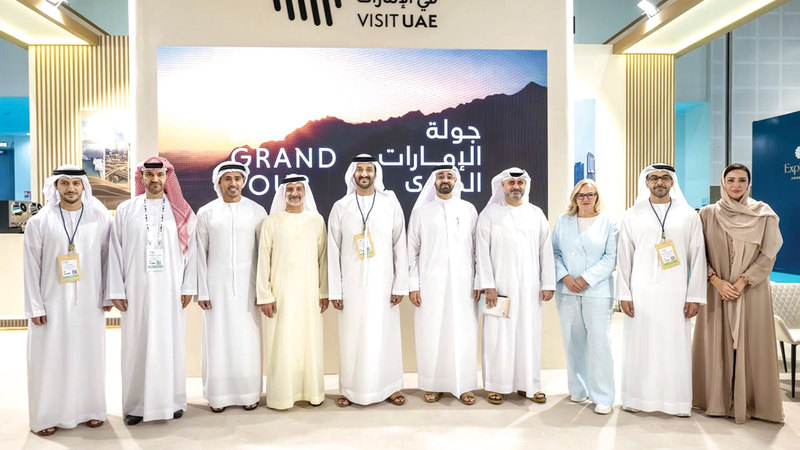
The UAE’s Ministry of Economy and Tourism recently convened the Emirates Tourism Council, headed by Minister Abdullah bin Touq Al Marri. This meeting took place against the backdrop of the Arabian Travel Market 2026, where council members reviewed the performance of the tourism sector and discussed various initiatives aimed at enhancing the integration of the national tourism framework, consolidating promotional efforts, and bolstering the competitiveness of the UAE as a premier destination in international and regional markets.
UAE’s Tourism Sector Growth in 2025
Minister Al Marri emphasised the UAE’s commitment to strengthening the competitiveness of its tourism sector, aiming to establish the nation as a world-leading and sustainable tourist destination. He highlighted growth figures that indicate significant contributions to the economy: the tourism and travel sectors generated approximately 251.3 billion dirhams in 2025, reflecting a 3% increase compared to 2024 and over 22.2% growth from 2019. Furthermore, international tourist spending reached around 209 billion dirhams the previous year, underscoring the vital role of national tourism in economic development.
Collaborative Efforts for Future Growth
The Emirates Tourism Council meeting, held in conjunction with the Arabian Travel Market 2026, underscored the necessity for unified visions and collaborative efforts among various tourism authorities within the country. The council is positioned to leverage the exhibition as a global platform to foster cooperation, enhance integration among national initiatives, develop tourism products and experiences, and improve the UAE’s competitiveness in global markets moving forward.
Focus on Sustainable and Environmental Tourism
The council deliberated on several pivotal topics aimed at promoting sustainable growth within the tourism sector. Central to the discussions were methods to support the recently announced national environmental tourism policy. The UAE boasts 55 protected areas and has rehabilitated approximately 4,900 hectares across deserts, mountains, and beaches, contributing to environmental tourism and reinforcing sustainability as a core component of tourism activities.
Encouraging Community Engagement and Responsible Tourism
Moreover, the council examined strategies for encouraging community involvement in enhancing environmental tourism and promoting responsible travel practices. There was a consensus on the urgent need for establishing a unified national standard for coastal safety that encompasses beaches, waterfronts, and marine activities, ensuring visitor safety while maintaining the integrity of the tourism destination. This comes in tandem with the expansion of coastal and natural offerings across the UAE. The council also agreed to complete a review of the environmental policy within 30 days, appointing a leading representative from each emirate to contribute to diversifying nature-based tourism experiences associated with coastal environments.
Expanding Tourism Beyond Major Cities
Additionally, the council discussed initiatives for developing tourism outside the major urban centres, with a particular focus on collaborating with the ‘UAE Villages’ project in conjunction with the Emirates Council for Balanced Development. The council aims to leverage the ‘Best Tourism Villages’ programme from the United Nations World Tourism Organization, sharing best practices from the global programme to support diversification of tourism products and experiences in the UAE and to maximise the benefits of tourism across the nation.