
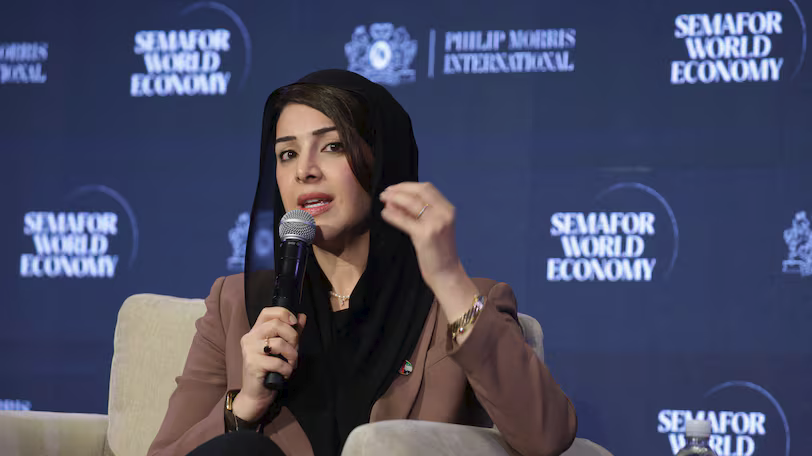
In a recent address, Reem Al Hashimy, the UAE Minister of State for International Cooperation, made a powerful statement regarding the status of maritime routes, specifically the Strait of Hormuz. She emphasized that this vital waterway is not the possession of any single nation, underscoring the importance of ensuring freedom of navigation for global trade stability. The discourse surrounding the Strait of Hormuz highlights its critical role in international relations, trade, and security. As global commerce increasingly hinges on these maritime passages, Al Hashimy’s remarks call for a collective responsibility to maintain their open and unrestricted use.
International Waters as Public Property
During her speech at the Semafor Global Economy Summit in Washington, Al Hashimy asserted that international waterways, particularly the Strait of Hormuz, are public assets that cannot be controlled or monopolized by any country or entity. She articulated that freedom of navigation is essential for global economic stability, reinforcing that the security of these channels is directly tied to the world’s trading systems.
Moreover, she highlighted the well-defined regulations governing critical straits, such as the Strait of Hormuz and the Strait of Malacca, as established by international law and treaties. These legal frameworks are designed to protect these waterways from any attempts at appropriation or disruption, ensuring that trade can proceed unimpeded across international lines.
The Link Between Navigation and Global Security
Linking freedom of navigation to global livelihood security, Al Hashimy noted that waterways like the Strait of Hormuz are essential arteries through which commercial vessels transport crucial supplies, including food, oil, and gas. She affirmed that unobstructed access to these resources is an international right protected by law, separate from narrow political agendas. The discussion surrounding the Strait of Hormuz takes on heightened significance given its role in the world’s energy supplies.
With the Strait of Hormuz being a vital conduit for nearly one-fifth of global energy supplies, it serves as a key passage for various essential goods, including 30% of global fertilizers, 25% of liquefied natural gas, and 25% of the world’s oil supplies. Consequently, any disruption in this channel can have far-reaching implications for economies worldwide.
The Threat of Control
Al Hashimy cautioned that any attempt by a party to exert control or impose conditions on those transiting these maritime routes effectively weaponizes them against others. Such actions not only violate international law but also pose a direct threat to the very framework of international cooperation that relies on free trade. By asserting that the Strait of Hormuz must remain open and free, she called for unity in upholding international norms regarding these crucial passageways.
In her closing remarks, Al Hashimy emphasized the need for sustainable solutions to conflicts that address the underlying causes of instability. Protecting global trade routes and essential economic infrastructure is critical for the continued cooperation and stability of international markets. The future of maritime navigation rests on collective vigilance and commitment to maintaining these waters as shared global resources.