
Recent Iranian missile attacks on the United Arab Emirates have prompted a strong international response. Officials and foreign ministers are condemning Iran’s brazen assaults on the UAE, leading to urgent discussions among leaders from several allied and neighboring nations. This heightened tension in the region has become a focal point for diplomatic communications aimed at addressing the escalating situation and reinforcing commitments to regional stability.
Crucial Diplomatic Conversations
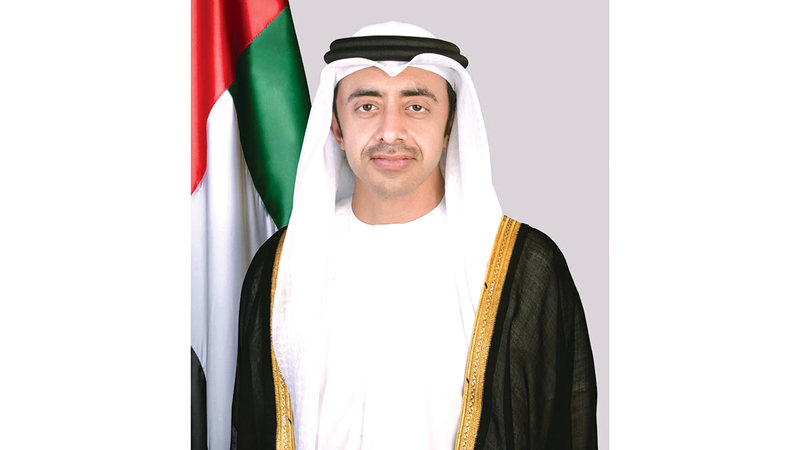
His Highness Sheikh Abdullah bin Zayed Al Nahyan, Deputy Prime Minister and Minister of Foreign Affairs of the UAE, engaged in extensive phone discussions with various foreign ministers from allied and friendly nations. Key topics included the ongoing regional developments following the Iranian attacks that targeted both the UAE and several other nations.
Among those involved in these conversations were Hussein Sheikh, Deputy President of Palestine; Sheikh Mohammed bin Abdulrahman Al Thani, Prime Minister and Minister of Foreign Affairs of Qatar; and Ayman Safadi, Deputy Prime Minister and Minister of Foreign Affairs and Expatriates of Jordan. Also included were Antonio Tajani, Italy’s Deputy Prime Minister and Minister of Foreign Affairs; Sergey Lavrov, Minister of Foreign Affairs of the Russian Federation; and Dr. Badr Abdelatty, Egypt’s Minister of Foreign Affairs and Expatriates.
Consequences of Escalation
The discussions highlighted the dire implications of the current escalation and the potential for conflict expansion. The leaders collectively condemned the Iranian actions as direct violations that threaten regional and international security, destabilizing global economic conditions and energy security.
Sheikh Abdullah bin Zayed and the participating foreign ministers vehemently expressed their disapproval of the Iranian missile strikes against the UAE and neighboring countries. They reaffirmed the legitimate right of the targeted nations to defend themselves, emphasizing the need for protections of their sovereignty, security, and the well-being of their people, as mandated by international law.
The Call for Responsible Dialogue
In addition to condemning the attacks, the ministers stressed the importance of exercising restraint and prioritizing constructive dialogue. They underscored the necessity for serious discussions aimed at resolving the current crisis in a manner that ensures lasting peace, security, and prosperity for the region’s inhabitants.
As the situation continues to evolve, the global community remains watchful, advocating for diplomatic solutions amidst heightened tensions. The collective frustration over the Iranian actions serves as a reminder of the delicate balance that must be maintained to secure stability in the Middle East.