
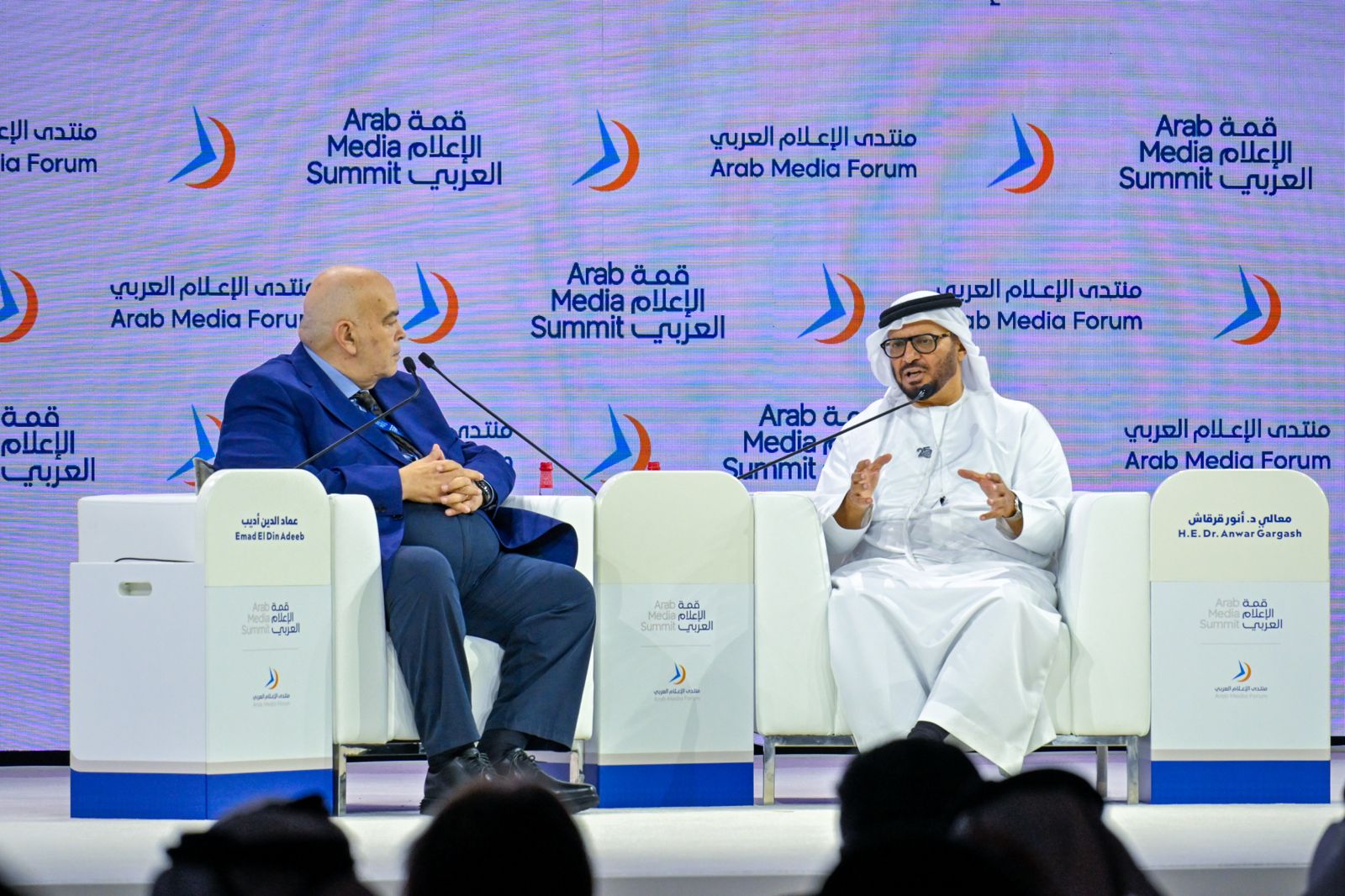
During the Arab Media Summit in Dubai, Dr Anwar Gargash, the diplomatic advisor to the UAE President, underscored that the region remains in a critical confrontation with Iran. He emphasised that managing this crisis with minimal damage is essential, especially in light of the disintegration of the existing security mechanisms in the area and the urgent need for new understandings.
UAE’s Approach to Iran
Dr Gargash articulated that the UAE’s current stance towards Iran encompasses several facets, primarily focusing on deterrence, defending national sovereignty, and fostering the necessary flexibility for dialogue. This dialogue aims to create a new framework and pave the way for potential reconciliation.
The Need for Dialogue and Reconciliation
He noted that relations with Iran must be built on the pillars of dialogue and reconciliation. This dialogue should extend beyond daily matters such as trade, aviation, and maritime activities to ensuring non-aggression and exploring a future that maintains regional stability.
Building Trust Takes Time
Dr Gargash pointed out that establishing trust with Iran will take many years, as the UAE and other Gulf nations have faced significant and premeditated Iranian aggression. He referenced Iran’s leadership, citing that the Iranian president had previously acknowledged that attacking Gulf states was a mistake—a strategic error that has complicated Iran’s position long-term. He urged Iranian decision-makers to reassess their perspectives towards the Gulf countries.
A Call for Peace and Friendship
He further asserted, “The most crucial step right now is to halt the war to start a new relationship. The UAE has defended itself and will continue to do so, but it also extends a hand of friendship and dialogue.” Although there was no comprehensive agreement after the meeting between Abu Dhabi Crown Prince Sheikh Khalid bin Mohammed bin Zayed Al Nahyan and Iranian President Massoud Bezheh Kian on the sidelines of the BRICS summit, there is an understanding of the need to turn the page and look towards the future.
UAE’s Leadership Amidst Challenges
Dr Gargash praised UAE President Sheikh Mohammed bin Zayed Al Nahyan for adeptly managing one of the region’s most challenging crises, highlighting his dual role as a promoter of both deterrence, concerning state security, and diplomacy aimed at forming new agreements to address the current crisis.
The Interconnectedness of Security
He reiterated that “the security of Saudi Arabia is the security of the UAE,” noting the interconnected nature of the Gulf’s security landscape. The stability of the Gulf Cooperation Council (GCC) is in the best interest of all member states, and any threats to Saudi Arabia consequently affect the UAE. He acknowledged the region’s struggles with militias and reiterated that open channels with Saudi Arabia are vital, emphasising that the security, stability, and prosperity of Saudi Arabia are inextricably linked to that of the UAE. The control of the Houthi militia over Bab al-Mandab raises significant concerns, extending beyond regional impacts to global economic worries.
Arab Media Summit Highlights
The 24th Arab Media Summit concludes today at the Dubai World Trade Centre, featuring discussions led by prominent national officials, editors-in-chief, writers, analysts, content creators, and influencers from 23 countries. Over three days, more than 175 sessions covered a broad agenda that included eight forums: the Arab Media Forum, the Government Communication Forum—held for the first time within the summit, the Arab Youth Media Forum, the Film Forum, the E-sports Forum, the Arab Social Media Pioneers Summit, the “Dubai Podfest,” and the “Euronews” Forum, which took place outside Europe for the first time.
The summit also recognised the winners of the Arab Media Award, celebrating its silver jubilee this year, as well as the Arab Youth Media Award “Creativity” in its tenth edition, along with the Arab Social Media Pioneers Award.