
The recently concluded Arab Media Summit 2026 in Dubai was not just another ordinary event; it was an exceptional gathering, marking its largest iteration to date, characterised by an extensive participation and a wide array of sessions and activities. This summit united leaders, officials, experts, academics, journalists, influencers, and content creators from around the globe, all drawn together by the pressing questions facing the industry.
Central themes such as the future of journalism, the evolution of content, the rise of digital platforms, and the impact of artificial intelligence were scrutinised, reflecting the profound transformations reshaping the media landscape and its interactions with audiences.
Held from September 15th to 17th, the summit was not only rich in discussions but also launched several initiatives and announcements looking towards the future of media and creative industries. Notably, it heralded the return of the Dubai International Film Festival, set to take place in December 2027.
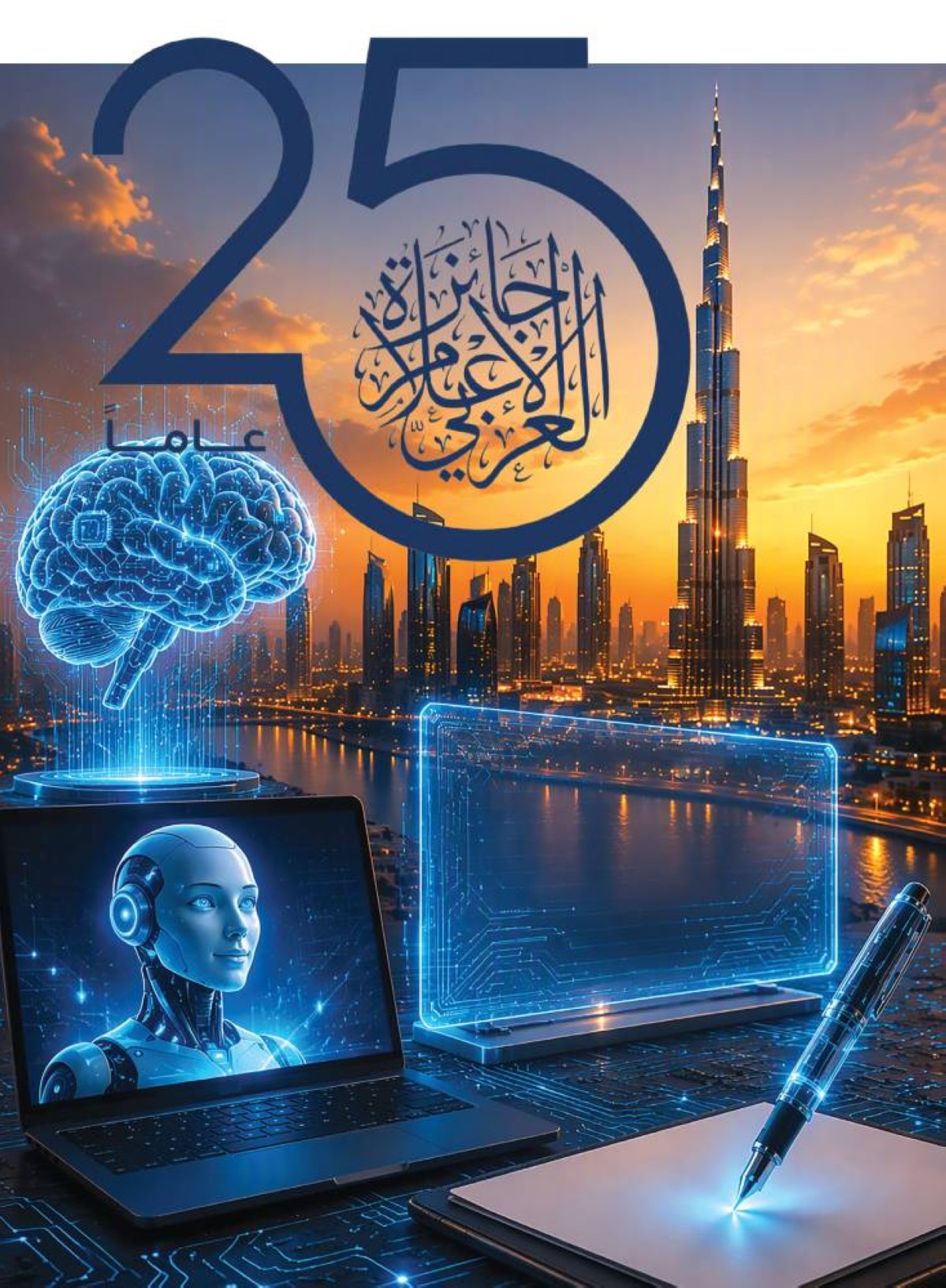
This year’s summit also held special significance as it coincided with the silver jubilee of the Arab Journalism Award, bringing together a legacy of 25 years of journalistic achievement with a forward-looking vision.
The Beginning of the Journey
The narrative of this unique annual media event is deeply intertwined with its foundational journey. It all began with the establishment of the Dubai Press Club in 1999 under the guidance of His Highness Sheikh Mohammed bin Rashid Al Maktoum, Vice President of the UAE and Ruler of Dubai. From the outset, the vision extended beyond merely creating a meeting place for journalists; it aspired to establish a platform where media professionals could engage, exchange ideas, and foster dialogue.
The early days were characterised by warmth and simplicity, with the club serving as a youthful gathering for journalists, offering social events, sports competitions, and group outings across the Emirates. However, the full scope of what this initiative would eventually encompass was not yet evident.
In the same year, Sheikh Mohammed bin Rashid Al Maktoum launched the Arab Journalism Award, tasking the Dubai Press Club with its establishment and regulations, creating a platform for celebrating excellence in journalism and nurturing creativity within the profession.
The Growth of the Initiative
Alongside the award, the Arab Media Forum was introduced, offering an additional platform for dialogue on various pressing issues in the field, including journalism, media, politics, economics, and societal transformations impacting the media’s engagement with news. Thus, the gathering evolved from merely recognising excellence to becoming a space for discussing the profession and its future direction.
Year after year, the event saw increased participation, attracting heads of state, decision-makers, ministers, thinkers, and media experts, all while the media landscape itself was undergoing a seismic shift. The focus transitioned from traditional print media to a multimedia environment where screens, platforms, and smartphones coexisted, culminating in an era dominated by algorithms and content creators. In parallel, the award itself evolved considerably.
In 2021, the Arab Journalism Award was transformed into the Arab Media Award under Sheikh Mohammed’s guidance, broadening its scope to encompass various new media domains and reflecting the dynamic nature of the contemporary media environment.
From Initiative to Ecosystem
As the media landscape expanded, the Dubai Media Council was established, chaired by His Highness Sheikh Ahmed bin Mohammed bin Rashid Al Maktoum, to enhance the integration of the media ecosystem in the emirate, encompassing visual, audio, written, and digital media as well as content production, film, gaming, and media talent development.
The Arab Media Summit is a testament to this integration, encapsulating years of initiatives and experiences spanning the Arab Media Forum, the Arab Youth Media Forum, and the Arab Social Media Pioneers Summit, alongside specialised forums and awards that celebrate media excellence and aspiring talent.
This year’s summit, coinciding with the 25th anniversary of the Arab Media Award, seemed to encapsulate a quarter-century journey within just three days. The present and the beginnings are intertwined; what started as a platform for dialogue and recognising achievement has transformed into a broader space uniting traditional and digital media, content creation, technology, and artificial intelligence.
Moreover, this year’s summit was not solely focused on reflecting upon the past but also laid down initiatives and strategies looking ahead. Dubai Media Incorporated showcased its platforms and projects while “Dubai Plus” expanded its partnerships in the media and entertainment sectors, aiming to enhance the presence of Emirati and Arab content both regionally and globally.
The Dubai Media Academy also presented a knowledge programme addressing the future of media professions, the new generations’ relationship with content, AI, digital misinformation, podcasts, and trust in media, alongside expanding its network of partnerships with educational, media, and academic institutions, emphasising that investing in the future of media also begins with investing in its human capital.
A particularly significant announcement was made regarding the return of the Dubai International Film Festival. On the final day of the summit, Her Excellency Mona Ghanem Al Marri, Deputy President and Managing Director of the Dubai Media Council, announced that the festival will return for its fifteenth edition on December 8, 2027, featuring a new vision that aligns with the evolving film industry and strengthens Dubai’s position in cinematic and creative production, supported by the Dubai Film and Electronic Games Office.
The festival’s return, after years of absence, encapsulates the notion that initiatives may fade but can regain vitality when the city identifies a renewed need for the future. Thus, these initiatives born from this space now reflect not only an addition to an annual event’s programme but are also indicative of Dubai’s visionary media perspective and its capacity to pivot seamlessly from one initiative to another while maintaining a focus on the essential questions: What kind of media do we envision? What future lies ahead?
Readers, Viewers, and Transformation of Tools
As we step into the autumn of 2026, it is apparent that the event has not evolved in isolation; the media landscape has also undergone significant changes. The journalism of a quarter-century ago bears little resemblance to the present; tools, speed, and mediums have transformed, and so too have readers and viewers, with everyone now carrying a small newsroom in their pockets.
New terminologies have entered the professional lexicon, which were absent in initial discussions: platforms, algorithms, influencers, content creators, and artificial intelligence. Moreover, it is not just journalists’ tools that have morphed; the very boundaries of the profession have shifted. What was once a period when a journalist awaited the morning’s newspaper has transitioned to a reality where news is birthed and reaches its audience within the same moment, shifting the focus from rapidity of access to the importance of what deserves to be disseminated and whom to trust for that content.
In the midst of this, an enduring question remains: What ultimately remains of journalism when its tools evolve? Perhaps one answer lies within the summit itself. Technology may shift the medium, yet it does not erase the necessity for media professionals to convene, converse, and sometimes disagree while questioning the credibility of information, the responsibility of expression, and the future of media.
This ongoing evolution, step by step, narrates not only the story of a growing institution but also illustrates a chapter of Dubai’s journey in redefining its media role and identity. From a press club uniting professionals to an Arab award and dialogue forum, culminating in a summit attracting thousands and bringing together decision-makers, experts, and media specialists.
Between Pen, Keys, and Screen
The silver jubilee of this Arab gathering carries a distinct significance for those who have witnessed its beginnings and returned to see how far the idea has travelled after 25 years.
Within the summit’s hallways this autumn, it was possible to reconnect with colleagues met long ago, alongside young faces who may have been born when the journey began. This juxtaposition reveals the true distance that media has traversed: a generation that physically visited printing presses and a new generation carrying their platforms in smartphones.
Between ink and screen lies a quarter-century of transformation. The paper has changed, the screens have evolved, and the ways stories reach audiences have adapted, yet the essence of storytelling still requires a discerning eye, a questioning mind, and a responsible conscience. The need for words and those who express them with accountability remains largely unchanged.
We were present in those early days, and we are present now, after a quarter of a century. Between these two scenes lies a lengthy narrative that began in a pressroom in Dubai, driven by a vision that recognised early on the media’s role extends beyond mere news reporting. It has opened its doors wider each year, evolving into a venue for the Arab media to seek, in an ever-changing world, the path to the future.