
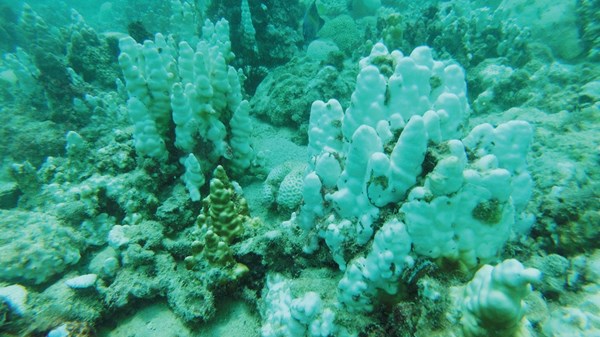
High temperatures during the summer in the Arabian Gulf are a concerning issue, as recent research conducted by the Mubadala Center for Climate and Environment Research of the Arabian Gulf at New York University Abu Dhabi reveals the main reasons behind this significant increase. This understanding provides vital insight for environmental scientists and local authorities, helping them predict hazardous environmental conditions two to three months in advance. In this article, we will review the research findings and how marine heatwaves impact the marine environment and surrounding ecosystems.
Reasons for Rising Temperatures
The study is based on long-term monitoring processes and advanced simulation models, revealing that high summer temperatures in the Arabian Gulf lead to marine heatwaves that negatively affect coral reefs and fish stocks. Researchers noted that changes in wind patterns play a crucial role, particularly the weakening of northwesterly winds, known as the Shamal winds, and the increasing strength of the Indian monsoon winds during the summer. As a result, humidity in the atmosphere rises, and heat is trapped on the surface of the sea.
The Impact of La Niña on the Environment
The La Niña phenomenon, which makes the tropical Pacific Ocean cooler than usual, can increase the likelihood of these changes. Simultaneously, the North Atlantic oscillations weaken, affecting the path of storms over the Atlantic Ocean. These combined factors lead to the Gulf waters recording the highest temperatures during the summer. As explained by Zuheir Al-Ashqar, the lead researcher in the study, “Marine heatwaves in other oceans often occur under cloud-free climatic conditions. However, in the Arabian Gulf, the highest temperatures occur under humid and foggy conditions.”
Predicting Marine Heatwaves
John Burt, the co-lead researcher of the study, confirmed that the research findings could significantly contribute to the advance prediction of extreme heatwaves. These results provide stakeholders with the opportunity to monitor and protect sensitive ecosystems like coral reefs. Such predictions help in taking measures to safeguard biodiversity and fish stocks. This effort reflects the main objectives of Mubadala, which focus on producing regionally relevant research with global impact.
The Importance of Scientific Research in Adapting to Climate Change
The study emphasizes the necessity of developing early warning systems for marine heatwaves in the Arabian Gulf, which is vital for environmental protection. It stresses that climate change will continue to impose severe weather patterns, amplifying the need to adapt environmental policies and develop modern technologies to address these challenges. New York University Abu Dhabi ranks among the top 31 universities globally, reflecting the high level of education and scientific research in the United Arab Emirates.