Explore 12 traditional Emirati dishes and six Dubai restaurants, from machboos and balaleet to luqaimat, plus a food trail and November 2026 events.
Dubai is famous for restaurants that seem to defy imagination. Underwater dining rooms, celebrity-chef destinations and spectacular rooftop terraces have helped turn the city into a global food capital. But if you really want to discover what Dubai tastes like, the most memorable meal might be something far simpler.
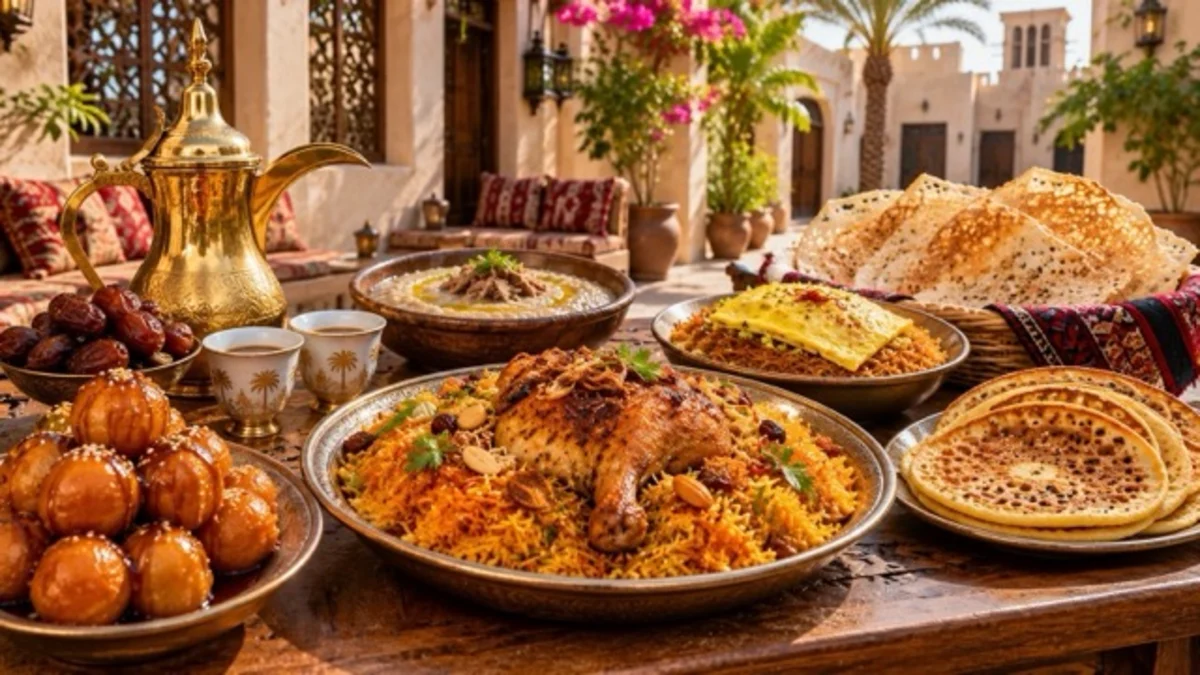
Imagine beginning your morning with sweet saffron-scented vermicelli and freshly prepared Emirati bread. Later, you sit down to fragrant chicken machboos, cooked with aromatic spices and dried lime. And as the afternoon fades over Dubai Creek, someone pours golden Arabic coffee from a traditional dallah, accompanied by a small bowl of dates.
This is a different side of Dubai’s food scene: one shaped by family traditions, desert life, coastal communities and centuries of trade across the Arabian Gulf.
Whether you are visiting the UAE for the first time or have lived here for years, discovering traditional Emirati food in Dubai is one of the most rewarding ways to understand the country’s culture.
In this 2026 guide, we explore 12 traditional Emirati dishes, six restaurants worth visiting, essential local drinks and a suggested culinary trail through Dubai. We also highlight special food experiences taking place in November as the city prepares to celebrate the UAE’s 55th Eid Al Etihad.
What Makes Emirati Cuisine Different?
Emirati cooking tells the story of a country where communities learned to make the most of the desert, the sea and the ingredients brought by merchants travelling between Arabia, India, Persia and East Africa.
Rice, fish, meat, wheat, dates and traditional breads became important elements of everyday meals. Spices such as cardamom, saffron, cinnamon, turmeric and dried lime helped create flavours that remain distinctive today.
The result is a cuisine that often balances savoury and sweet elements, aromatic rice with slow-cooked meat, and simple ingredients with remarkably complex flavours.
One particularly important ingredient is loomi, a dried lime used to introduce citrusy, earthy notes into rice dishes, stews and broths.
Hospitality is equally important. Food is traditionally associated with generosity and gathering, while sharing dishes and offering refreshments are expressions of welcome.
The official Visit Dubai guide to the history of Emirati cuisine explores how desert resources, fishing traditions and international trade influenced these recipes.
It is worth making a distinction: while hummus, shawarma and falafel are widely enjoyed throughout Dubai, they belong to broader Middle Eastern culinary traditions. Emirati cooking has its own rich identity, and the dishes below offer a more direct introduction.
1. Machboos: The Aromatic Rice Dish You Should Try First
Best for: lunch, dinner and first-time visitors discovering Emirati cuisine.
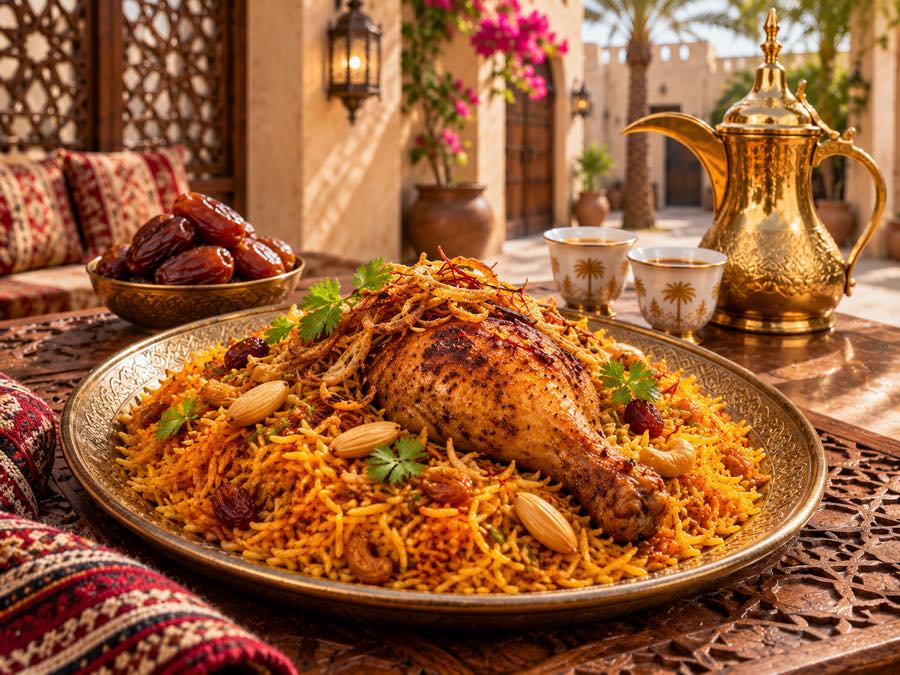
If you only have time to try one traditional Emirati main course, make it machboos, also written as majboos or makbous.
This fragrant rice dish is often prepared with chicken, lamb, fish or seafood. The ingredients are cooked with a mixture of spices that can include dried lime, cardamom, cinnamon, cloves, turmeric and saffron.
Unlike an ordinary plate of rice with meat, machboos develops much of its character from the seasoned cooking liquid absorbed by the grains.
Every household and restaurant may have its own version. Some are deeply aromatic and richly spiced, while others are lighter, allowing the flavour of the fish or meat to stand out.
What to order: Chicken machboos is an approachable introduction. Fish machboos offers another dimension, reflecting the UAE’s long connection with the sea.
Where to try it: Al Fanar Restaurant & Cafe offers chicken, fish and meat variations. You can explore its official Al Seef menu before visiting.
2. Balaleet: The Sweet-and-Savoury Breakfast That Surprises Visitors
Best for: breakfast and travellers interested in unusual flavour combinations.
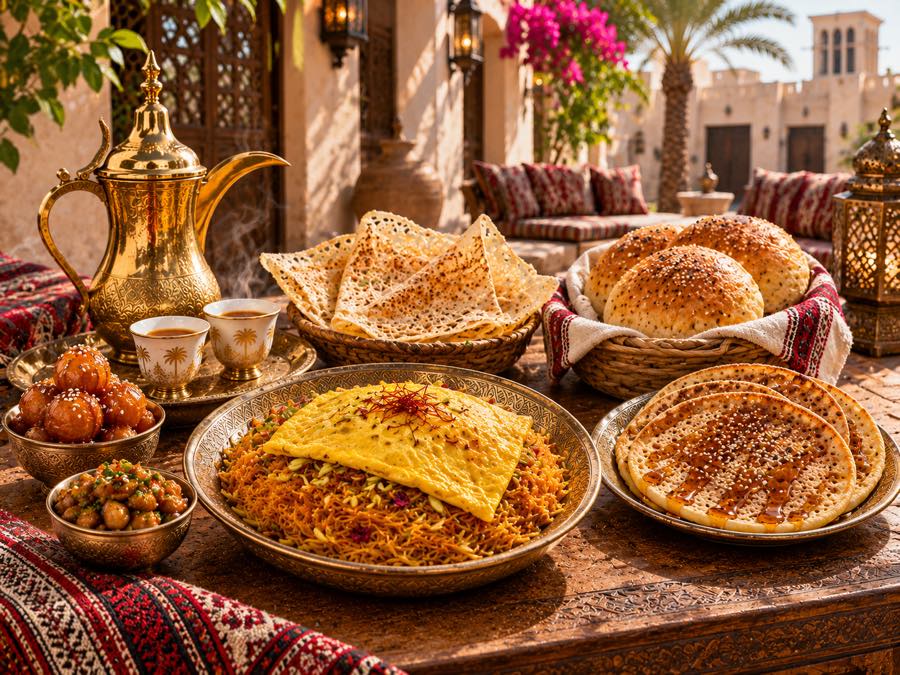
One of the most distinctive dishes in Emirati breakfast culture is balaleet, a preparation of sweet vermicelli flavoured with cardamom and often saffron, traditionally accompanied by eggs.
To someone unfamiliar with the dish, sweet noodles and eggs might sound unexpected. But the combination makes sense once tasted.
The vermicelli provides delicate sweetness and fragrance, while the eggs introduce a savoury contrast that balances the entire plate.
Balaleet is also an excellent example of how familiar ingredients can become something completely different through local culinary traditions.
Where to try it: SMAT in Dubai Design District lists Balaleet Baitna on its official menu, described as vermicelli prepared with saffron and cardamom.
The restaurant’s published menu lists this dish at AED 40 at the time of writing. Prices may change.
Menu: SMAT Restaurant.
3. Chebab: Emirati Pancakes with a Fragrant Twist
Best for: leisurely breakfasts, families and anyone who loves pancakes.
Dubai’s international brunch scene may be famous for elaborate pancake stacks, but the UAE has its own traditional version.
Known as chebab, these pancakes are commonly prepared with a batter containing flour, sugar and aromatic ingredients such as cardamom or saffron.
The finished pancakes can be served with honey, date syrup, cheese or other accompaniments, depending on the restaurant and family tradition.
Chebab is particularly appealing because it feels both familiar and different: comforting like a traditional pancake, yet distinctly regional in its flavour.
Where to try it: Al Khayma Heritage Restaurant and SMAT are useful starting points for exploring traditional Emirati breakfast dishes.
4. Khameer: Soft Emirati Bread That Deserves More Attention
Best for: breakfast, sharing plates and discovering traditional baked goods.
Khameer is a traditional Emirati bread often associated with breakfast and home-style cooking.
Unlike the thin, crisp texture of regag, khameer is softer and thicker. Its flavour can carry subtle sweetness and the aroma of traditional spices.
It is commonly served with cheese, honey or date syrup, making it a particularly versatile choice for a relaxed morning meal.
For visitors who usually order croissants or toast, khameer is an excellent way to explore a different side of Dubai’s breakfast culture.
Contemporary restaurants have also begun reinterpreting it. SMAT, for example, includes a Khameer Benedict on its menu, combining a familiar modern breakfast format with traditional Emirati bread.
Dubai Lifestyle recommendation: Try a simple traditional serving first before exploring the modern variations.
5. Regag: The Thin, Crispy Emirati Flatbread
Best for: a quick breakfast, light snack or savoury treat.
Regag is another essential part of Emirati bread culture, but it offers a completely different texture from khameer.
Made by spreading a thin batter across a hot surface, regag develops crisp edges and a delicate texture.
It can be enjoyed plain or filled with ingredients such as egg, cheese, honey or mahyawa, a strongly flavoured fish-based sauce.
This makes regag particularly interesting for adventurous eaters. One version may be mild and comforting, while another can offer a distinctly savoury, salty flavour.
Where to try it: SMAT includes regag with a choice of fillings on its menu, with a published starting price of AED 16.
Official menu: SMAT Regag.
6. Dango and Bajella: Traditional Emirati Breakfast Comfort Food
Best for: vegetarian-friendly breakfast choices and anyone interested in everyday local dishes.
Not every memorable Emirati dish revolves around meat or elaborate preparation.
Dango, typically made with chickpeas, and bajella, made with fava beans, are traditional foods that demonstrate the importance of simple, nourishing ingredients.
Prepared with seasonings that can vary between kitchens, these dishes are associated with breakfast and informal gatherings.
They can be eaten alongside bread and other small plates, making them a useful addition to an Emirati breakfast spread.
Where to try them: SMAT’s published Emirati breakfast selection includes both dango and bajella.
Dubai Lifestyle tip: If travelling with friends, consider ordering an assortment of traditional breakfast dishes instead of having everyone choose the same item.
7. Harees: A Slow-Cooked Dish with Deep Cultural Roots
Best for: traditional meals and understanding Emirati hospitality.
Harees is a dish that shows how simple ingredients can become deeply satisfying through time and careful preparation.
It is traditionally made using wheat and meat, cooked slowly until the mixture reaches a thick, smooth consistency.
The final dish has a comforting, porridge-like texture and may be finished with ghee.
Harees has an important place in Emirati food culture and is especially associated with family gatherings, Ramadan and Eid celebrations.
For diners accustomed to grilled meats and rice, its softer texture may be surprising. But that difference is precisely what makes the dish worth trying.
Where to look: Traditional Emirati restaurants and heritage dining experiences. Availability can be seasonal, so confirm that harees is on the current menu before visiting.
8. Thareed: The Traditional Bread and Stew Combination
Best for: hearty meals and travellers who enjoy comforting stews.
Thareed is a deeply satisfying dish built around slow-cooked meat, vegetables and bread.
The bread absorbs the flavourful broth, creating a combination of soft textures and rich seasoning.
Depending on the recipe, thareed may include lamb, chicken or other ingredients, with vegetables contributing sweetness and body to the sauce.
The dish demonstrates a central feature of Emirati cooking: transforming familiar ingredients into a generous meal intended to be shared.
What makes it special? The combination of soaked bread and slow-cooked stew produces a texture unlike the rice-based dishes that many visitors expect.
Dubai Lifestyle tip: Ask whether the restaurant offers a traditional thareed preparation, as recipes and menus vary.
9. Jesheed: A Taste of Dubai’s Maritime Heritage
Best for: seafood enthusiasts and adventurous diners.
Dubai’s culinary history cannot be separated from the Arabian Gulf.
Long before the city became an international metropolis, fishing and maritime trade played important roles in coastal communities.
Jesheed reflects those traditions. It is made with shredded shark meat cooked with onions, spices and other flavourings, depending on the recipe.
The dish has a distinctive texture and offers a perspective on local seafood traditions that many international visitors may never have encountered.
Where to try it: Al Fanar includes jesheed among its traditional seafood dishes.
Official information: Al Fanar Restaurant & Cafe.
Responsible dining note: Shark species differ in conservation status. Diners concerned about sustainability should ask about the species, origin and sourcing of seafood, or choose another traditional fish dish.
10. Muhammar: Sweet Rice Traditionally Paired with Fish
Best for: discovering less familiar Gulf flavour combinations.
Muhammar may surprise visitors who assume rice is always served in savoury form.
Traditionally prepared with ingredients such as date molasses, ghee and spices, muhammar develops a sweet, aromatic character.
It is often paired with fish, creating a striking contrast between the sweetness of the rice and the savoury seafood.
This combination reflects an important characteristic of Emirati cuisine: sweet and savoury flavours frequently appear together rather than being reserved for separate courses.
Muhammar is featured in Visit Dubai’s official guide to traditional Emirati dishes.
Dubai Lifestyle tip: Muhammar is not necessarily available at every Emirati restaurant. Check the current menu or ask whether it can be prepared on request.
11. Luqaimat: The Golden Emirati Dessert You Cannot Miss
Best for: dessert lovers, afternoon refreshments and sharing.
Few Emirati sweets are as instantly appealing as luqaimat.
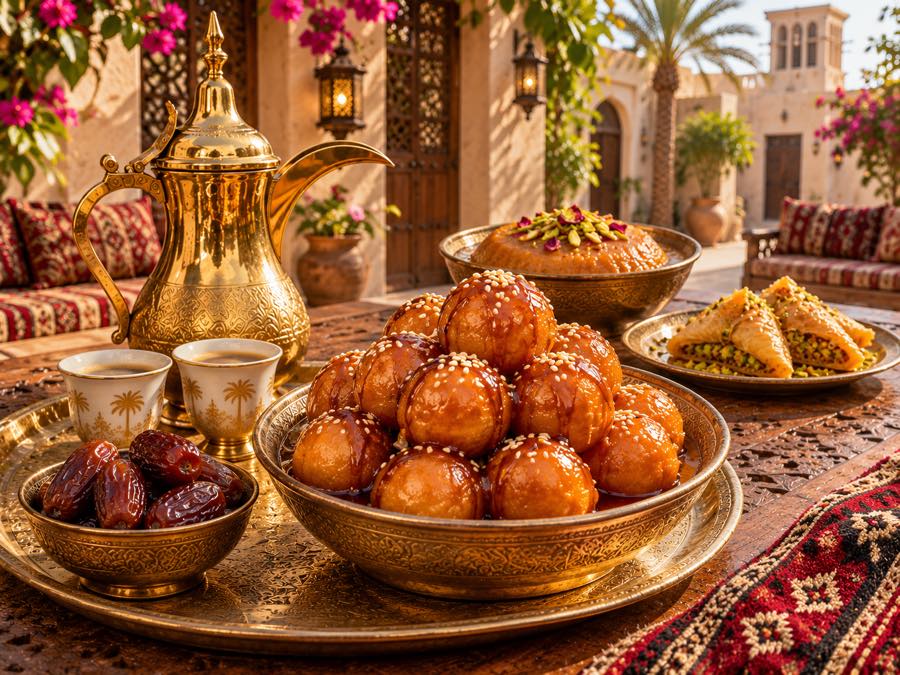
These small golden dumplings are fried until the exterior becomes crisp while the centre remains soft and airy.
They are typically finished with date syrup or another sweet syrup and may be sprinkled with sesame seeds.
The result is a dessert that is rich, comforting and particularly enjoyable while still warm.
Luqaimat are popular during celebrations and family gatherings, but they can also be found at restaurants and traditional food venues throughout the year.
Where to try them: Al Fanar is one option, while heritage restaurants in Al Fahidi and Al Seef are also useful places to explore local desserts.
Dubai Lifestyle recommendation: Pair a serving of luqaimat with Arabic coffee for a traditional finish to your meal.
12. Khabeesa: A Traditional Sweet with a Homemade Character
Best for: travellers who want to explore desserts beyond familiar pastries.
Khabeesa is a traditional sweet preparation commonly made using roasted flour or semolina, ghee and sweet ingredients that can include dates.
Its flavour and texture vary depending on the recipe, but it is often associated with home cooking and family hospitality.
Unlike glossy restaurant desserts built around elaborate decorations, khabeesa is appreciated for its comforting flavour and traditional character.
It offers an opportunity to discover how modest ingredients have long been transformed into satisfying sweets throughout the region.
Where to find it: Ask traditional Emirati restaurants about their current dessert selection, particularly during cultural and festive celebrations.
Traditional Drinks in Dubai: Gahwa, Karak and Laban
A genuine Emirati food experience is not complete without discovering the region’s drinks.
Gahwa: Arabic Coffee and the Ritual of Hospitality
Gahwa, also written as qahwa, holds a special place in Emirati hospitality.
This traditional Arabic coffee is commonly flavoured with cardamom and may include saffron. It is often served from a distinctive dallah coffee pot into small handleless cups called finjan.
Unlike the milk-based coffee drinks found in international cafes, gahwa is typically light in colour and served without milk, accompanied by dates.
The combination is wonderfully balanced: the dates contribute sweetness while the coffee provides warmth and fragrance.
Accepting coffee is also part of the broader social tradition of welcome and hospitality.
Karak: Dubai’s Beloved Spiced Milk Tea
Karak is one of the most recognisable everyday drinks in the UAE.
Made with strong tea, milk and often cardamom or other spices, it reflects the culinary connections between the Gulf and South Asia.
Although karak is not exclusively Emirati in origin, it has become deeply woven into everyday life across the country.
Visitors will encounter it in everything from small neighbourhood tea shops to contemporary cafes.
Laban: A Refreshing Alternative
For something cooler and less sweet, laban is a refreshing fermented milk drink often enjoyed with food.
Its tangy flavour can be particularly satisfying alongside richly seasoned dishes.
Traditional preparations and commercial varieties differ, so check the ingredients if you have dietary restrictions.
For more background on food and drink traditions, explore Visit Dubai’s official cultural heritage guide.
Where to Eat Traditional Emirati Food in Dubai: 6 Restaurants Worth Visiting
Knowing what to order is only half the experience. The setting, atmosphere and style of cooking can make a traditional Emirati meal even more memorable.
These six restaurants offer different approaches, from heritage courtyards to contemporary Emirati-inspired dining.
1. Arabian Tea House – Al Fahidi
Best for: traditional breakfast, Arabic coffee and an atmospheric Old Dubai experience.
Set within Al Fahidi Historical Neighbourhood, Arabian Tea House is one of Dubai’s most recognisable heritage dining destinations.
Its light-filled courtyard, traditional architectural details and relaxed atmosphere make it a popular place to enjoy a leisurely breakfast or afternoon refreshments.
Expect traditional breads, regional breakfast dishes, tea, Arabic coffee and a broader selection of Emirati and Middle Eastern food.
The restaurant is particularly appealing for first-time visitors because it can be combined with a walk through the surrounding historic streets.
Address: Al Fahidi Street, Al Fahidi Historical Neighbourhood, Bur Dubai.
Official website: Arabian Tea House
Reservations: Official table reservation page
2. Al Khayma Heritage Restaurant – Al Fahidi
Best for: heritage surroundings, Emirati breakfast and an immersive cultural meal.
Al Khayma Heritage Restaurant is another excellent choice within the historic Al Fahidi district.
The restaurant draws inspiration from traditional Emirati hospitality, combining local cuisine with a setting that reflects the region’s architectural heritage.
Visitors can explore regional breakfast dishes, breads, rice preparations, meat dishes and seafood, depending on the menu.
Al Khayma is also included in the MICHELIN Guide’s Dubai restaurant selection, recognition that reflects its place within the city’s dining landscape.
Address: Al Fahidi Historical District, Bur Dubai.
Official website: Al Khayma Heritage Restaurant
MICHELIN Guide: Restaurant listing
3. Al Fanar Restaurant & Cafe – Al Seef
Best for: traditional Emirati mains, seafood and a nostalgic Dubai Creek setting.
Al Fanar Restaurant & Cafe is designed to evoke the Dubai of an earlier era.
Its heritage-inspired interiors complement a menu built around dishes such as machboos, jesheed, traditional stews and desserts.
The Al Seef location offers an especially attractive setting for visitors exploring Dubai Creek and the historic parts of the city.
Al Fanar’s Al Seef branch is included in the MICHELIN Guide Dubai 2026 restaurant selection.
Address: Al Seef, Dubai Creek, Dubai.
Official website: Al Fanar Restaurant & Cafe
Menu: Al Seef menu
Locations: Official branch directory
4. SMAT – Dubai Design District
Best for: Emirati breakfast, traditional bread and contemporary interpretations of regional favourites.
For visitors who want to see how local cuisine fits into modern Dubai, SMAT is an interesting contrast to the heritage restaurants of Al Fahidi.
Located in Dubai Design District, the restaurant celebrates Emirati ingredients and culinary traditions while introducing contemporary influences.
Its breakfast selection includes balaleet, dango, bajella, khameer and chebab, while regag and other breads provide opportunities to explore familiar ingredients in new forms.
The official menu lists an Emirati breakfast selection, along with individual dishes for guests who prefer to sample smaller portions.
Address: Dubai Design District, Building 10, Dubai.
Official website: SMAT
Menu: Official SMAT menu
Contact: +971 4 580 2429
5. Gerbou – Nad Al Sheba
Best for: design enthusiasts, contemporary Emirati-inspired cuisine and a refined cultural experience.
Gerbou takes a different approach to celebrating Emirati food and hospitality.
Located in Nad Al Sheba 1, the restaurant brings together traditional influences and contemporary culinary ideas in a carefully designed environment.
The property itself is part of the story. Its interiors reflect local craftsmanship, regional design and an appreciation for materials associated with the UAE’s cultural heritage.
The menu draws on Emirati and broader Arab culinary traditions, while offering creative interpretations that feel contemporary rather than strictly traditional.
Gerbou is included in the MICHELIN Guide Dubai restaurant selection.
Address: Nad Al Sheba 1, Dubai.
Official website: Gerbou
MICHELIN Guide: Gerbou restaurant listing
6. Aseelah – Radisson Blu Hotel, Dubai Deira Creek
Best for: contemporary Emirati dining and exploring the heritage of Dubai Creek.
Located within Radisson Blu Hotel, Dubai Deira Creek, Aseelah offers a refined interpretation of Emirati and Middle Eastern flavours.
The restaurant’s approach provides another perspective on regional cuisine, making it an interesting choice for visitors who prefer a hotel dining environment.
Its location in Deira also makes it convenient to combine lunch or dinner with a walk through one of Dubai’s historic commercial districts.
Ask about the current Emirati specialities and seasonal menu, as the selection may change.
Address: Radisson Blu Hotel, Dubai Deira Creek, Baniyas Road, Deira.
Official hotel dining page: Aseelah at Radisson Blu Dubai Deira Creek
A One-Day Emirati Food Trail Through Dubai
If you want to turn your discoveries into a memorable experience rather than simply visiting one restaurant, consider this suggested itinerary.
Morning: Traditional Breakfast in Al Fahidi
Start your day at Arabian Tea House or Al Khayma Heritage Restaurant.
Order a selection of Emirati breakfast dishes, such as balaleet, chebab or traditional bread, depending on the available menu.
Take time to enjoy the courtyard surroundings before walking through the historic Al Fahidi neighbourhood.
The district offers a refreshing contrast to Dubai’s futuristic skyline, with narrow lanes, traditional architecture and cultural attractions.
For further inspiration, explore Dubai Lifestyle’s guide to seven experiences in Old Dubai beyond the skyscrapers.
Afternoon: Explore Dubai Creek and Al Seef
Continue towards Dubai Creek and Al Seef.
This waterfront district combines heritage-inspired architecture with restaurants, cafes and pedestrian spaces.
For lunch, choose Al Fanar and explore traditional Emirati rice or seafood dishes.
Chicken machboos makes an accessible first choice, while seafood lovers may prefer fish machboos or another regional speciality.
Afterwards, take a walk beside the Creek, explore the surrounding streets or enjoy a traditional coffee.
Evening: Discover Modern Emirati Cuisine
Complete the experience with a contemporary interpretation of local flavours.
Gerbou in Nad Al Sheba offers a refined setting for a more design-led dinner, while SMAT in Dubai Design District provides another perspective on traditional ingredients.
These are separate destinations requiring transport from Old Dubai, so plan your evening according to your preferred location.
The contrast between heritage restaurants and modern Emirati-inspired venues reveals just how varied Dubai’s food culture has become.
What’s Happening in November 2026? Emirati Food Takes Centre Stage
November 2026 is an especially interesting moment to explore local cuisine, as Dubai prepares to mark the UAE’s 55th Eid Al Etihad on 2 December.
Two initiatives offer additional opportunities to discover the country’s culinary identity.
The Emirati Chef’s Table: Founders Series
Dubai SME and Kitopi have collaborated on an initiative supporting 12 Emirati chefs and culinary entrepreneurs over three months, from September through November 2026.
The programme gives emerging local food businesses opportunities to present their concepts and reach new audiences through Kitopi’s network.
The final group of participating founders is featured during November, with the programme running until 30 November 2026.
For residents and visitors interested in supporting homegrown culinary talent, this initiative offers an additional way to explore the UAE’s evolving food scene.
Official information: The Emirati Chef’s Table: Founders Series.
Flavours of the Union: 26 November to 6 December 2026
Dubai’s Eid Al Etihad celebrations will also include a citywide dining initiative called Flavours of the Union.
Running from 26 November to 6 December 2026, the programme invites participating restaurants to celebrate the country’s culinary identity through Emirati-inspired food experiences and special treats.
Individual menus, offers and participation may vary, so visitors should consult official announcements and participating venues for the latest details.
This is a particularly appealing opportunity for anyone who wants to combine a culinary experience with Dubai’s cultural celebrations.
Official information: Visit Dubai – 55th Eid Al Etihad celebrations.
Dubai Lifestyle has also covered the occasion in Dubai Celebrates 55 Years of Unity with Spectacular Events.
How to Order Traditional Emirati Food for the First Time
Trying unfamiliar food is part of the pleasure of travelling, but a few simple strategies can make the experience more rewarding.
- Start with something familiar: Chicken machboos, chebab and luqaimat are approachable choices for first-time visitors.
- Order several dishes to share: A selection of traditional breads, breakfast dishes and mains provides a broader introduction than ordering a single large meal.
- Ask about ingredients: Some dishes contain wheat, dairy, egg, fish or nuts. Always inform the restaurant about allergies or dietary restrictions.
- Explore different textures: Harees, thareed and regag are very different from familiar grilled-meat dishes.
- Try Arabic coffee with dates: It is one of the simplest ways to appreciate a central tradition of Emirati hospitality.
- Check the current menu: Traditional and seasonal dishes may not be available at every restaurant throughout the year.
Frequently Asked Questions About Emirati Food in Dubai
What is the most famous traditional Emirati dish?
Machboos is among the UAE’s most recognisable traditional main dishes, prepared with fragrant rice, spices and meat or seafood.
What do Emiratis traditionally eat for breakfast?
Traditional breakfasts may include balaleet, chebab, khameer, regag, dango, bajella and eggs, accompanied by tea or Arabic coffee. Meals differ between households and restaurants.
Is traditional Emirati food spicy?
Emirati cuisine is often aromatic rather than intensely hot. Cardamom, saffron, dried lime, cinnamon and other spices contribute flavour, although some preparations may be stronger than others.
Where can tourists try authentic Emirati food in Dubai?
Al Fahidi and Al Seef are excellent starting points. Arabian Tea House, Al Khayma Heritage Restaurant and Al Fanar are established options, while SMAT and Gerbou offer different interpretations of local cuisine.
Is Emirati food suitable for vegetarians?
Some traditional breads, breakfast dishes, chickpea preparations and sweets can be vegetarian, depending on the ingredients. Others contain meat, fish or animal-derived ingredients. Always confirm with the restaurant.
What is the difference between Emirati food and Arabic food?
Arabic cuisine encompasses numerous regional traditions across the Arab world. Emirati cuisine is the culinary heritage of the United Arab Emirates, with its own ingredients, preparations, traditions and influences.
Why Discovering Emirati Food Is One of Dubai’s Most Authentic Experiences
Dubai’s most extraordinary culinary experiences are not always found in its tallest buildings or most expensive dining rooms.
Sometimes they are found in a quiet courtyard, where fresh bread is prepared in front of you, in the aroma of cardamom rising from a cup of Arabic coffee, or in a shared platter of rice that carries generations of family tradition.
To explore traditional Emirati food is to discover a part of the UAE that exists beyond luxury hotels, shopping malls and record-breaking attractions.
And in a city that welcomes flavours from across the world, that connection to local identity feels more meaningful than ever.
For more inspiration, discover Dubai Lifestyle’s feature on the richness of traditional Emirati cuisine and explore the restaurants celebrated in the 2026 Careem dining awards.
The Dubai Lifestyle recommendation: On your next visit to Dubai, go beyond the familiar. Order something you have never tasted, ask about the story behind the dish and discover the extraordinary food heritage of the Emirates.
Editorial note: Published November 2026. Restaurant menus, operating hours, prices and reservations are subject to change. The recommended venues and dishes are an editorial selection, not a paid ranking. Cultural information draws on official Visit Dubai resources and restaurant publications. Individual dish availability should be confirmed directly with the restaurant.