
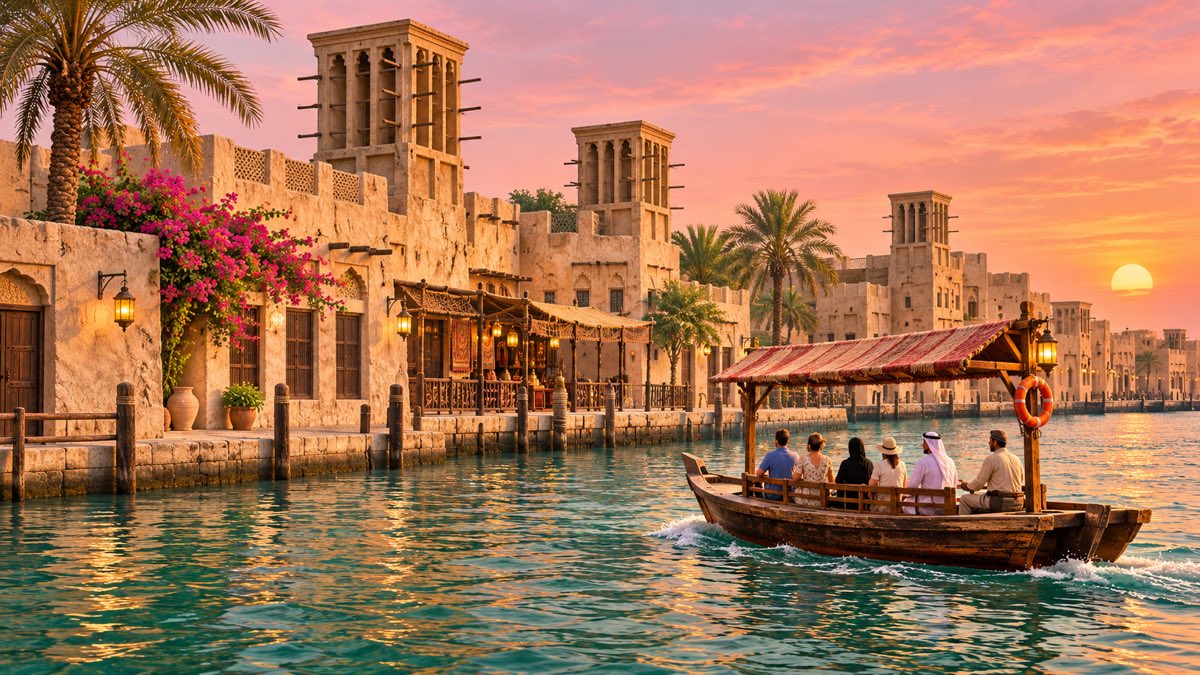
A wooden boat crossing the Creek. A quiet courtyard beneath a wind tower. A fragrance with a story behind it. Some of Dubai’s most memorable experiences happen far below the skyline.
Dubai’s skyscrapers may capture your attention first, but its older neighbourhoods offer another reason to fall in love with the city. Around Dubai Creek, narrow lanes, waterfront markets and cultural spaces reveal the traditions and trading connections behind its extraordinary growth.
These seven Old Dubai experiences bring that side of the city into focus. Whether you are visiting for the first time or looking for something different on your next trip, they offer an inviting mix of architecture, food, fragrance and life beside the water.
A little planning makes the experience better
Al Fahidi, Al Shindagha and Al Seef are on the Bur Dubai side of the Creek. The Spice Souk is across the water in Deira. Choose a few stops and leave time to explore, rather than trying to fit everything into one afternoon.
1. Discover the wind towers of Al Fahidi
In Al Fahidi Historical Neighbourhood, look above the winding lanes. The district’s distinctive wind towers were an early cooling solution, offering a glimpse of how buildings responded to the climate before modern air conditioning.
Part of the pleasure is noticing the smaller details: a shaded passage, a courtyard entrance or the outline of a tower against the sky. Galleries and cultural spaces give you reasons to linger beyond the photographs.
Take your time: Put the camera away for a few minutes and follow the lanes. The neighbourhood is more rewarding when you experience its layout as well as its architecture.
2. Cross Dubai Creek on a traditional abra
A traditional abra ride is both a practical crossing and a change of perspective. From the water, the buildings, boats and activity along the banks become part of the experience.
The Roads and Transport Authority lists a fare of AED 1 per passenger, per trip for its motorised traditional abra services between Bur Dubai and Deira Old Souq, and between Dubai Old Souq and Al Sabkha. Payment for these services is in cash.
Before boarding: Confirm the route and fare. Private cruises and other boat services have different prices.
3. Explore Emirati fragrance traditions at Perfume House
At Perfume House, part of Al Shindagha Museum, fragrance offers a different introduction to Emirati heritage. The displays explore the role of scent in local traditions and its connections with trade and cultural life.
For anyone who enjoys perfume, the appeal goes beyond finding a new fragrance. It is an opportunity to understand the stories and customs behind something you encounter throughout the city.
Plan your visit: Check the museum’s current admission information and available experiences before setting out.
4. Learn how the Creek helped shape Dubai
Also at Al Shindagha Museum, Dubai Creek: Birth of a City explores the city’s development through multimedia displays, photographs and artefacts, including the influence of maritime trade and life beside the water.
Visiting adds context to the waterfront outside. The Creek becomes easier to appreciate as a place of movement, work and exchange, rather than simply a scenic stop.
Make the connection: After the exhibition, spend a little time beside the water and consider how its role relates to the city around it.
5. Share an Emirati cultural meal
Food creates an opening for conversation. The Sheikh Mohammed bin Rashid Al Maktoum Centre for Cultural Understanding offers cultural meals in a traditional wind-tower house in Al Fahidi, combining local dishes with discussion about Emirati customs and daily life.
It is a thoughtful option for visitors who want to ask questions and understand more about the culture around them. The conversation can be as memorable as the meal itself.
Book ahead: Check the available programmes and reservation requirements directly with the centre.
6. Follow your curiosity through the Spice Souk
In Deira, the Spice Souk offers a colourful introduction to ingredients and aromas from across the region and beyond. Cardamom, cinnamon, teas and dried goods make browsing part of the attraction.
Ask how an unfamiliar spice is used or choose an ingredient you can cook with at home. A small purchase with a story behind it can become a particularly satisfying souvenir.
Shop thoughtfully: Confirm the quantity and total price before buying. Ask permission before photographing sellers or other shoppers.
7. Enjoy the waterfront atmosphere at Al Seef
Al Seef combines heritage-inspired design with a contemporary waterfront setting. Its walkways, shops and places to eat make it an appealing place to slow down beside Dubai Creek.
Appreciate it alongside nearby Al Fahidi, while recognising the difference between a heritage-inspired destination and a historic neighbourhood. Each offers its own reason to visit.
Stay for the light: Sunset is an attractive time for a waterfront walk. Leave room to sit down and enjoy the setting instead of rushing to the next stop.
How to plan your Old Dubai outing
For a manageable introduction, explore Al Fahidi and then take an abra to Deira’s souks. If a cultural meal is your priority, arrange your day around the booking.
Give Al Shindagha Museum enough time of its own, especially if you want to explore several exhibitions. Al Seef can be a separate waterfront outing or an additional stop when your schedule allows.
Wear comfortable shoes, carry water and plan outdoor walking around the weather. Confirm opening hours, bookings and transport details with the relevant operators.
Frequently asked questions about Old Dubai
Where should I start in Old Dubai?
Al Fahidi is a useful starting point for heritage architecture and cultural experiences. From there, choose between a museum visit at Al Shindagha or a Creek crossing towards Deira’s souks.
How much does a traditional abra ride cost?
RTA lists AED 1 per person, per trip for the two motorised traditional abra routes described in this guide. Check the service before boarding, as other boat trips have different fares.
Is Old Dubai worth visiting after Downtown Dubai?
Yes, especially if you enjoy architecture, culture, food and local history. The Creek districts offer a different perspective that complements Dubai’s modern landmarks.
The skyline shows how far Dubai has grown. Time beside the Creek helps you understand the stories behind it.
Visitor information is based on the official sources linked throughout this article. Fares, opening hours and programme availability may change.