
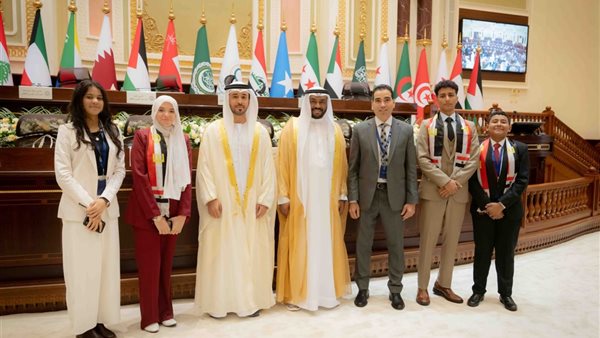
The discussion surrounding the protection of digital content has garnered significant attention, particularly among young people. Recently, a group of children from Egypt participated in a pivotal session in Sharjah, UAE, addressing the theme “Cybersecurity: Towards Child-Friendly Content for Arab Children.” This gathering, organized by the Arab Parliament for Children, highlighted the importance of empowering youth in discussions about their digital rights and safety.
Youth Participation in International Forums
The National Council for Childhood and Motherhood of Egypt sent a delegation of young parliament members to the third session of the fourth Arab Parliament for Children held in Sharjah. The delegation included children Fardah Mohammed Magdy, Malak Hany Abdel-Maboud, Mohammed Mamdouh, and Ahmed Mohammed El-Sawy, accompanied by Mr. Ali Abdel-Aal, General Director of Publishing at the council. Dr. Sahar El-Senbaty, the head of the council, emphasized that the participation of children in international forums is crucial for shaping policies that cater to their needs, fostering a culture of positive engagement, and building a conscious generation capable of representing their country effectively on the global stage.
Insights from the Session
During the main session, child delegate Malak Hany articulated the subtle dangers present in today’s digital environment, stating, “The danger is no longer visible; it has transformed into a hidden message and content that infiltrates children’s minds.” She noted the exemplary efforts of the National Council for Childhood and Motherhood in Egypt, which has been instrumental in enhancing legislative frameworks and expediting legal actions regarding child-related crimes. Significant initiatives like “Amani.com” and “Wai and Ghali” have been launched to safeguard children from online threats.
Recommendations for Digital Content Safety
The children collaboratively proposed launching an Arab charter for child-friendly content, encouraging content creators and digital platforms to adhere to it. They underscored the necessity of integrating digital security education at all school levels and creating online platforms that offer psychological support to children affected by online violence. Ahmed Mohammed El-Sawy pointed out, “We are a generation living in a digital world, using technology for learning, communication, and achieving dreams. The internet is both a school and a creative platform, but it can also pose dangers if used carelessly.” He advocated for comprehensive cybersecurity education to protect children from digital threats.
Across Borders: The Urgency of Legislation
Fardah Mohammed Magdy further stressed the importance of viewing children’s online safety as a universal concern. She mentioned Egypt’s approach to this issue as a matter of human security, reflected in the strategies developed by the Ministry of Communications, including the child helpline (16000) for reporting online harassment. Additionally, she highlighted the president’s directive for legislation regulating children’s use of social media to protect their rights in the digital space. The children collectively urged for an obligatory regional law to criminalize online harassment and create a unified network for child helplines across the Arab world.
As discussions conclude, the voices of Egypt’s children echo a broader call for awareness and proactive measures to secure their digital landscapes. They recognize the transformative potential of technology while demanding frameworks to safeguard their rights and well-being in an increasingly digital environment.