
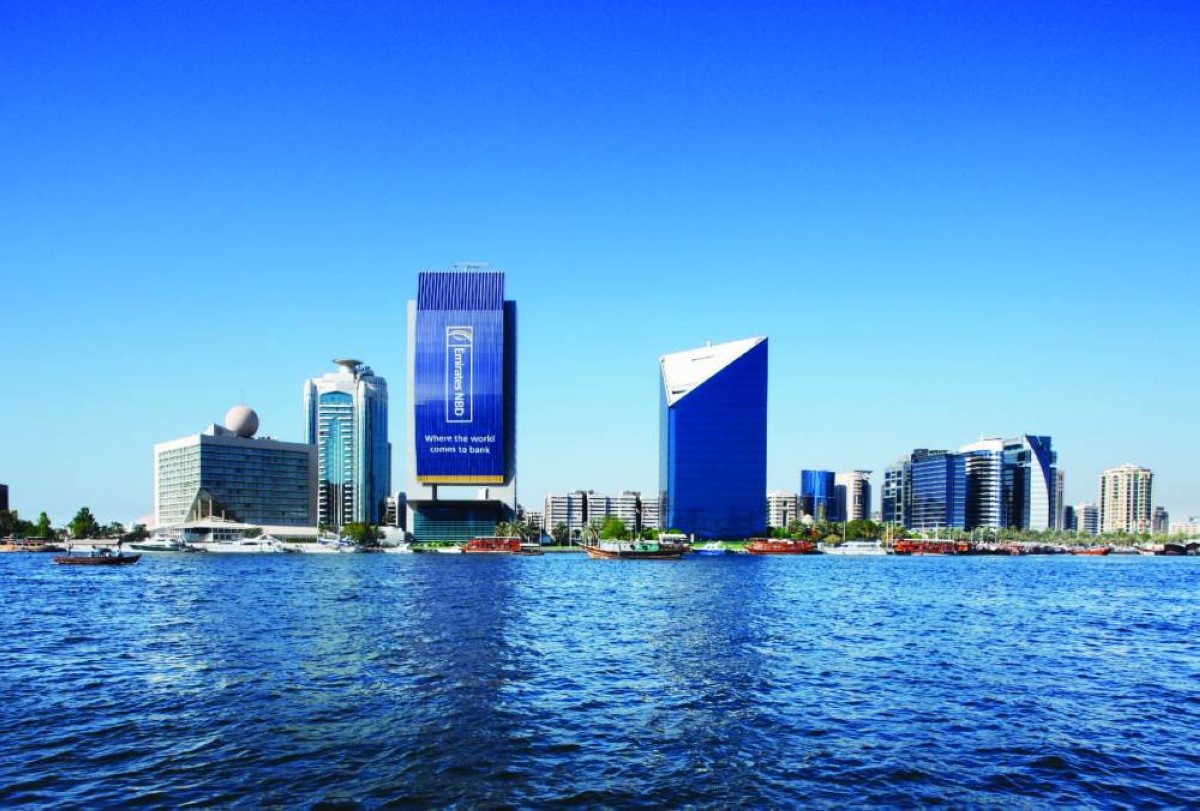
In a move that reinforces strong growth expectations, Emirates NBD has announced a new expansionary budget for Dubai that spans three years and is expected to achieve the largest spending in its history. This historic budget for Dubai confirms strong GDP growth projections, with an anticipated continuation of this growth to reach 4.5% next year and 4% by 2027. This report analyzes the various aspects of this budget and its positive impact on Dubai’s economic future.
Financial Details of the New Budget
His Highness Sheikh Mohammed bin Rashid Al Maktoum, Vice President, Prime Minister, and Ruler of Dubai, issued the expansionary budget for the years 2026-2028, which includes a budget for 2026 estimated at a total expenditure of 302.7 billion dirhams. In this context, the Department of Finance expects expenditures in 2026 to reach 99.5 billion dirhams, reflecting a significant increase of 15.4% over the planned figure for 2025.
Budget Surplus and Future Outlook
The budget indicates a surplus of 8.2 billion dirhams, which is equivalent to 1.5% of the expected GDP for 2026. This surplus serves as evidence of the strong performance of Dubai’s economy, as the city has not recorded a budget deficit since 2020. Additionally, the new Dubai budget contributes to bolstering hopes for the UAE’s economy as a whole, with expectations of a national surplus reaching 4% by 2026.
Infrastructure Investment Focus
The significant commitment to infrastructure investment is reflected in the budget, with 48% of total expenditure, amounting to 47.8 billion dirhams for 2026, allocated for this purpose. This spending is focused on the development of roads, public transportation, and renewable energy projects. This clearly demonstrates a strong focus on improving spatial infrastructure, which is essential to accommodate future population growth.
Digitization Programs and Social Transformation
In a related context, approximately 28% of the budget is allocated for social spending, reflecting Dubai’s commitment to enhancing health, education, and housing sectors. Additionally, 6% is directed towards government development, including digitization programs aimed at improving efficiency and reducing future operational expenses. This historic budget for Dubai supports strong growth expectations across all these areas, as the city aims to excel in all sectors.