
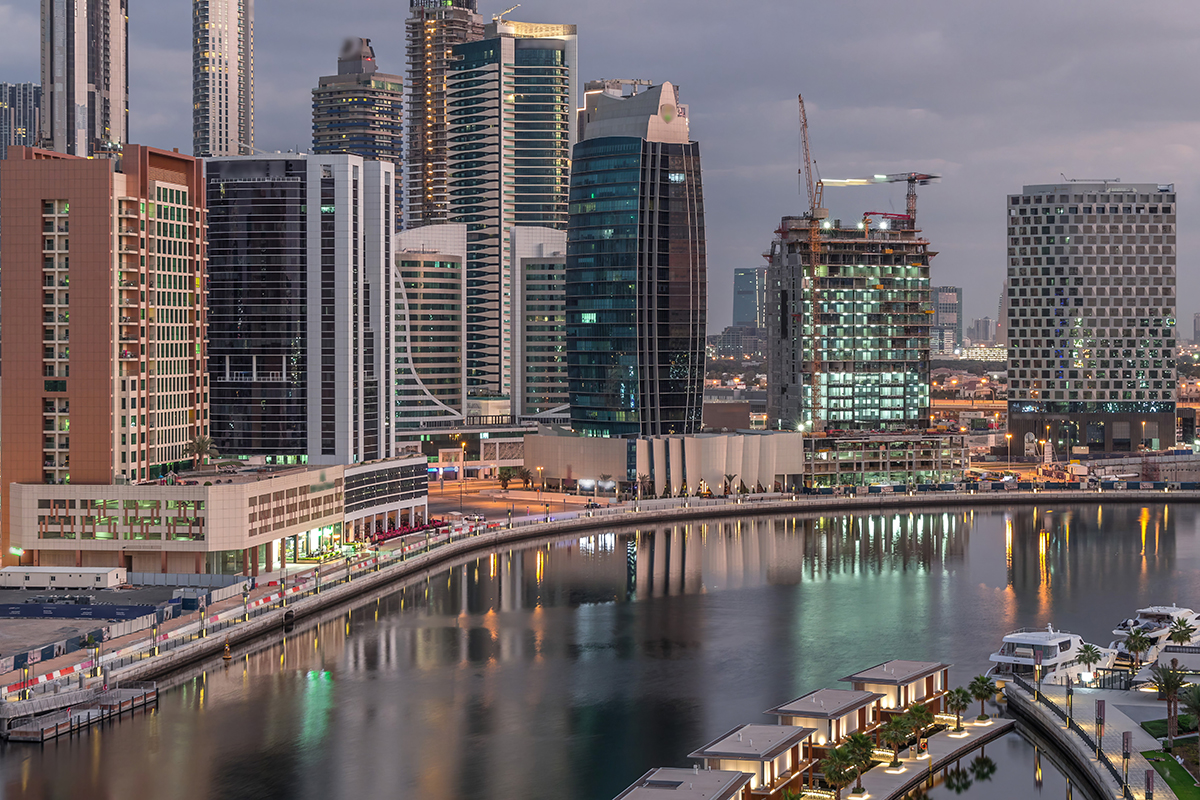
In the competitive landscape of Dubai real estate, office rents have demonstrated remarkable resilience, remaining 36% higher on a year-on-year basis in Q2 2025, according to a recent report by Savills. This surge is attributed to a combination of constrained supply and a steady influx of international demand, reflecting the city’s ongoing appeal as a hub for businesses seeking prime office space. As the market evolves, various submarkets have showcased significant rental growth, reinforcing Dubai’s position in the global real estate arena.
Dubai’s office sector sustained momentum in the second quarter of 2025, supported by restricted supply and continued international demand, according to Savills’ latest market report.
“Rents appear to have leveled out in some submarkets, with 11 of the 23 submarkets tracked by Savills showing a 0% quarter-on-quarter change in rental rates, likely a result of many tenants adopting a holding pattern and limited market movement. Rents remain up 36% year-on-year on average,” the report stated.
Submarkets such as Dubai Silicon Oasis, Barsha Heights, Business Bay, and Studio City recorded rental growth of 10% or more in Q2 2025.
Dubai sees rise in foreign company registrations, led by India and Pakistan
The Dubai Chamber of Commerce reported that India led overseas company registrations in Q1 2025, with 4,543 new businesses.
Pakistan followed with 2,154 registrations, and Egypt with 1,362. Other countries in the top 10 included Bangladesh, the United Kingdom, Syria, Jordan, China, Türkiye, and Iraq.
According to the report, “most new leases are being signed by new market entrants or by companies expanding their footprint,” with 44% of Savills’ Q2 inquiries for spaces ranging between 10,000 and 20,000 sq ft. Inquiries for units below 10,000 sq ft represented 38%.
Renewals accounted for 41% of transactions, followed by relocations (29%), new entries (12%), surrenders (12%), and expansions (6%).
Landlords are showing a preference for tenants with regional track records or international presence. “Landlords remain mindful of covenant strength, tenant profile, and alignment with existing occupiers to ensure a balanced tenant mix,” the report stated.
Occupiers are also prioritizing buildings with established reputations or institutional landlords.
In Q2 2025, 84% of Savills’ transactions involved companies in the financial services, consulting, and technology and media sectors.
Many occupiers are adopting a wait-and-see approach due to the limited availability of sustainable or ESG-compliant space.
Some tenants are securing the right of first refusal on additional space within their current buildings, enabling limited expansion while retaining RERA protection.
“Flexible space continues to be used to accommodate supplementary requirements,” the report added.
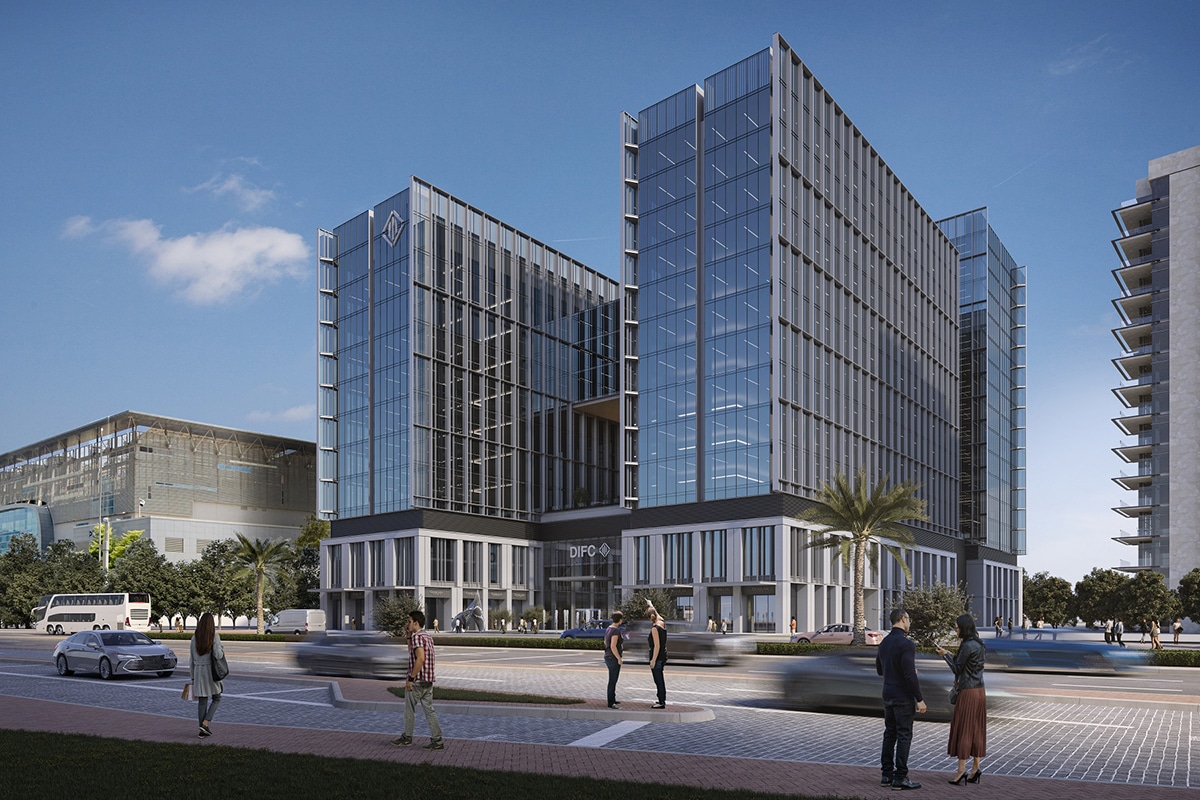 DIFC Square will comprise three connected buildings providing 600,000 square feet of office space and 17,200 square feet of retail area.
Approximately 1 million sq ft of new stock is expected in late 2025 and early 2026, with pre-commitments absorbing much of the pipeline.
Key upcoming developments include Wasl Tower, Immersive Tower, DIFC Square, Sweid One, Uptown Towers, and Capital One.
Developers traditionally focused on residential projects are exploring strata office buildings, which could shift supply dynamics and support the Dubai 2040 Urban Master Plan’s vision of a 20-minute city.
At a macro level, Oxford Economics revised the UAE’s GDP growth forecast to 5.1% for 2025, up from 4.7%, citing oil sector recovery and non-oil GDP growth.
Nevertheless, S&P Global’s UAE PMI fell to 53.3 in May, the lowest since September 2021, indicating potential pressure on short-term sentiment.
President Trump’s visit in May 2025 and the launch of the US-UAE AI Acceleration Framework are expected to strengthen bilateral ties and support further trade and investment flows.
Business Bay, Silicon Oasis drive Q2 rental increases in Dubai
Submarkets with stable quarter-on-quarter rental rates in Q2 2025 included Healthcare City, Downtown Dubai, Al Barsha, JLT, Dubai Marina, Sheikh Zayed Road, DAFZA, Garhoud, Bur Dubai, and Dubai Production City.
Rental growth was highest in Dubai Silicon Oasis (13%), followed by Al Barsha Heights (12%), Business Bay (10%), and Dubai Studio City (10%).
Other increases were recorded in Dubai Design District (9%), Deira (8%), Dubai Investment Park (7%), One Central (6%), and Dubai Science Park (5%).
TECOM DIC/DMC/DKV and DIFC saw more modest increases of 3% and 2%, respectively.
New areas such as Dubai South and Expo City are expected to attract more demand due to greater availability, affordability, and improved access.
“Geopolitical uncertainty may also influence activity, as some European and US firms pause overseas investment due to domestic economic pressures and regional volatility affecting sentiment. Demand is expected to grow in submarkets such as Dubai South and Expo City, driven by greater space availability, affordability, and improved accessibility,” the report indicated.