
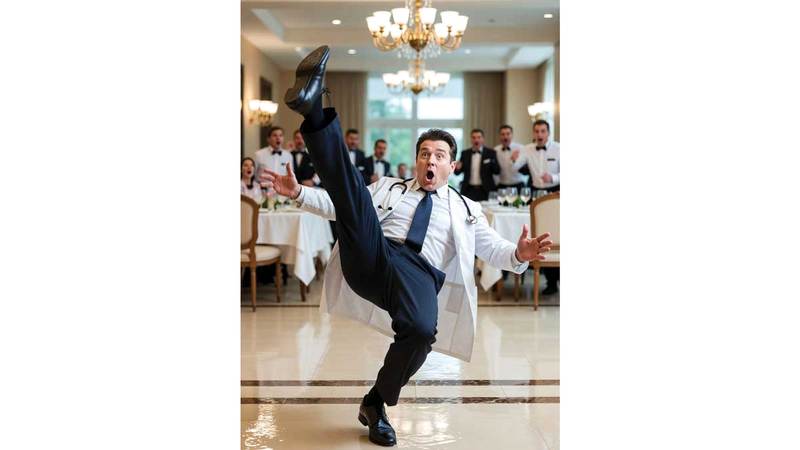
In a recent legal dispute in Abu Dhabi, a surgeon’s claim for 300,000 dirhams in compensation following a slip at a restaurant was dismissed by the Family and Civil Administrative Court. The case highlights the complex interplay between personal injury claims and the burden of proof regarding establishment liability, especially in hospitality settings.
The Incident and Claim
A renowned surgeon filed a lawsuit against a hotel, demanding comprehensive compensation of 300,000 dirhams. He alleged severe injuries sustained after slipping in the hotel’s restaurant, attributing the incident to negligence, lack of safety measures, and the absence of warning signs. The surgeon contended that he suffered significant physical harm, including severe muscle tears in both thighs accompanied by substantial bleeding. This resulted in urgent medical treatment and serious physical, psychological, and professional repercussions.
Details of the Allegations
The plaintiff elaborated on the extensive damages he incurred, including medical expenses, treatments, and diagnostic tests, which were compounded by his inability to work. He had to cancel multiple scheduled surgeries due to his inability to stand and was prohibited from exercising for three months. Furthermore, he required pain management injections and wore supportive braces on both thighs to perform his medical duties.
The Court’s Decision
However, the court found that the evidence provided was insufficient to substantiate the plaintiff’s claims regarding the hotel’s responsibility for the incident. In its judgment, the court pointed out that the surgeon’s statements lacked tangible proof connecting his injuries to the alleged negligence. They emphasized that even if there was a connection between his injuries and the restaurant incident, the evidence did not meet the legal standards required to establish liability on the hotel.
Response from the Hotel
In its defense, the hotel claimed the lawsuit was baseless. They indicated that the invitation for a complimentary dinner extended to the plaintiff did not constitute an admission of liability. The court concurred, noting that such a gesture could simply be an effort to maintain positive relations with guests and should not be interpreted as an acknowledgment of fault. The absence of substantive evidence, such as witness testimonies or official reports, further weakened the surgeon’s position.
Ultimately, the court dismissed the case, holding the surgeon accountable for the legal fees incurred during the proceedings. This decision reinforces the importance of presenting concrete evidence in personal injury claims, especially when alleging negligence against establishments.