
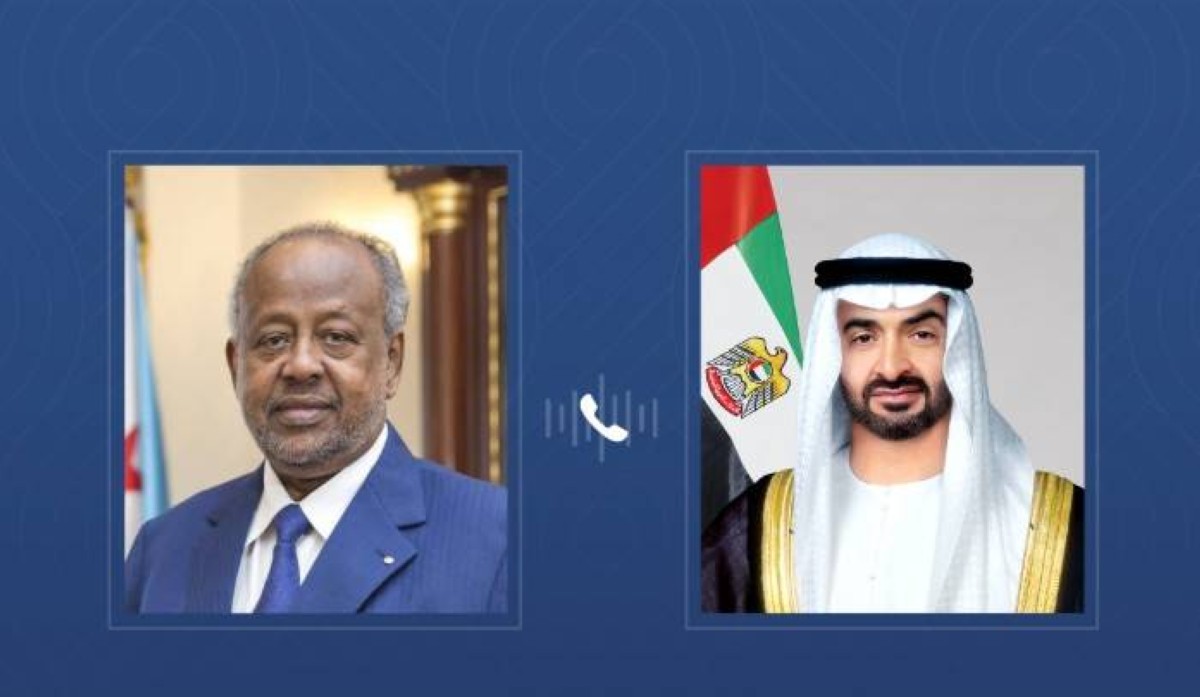
In a recent phone call with Ismail Omar Guelleh, the President of Djibouti, Sheikh Mohammed bin Zayed Al Nahyan, President of the United Arab Emirates, addressed the pressing security and military developments affecting the region. During this conversation, President Guelleh condemned the Iranian attacks on UAE territories, which have raised concerns regarding regional stability and international law. The discussion underscored the importance of solidarity among nations in the face of aggression, particularly in areas vulnerable to such threats.
Heightened Security Concerns
During the phone call, Sheikh Mohammed bin Zayed and President Guelleh examined the serious security challenges facing the region. These challenges not only threaten the safety of individual nations but also have broader implications for regional and global peace. President Guelleh articulated Djibouti’s strong condemnation of the “savage Iranian assaults” targeting the United Arab Emirates and other neighboring countries, characterizing these actions as blatant violations of national sovereignty and international law. The dialogue revealed mutual concerns over the escalating military tensions that could further destabilize the area.
Regional Solidarity
In expressing solidarity, President Guelleh emphasized Djibouti’s unwavering support for the UAE’s efforts to safeguard its sovereignty and protect its citizens. He asserted that the actions taken against the UAE not only breach its territorial integrity but also violate the principles outlined in the United Nations Charter. This solidarity is critical for building a unified response to external threats, as both leaders highlighted the necessity of standing together against such aggression.
Call for De-escalation
Both leaders acknowledged the urgent need for an immediate halt to military escalation. Sheikh Mohammed bin Zayed thanked President Guelleh for his country’s supportive stance towards the UAE during these tumultuous times. They collectively stressed that the continuation of conflict could pose severe risks to the security and stability of the entire region. The commitment to maintaining peace was evident in their discussions, which aimed to prevent further deterioration of the situation through diplomatic means.
The conversation serves as a reminder of the importance of diplomatic engagement among nations facing common threats. As both leaders conveyed their mutual concern for regional stability, they set the stage for potential collaborative efforts to mitigate these challenges, reaffirming that together, they can address the complexities of the current geopolitical landscape.