
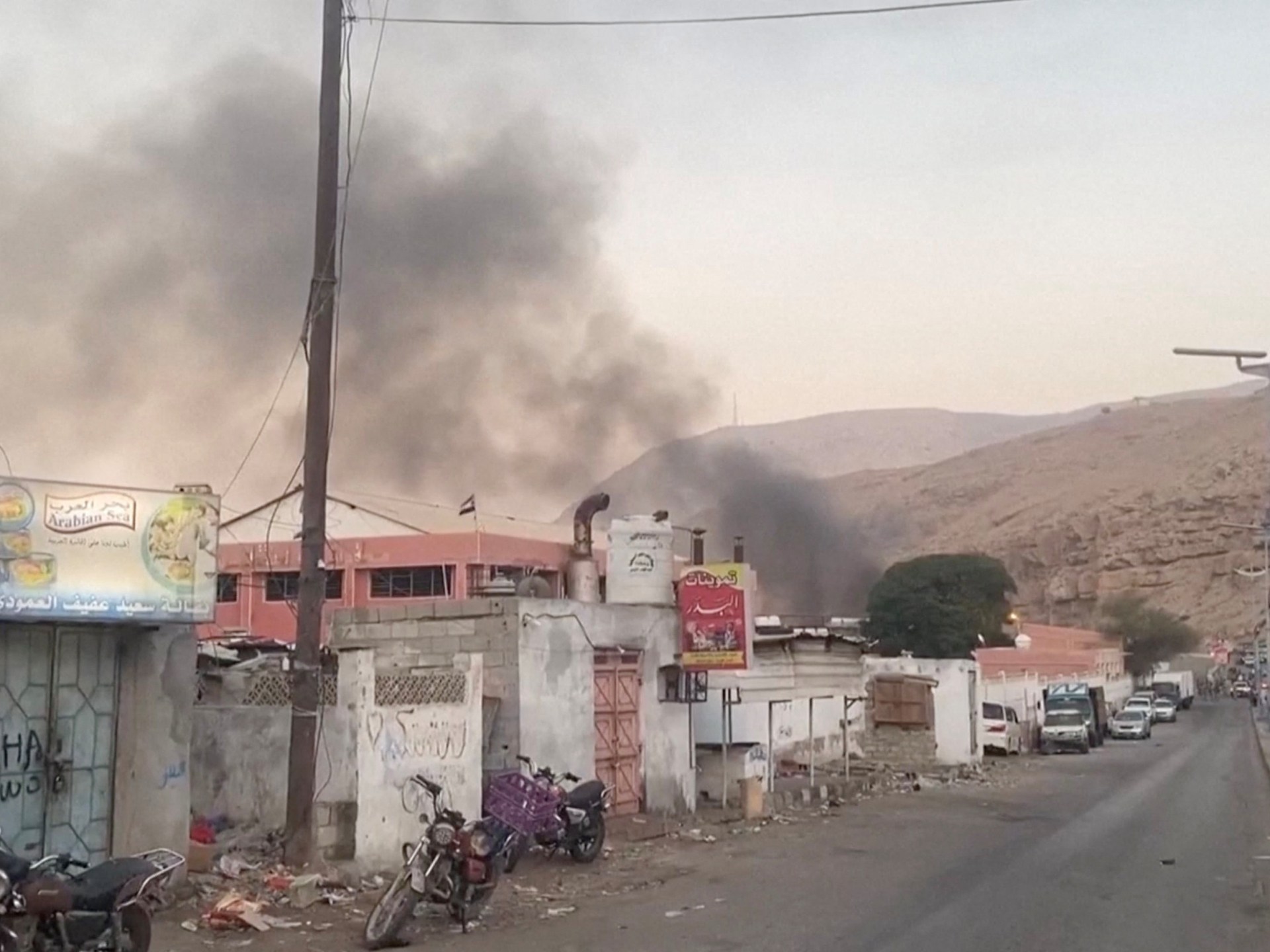
Watch: Coalition Leadership Reveals Details of Airstrike on Emirati Weapons Shipment
In a dramatic development in Yemen, the official spokesperson for the coalition leadership revealed details of the airstrike that targeted an Emirati weapons shipment arriving at the port of Mukalla. The incident involves two vessels coming from the UAE, raising significant questions about military coordination and escalating threats in the region. Information from the coalition clarifies the pivotal context of this military operation and hints at potential repercussions for regional security.
Details of the Military Operation
Major General Turki Al-Malki, spokesperson for the Coalition for Legitimacy in Yemen, issued a series of tweets outlining the events that occurred early Tuesday morning. He reported that the two vessels entering Mukalla port did so without following established protocols, as they did not obtain entry permits from the Yemeni government or the coalition leadership. Additionally, tracking devices were turned off prior to reaching Yemeni territorial waters.
Al-Malki explained that after monitoring the arrival and unloading of the shipment, officials in the UAE were informed that this support should be prevented to avoid its reach to conflict areas. However, he noted that Emirati forces transferred the vehicles and containers to Al-Riyan base without notifying the Kingdom, raising concerns within the coalition about escalating the conflict.
Consequences of Escalating Military Shipments
Following the arrival of the two vessels, the port was closed and all personnel were evacuated, creating an impression of a serious escalation. Information indicates that the shipment contained over 80 vehicles along with containers filled with weapons. Al-Malki warned that such practices could exacerbate tensions in the region.
In a related context, Al-Malki emphasized that the Emirati vessels were directed to return the vehicles to the port, but the containers of weapons were retained at Al-Riyan base. Nevertheless, accurate information indicated an intention to transfer those containers to various locations in the valleys and deserts of Hadramout, which could further escalate the conflict.
Political Tensions Between the UAE and Saudi Arabia
In light of these events, the Chairman of the Presidential Leadership Council in Yemen, Rashad Al-Alimi, announced the cancellation of the joint defense agreement with the UAE, adding further complexity to the political landscape. The Saudi Foreign Ministry accused the UAE of supporting local forces in carrying out military operations along the southern border, stressing that its national security is a red line.
Despite the UAE’s denial of these accusations, political tensions are rising, increasing concerns about regional security. The UAE Ministry of Defense announced the conclusion of its counter-terrorism missions, but Saudi Arabia once again demanded the withdrawal of all Emirati forces within 24 hours, reflecting the depth of the crisis in relations between the two parties.
Ultimately, the details of the coalition’s airstrike on the Emirati weapons shipment remain part of a complex narrative involving military and political elements that impact the future of Yemen and regional security. As time progresses, competition among regional powers intensifies, necessitating close monitoring of developments.