
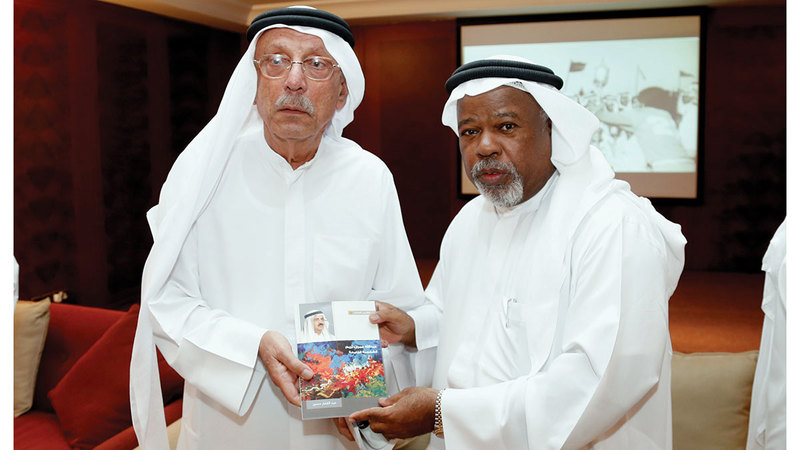
Abdul Ghaffar Hussain is a prominent figure in documenting the comprehensive renaissance of the UAE, with his influence extending over several decades. He has played a vital role in shaping the cultural and media landscape of the nation. Through his extensive experience and writings, Hussain has documented significant transformations that the UAE has witnessed since the 1950s to the present day, making him a reference point for studying the history of this homeland. In this article, we explore the highlights of his life and achievements that have solidified his status as one of the pioneers in documenting the comprehensive renaissance of the UAE.
Early Life of Abdul Ghaffar Hussain
Abdul Ghaffar Hussain was born in the Deira area of Dubai in 1935, where he grew up in a traditional environment that instilled in him a love for the Arabic language and history. He began his education in kuttabs (traditional schools) before moving to the Ahmadiah School, where he acquired the basics of the Arabic language and mathematics, setting the stage for his cultural journey. With unwavering determination, he sought to educate himself through independent reading, benefiting from Arabic literature, history, and biographies.
Administrative Career Journey
In 1957, Hussain embarked on his professional journey by joining the Dubai Municipality, where he began an administrative career that lasted over two decades. He rose through the ranks to become the secretary of the municipal council, gaining rich experiences that refined his documentation skills. He represented the Dubai Municipality at various Arab and international conferences and participated in specialized training programs in Egypt and Britain, which added new dimensions to his expertise. He left government service in 1979 to move to the private sector, but his passion for culture remained undiminished.
Hussain’s Role in Culture and Media
Alongside his administrative work, Abdul Ghaffar Hussain was a pioneer in the cultural and media scene since the 1960s. He witnessed the emergence of the cultural renaissance before the establishment of the UAE and used his pen to document the transformations and changes that accompanied that period. By contributing to the establishment of cultural institutions such as the Dubai Public Library and the Al Fahidi Museum, he played a pivotal role in developing Emirati culture. He also founded “Dubai News” magazine, making him one of the early cultural activists who contributed to the dissemination of ideas and information.
Ongoing Influence and Achievements
In the 1980s and 1990s, Abdul Ghaffar Hussain shone as one of the most prominent writers and intellectuals, publishing hundreds of articles. He played a significant role in documenting the UAE’s cultural movement and enhancing the writing of biographies and literary criticism. With the dawn of the new millennium, he focused more on documenting national memory through his weekly column “Colorful Notebooks” in the “Al Khaleej” newspaper. He had a tremendous impact on introducing new generations to its history and personalities. He also chaired the Emirates Writers and Authors Union and contributed to establishing the Sultan Bin Ali Al Owais Cultural Award.
Abdul Ghaffar Hussain reflected his belief that culture is a fundamental pillar for building society and that preserving national identity should go hand in hand with openness to modernity. This profound vision embodies the themes of his writings and intellectual contributions, making him one of the most notable documentarians of the UAE’s memory and an active contributor to shaping national cultural awareness. His achievements have become a landmark in the journey of documenting the comprehensive renaissance of the UAE, and their effects continue to be evident in society today.