
Sharjah 24:
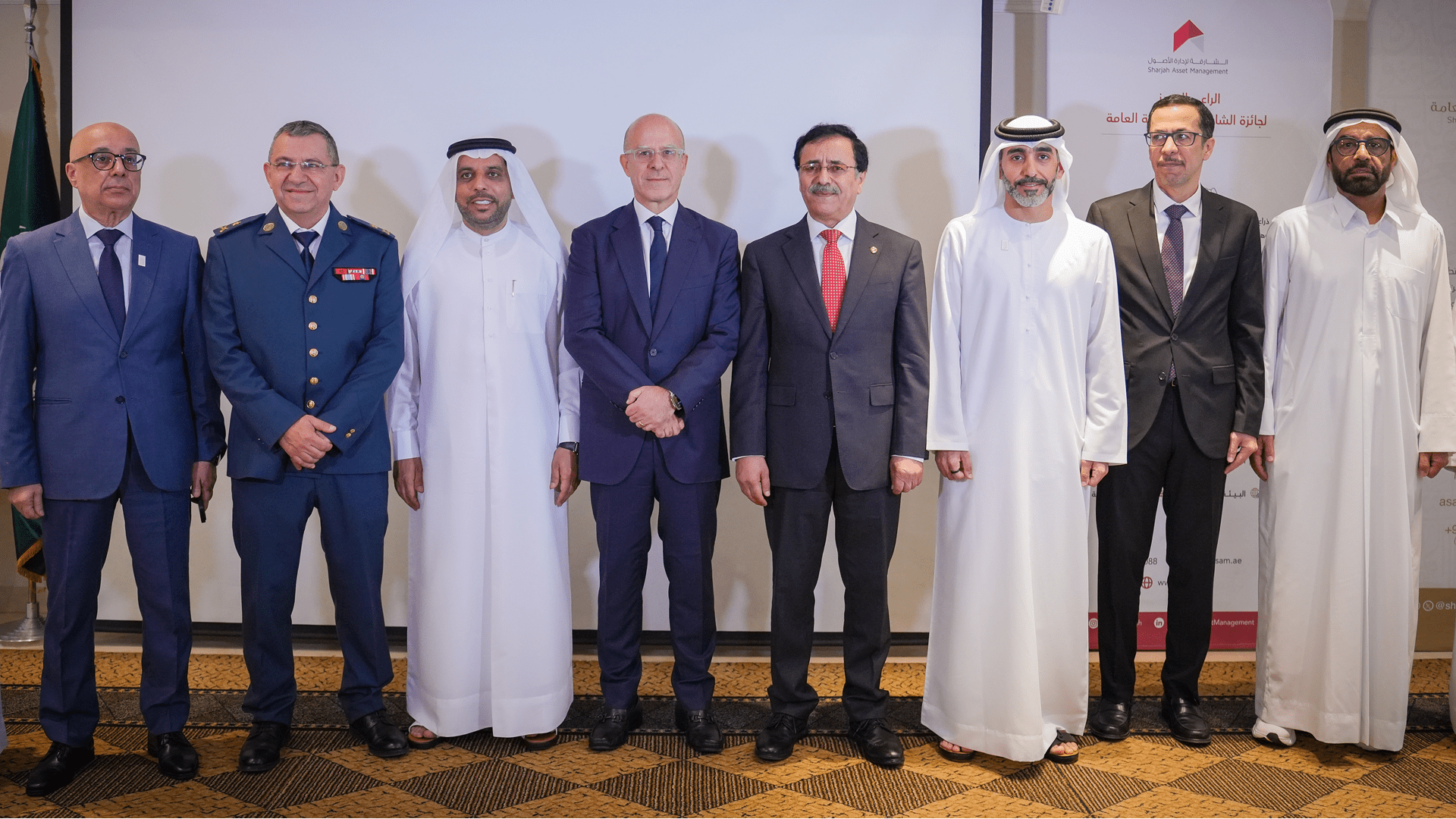
In a concerted effort to enhance its presence across the Arab region and broaden opportunities for collaboration and knowledge exchange in public financial management, the Sharjah Award for Public Finance, in partnership with the Arab Administrative Development Organization and Lebanon’s Minister of State for Administrative Development, hosted an informative seminar alongside a training workshop. This event took place on the 26th and 27th of October 2026 in the Lebanese capital, Beirut, under the patronage of His Excellency Dr. Fadi Maki, Minister of State for Administrative Development, and featured the participation of various officials and experts dedicated to advancing financial and administrative performance.
The event was attended by His Excellency Dr. Walid Al-Sayegh, Director-General of Sharjah’s Central Finance Department and Chairman of the Award’s Board of Trustees; His Excellency Sheikh Rashid bin Saqr Al Qasimi, Director of the Central Finance Department and Secretary-General of the Sharjah Award for Public Finance; Dr. Nasser Al-Qahatani, Director-General of the Arab Administrative Development Organization at the Arab League; as well as members of the Board of Trustees and the Award’s organizing committee.
This gathering served as a knowledge platform aimed at raising awareness about the award’s objectives, categories, evaluation standards, and participation mechanisms. It fostered the exchange of insights and experiences concerning the development of public financial systems, showcasing the role of digital transformation and the integration of financial systems in enhancing resource management effectiveness. Furthermore, it focused on boosting transparency and governance, thereby improving service quality to ensure that institutions can adapt to economic and technological shifts and lay the foundations for effective and sustainable financial performance.
Engagement of Arab Leadership
The seminar commenced with an opening session that featured remarks from His Excellency Dr. Fadi Maki, Minister of State for Administrative Development in Lebanon; His Excellency Sheikh Rashid bin Saqr Al Qasimi; and His Excellency Dr. Nasser Al-Hatlan Al-Qahatani, Director-General of the Arab Administrative Development Organization.
The programme included a presentation that introduced the award, a recognition segment, and specialized sessions designed to enhance awareness of the award while facilitating networking and the exchange of knowledge and experiences among participants.
Maximising the Impact of Public Spending and Promoting Sustainable Financial Approaches
His Excellency Dr. Walid Al-Sayegh emphasised that the award embodies the visionary leadership of His Highness Sheikh Dr. Sultan bin Muhammad Al Qasimi, Member of the Supreme Council and Ruler of Sharjah. He highlighted the importance of establishing robust governmental institutions grounded in effective resource management and directing capabilities towards achieving comprehensive development. This foundational vision aims to institutionalise a framework that places individuals at the centre of development efforts, thereby enhancing the concept of financial responsibility by aligning policies and budgets with developmental priorities and targeted outcomes.
Dr. Al-Sayegh remarked, “The wise vision of His Highness the Ruler of Sharjah has established a developmental approach that emphasises prudent investment in resources and views public funds as a tool for creating positive impact and fulfilling societal aspirations. From this standpoint, we believe that excellence in financial management extends beyond efficient planning and expenditure. It also encompasses institutions’ abilities to translate financial allocations into tangible achievements that enhance the quality of life and yield sustainable economic and social value. Through this award, we strive to institutionalise this concept, raising awareness of the importance of measuring the developmental return on public spending, thereby building institutions that are more capable of achieving their priorities and ensuring the sustainability of benefits for future generations.”