
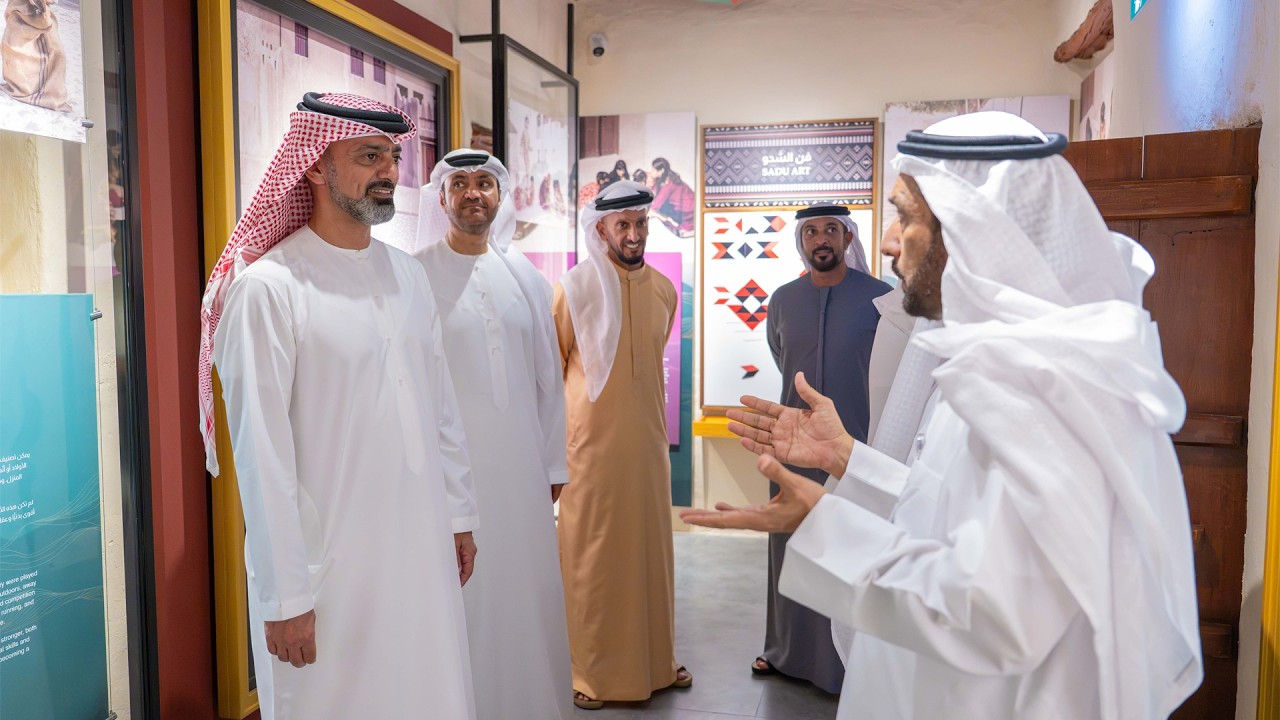
In a significant cultural development, His Highness Sheikh Ammar bin Humaid Al Nuaimi, Crown Prince of Ajman and Chairman of the Executive Council, has inaugurated the Manama Museum. This establishment is poised to offer a rich cultural and heritage experience that documents the history and collective memory of the region, while showcasing the agricultural, social, and environmental legacy of Emirati life.
Accompanying His Highness at the opening were Sheikh Abdulaziz bin Hamid Al Nuaimi, Head of the Department of Tourism, Culture, and Media in Ajman; Sheikh Rashid bin Hamid Al Nuaimi, Head of the Municipality and Planning Department in Ajman; His Excellency Abdullah bin Mohammed bin Batti Al Hamed, Chairman of the National Media Authority; and Mahmoud Khalil Al Hashimi, Director-General of the Department of Tourism, Culture, and Media, along with several other senior officials from various governmental entities in the emirate.
A Multifaceted Journey Through History
During the opening ceremony, Sheikh Ammar toured the museum, exploring its diverse contents spread across 13 rooms and a central courtyard known as “Al Liwan.” This thoughtfully designed space narrates the historical milestones of Manama, documenting its evolution and reflecting the way of life experienced by its residents over different eras.
Exhibits Reflecting Emirati Heritage
The museum’s exhibits delve into various aspects of traditional life, including agriculture, livestock breeding, artisanal crafts, social customs, and local architecture. Furthermore, it highlights the contributions of the ruling family to the development and flourishing of the region.
The Importance of Preserving History
His Highness Sheikh Ammar bin Humaid Al Nuaimi emphasised that safeguarding history is an investment in identity and a way to strengthen the foundations for the future. He noted that the Manama Museum embodies a commitment to presenting the rich cultural heritage to future generations in contemporary formats. This approach not only enables them to connect with the history of their forefathers but also fosters an understanding of the relationship between humans, their land, environment, and natural resources.