
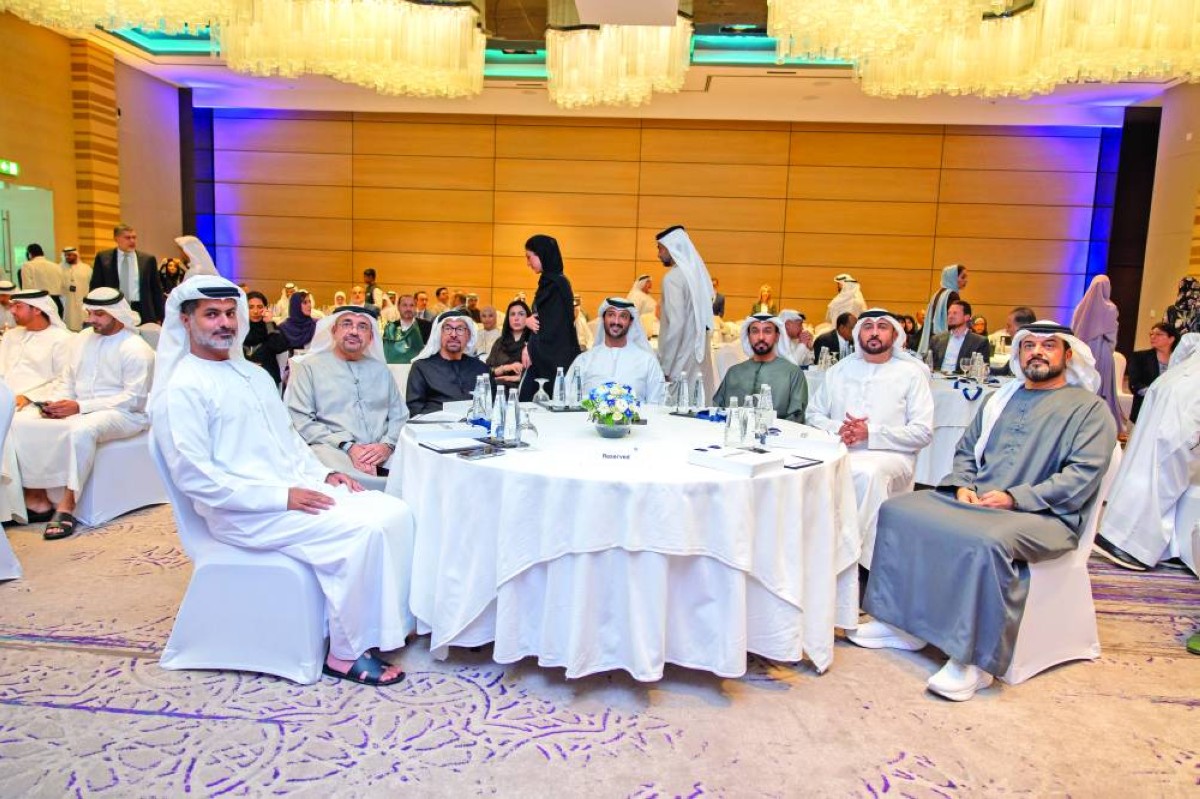
In the heart of Abu Dhabi, a pivotal seminar titled “Beyond Legacy: Sustainability of Family Businesses in the UAE” recently highlighted the vital role these enterprises play in the national economy. Organized by Habib Al Mulla & Partners in collaboration with the Ministry of Economy and the Abu Dhabi Family Business Council, this event aimed to address key strategies for ensuring the sustainability of family businesses in the Emirates. With a focus on corporate governance and long-term planning, the discussions brought together industry leaders and experts to emphasize the importance of a sustainable transition between generations.
The seminar featured prominent figures such as His Excellency Abdullah bin Touq Al Marri, Minister of Economy and Tourism; Shams Ali Khalfan Al Dhaheri, Vice Chairman and Managing Director of the Abu Dhabi Chamber of Commerce; and Khaled Abdulkarim Al Faheem, Chairman of the Abu Dhabi Family Business Council. Their participation underscored the commitment to nurturing a robust ecosystem for family-owned businesses, fostering their contributions towards diversifying the economy and enhancing competitiveness in alignment with the UAE’s long-term economic vision.
This event marks an extension of the success achieved in Dubai with the first iteration of the “Beyond Legacy” series and serves as a new milestone in ongoing national efforts to promote corporate governance. The seminar also included a speech from His Excellency bin Touq that examined how supportive economic policies and regulations can enhance the sustainability of family companies and help achieve the UAE Vision 2031.
The seminar incorporated two main panel discussions. The first centered on the legal frameworks and corporate governance structures essential for family businesses, while the second spotlighted real-world experiences, success stories, and challenges related to governance practices. This included the transition from traditional management to institutional oversight, ensuring generational succession, and developing family constitutions and charters.
His Excellency Abdullah bin Touq Al Marri remarked that the UAE recognizes family businesses as central to driving economic growth and sustainability. The Ministry of Economy and Tourism has actively collaborated with governmental partners and family-owned enterprises to establish a comprehensive law governing family businesses. This effort is encapsulated in Federal Decree Law No. 37 of 2022 regarding family businesses, designed to ensure continuity across generations.
Furthermore, the Ministry has launched four ministerial decisions, leading to the establishment of a unified registry for family businesses, which now includes over 18 family firms. Initiatives to regulate family business charters and procedures for equity buybacks have also been enacted. This regulatory framework aims to create a sustainable legislative environment that supports the growth and regional as well as global leadership of family enterprises.
Shams Ali Khalfan Al Dhaheri stated that the Chamber of Commerce continues to serve as a key engine driving the sustainability of family businesses. He highlighted that developing effective governance models fosters investor confidence and enhances the private sector’s competitiveness, aligning with Abu Dhabi’s ambitions of creating a knowledge-driven economy.
Khaled Abdulkarim Al Faheem, Chairman of the Abu Dhabi Family Business Council, reinforced the idea that family businesses are essential partners in the economic development of both Abu Dhabi and the wider UAE. Under the Abu Dhabi Chamber’s umbrella, the Council is committed to promoting best governance practices and strategic planning to ensure the sustainability of these businesses and safeguard their economic and social legacies.
In a similar vein, Masoud Rahma Al Masoud, Vice Chairman of the Abu Dhabi Family Business Council, emphasized that investing in the next generation of family business leaders is crucial for sustaining this business ecosystem. The Council strives to create knowledge-sharing platforms that convey expertise and raise awareness about the importance of governance and early institutional planning.
Professor Aliyah Habib Al Mulla, Head of the Commercial Disputes Department at Habib Al Mulla & Partners, stated that the seminar represents a significant step towards fostering a comprehensive national dialogue about the future of family businesses in the UAE. She emphasized that sustaining family heritage is not incidental but requires a clear vision, a cohesive family charter, and early institutional planning that balances the interests of different generations. She concluded, “We take pride in collaborating with the Ministry of Economy, the Abu Dhabi Chamber, and the Abu Dhabi Family Business Council on initiatives that embody the wise leadership’s vision for a diverse and sustainable economy.”