
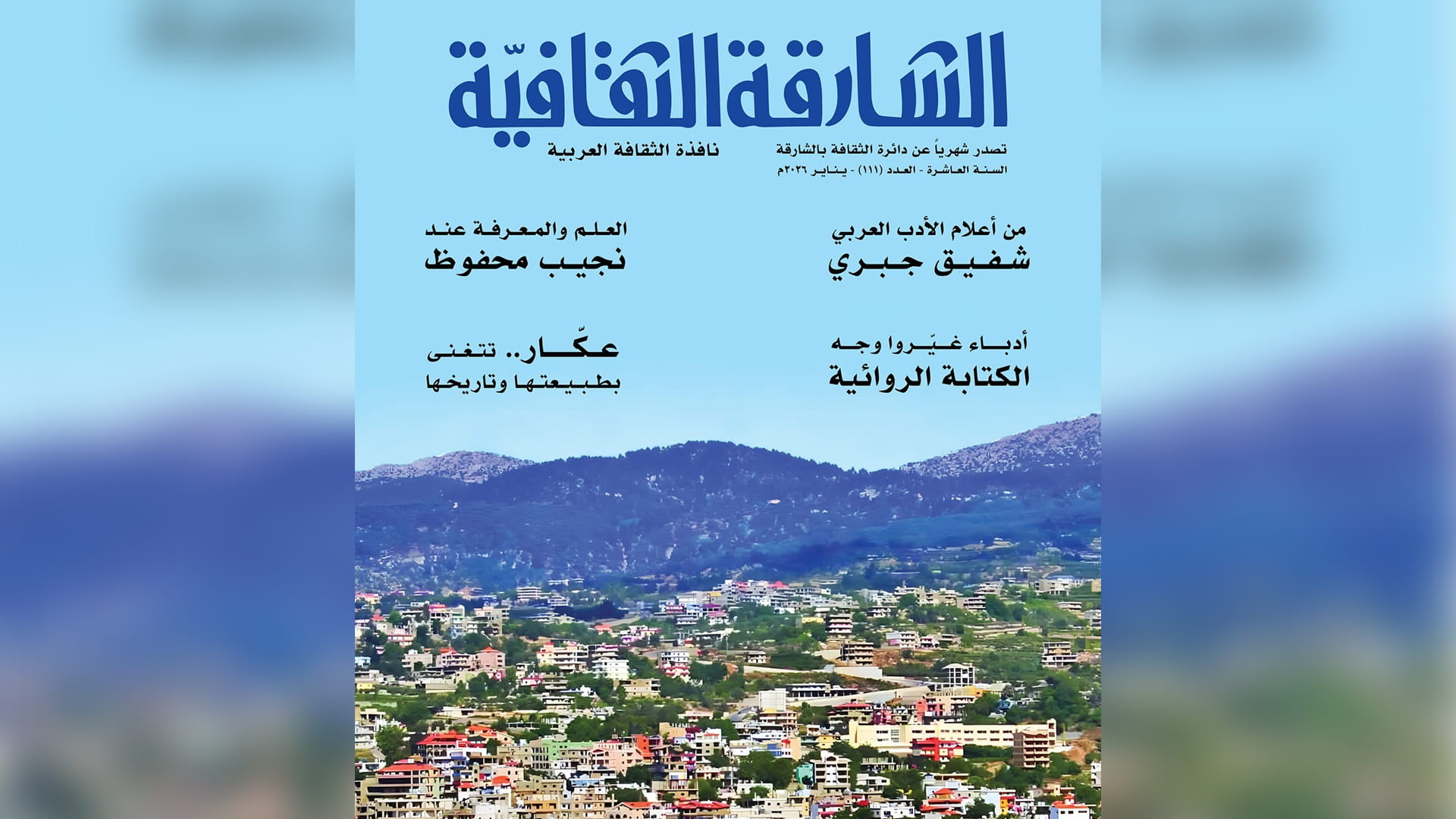
The cultural landscape of Sharjah is evolving rapidly, especially as the magazine “Sharjah Cultural” delves into the themes of culture and knowledge in the information age. This intriguing exploration highlights how contemporary society grapples with the dual forces of embracing modern advancements while respecting historical legacies. The latest edition, released in January 2026, emphasizes the vital balance required to navigate the complexities of modern life, showcasing various articles and discussions on diverse topics such as literature, art, and heritage.
The 111th issue of “Sharjah Cultural,” released in January 2026, features a distinguished collection of topics, articles, and dialogues in literature, art, thought, cinema, visual arts, theater, and heritage. The editorial titled “Culture and Knowledge in the Information Age” asserts that no one can live in isolation from the evolution that has imposed new and strange lifestyles. Failing to keep pace with modern civilization means decline and weakness, but this does not require abandoning the tools that have built the foundations of this civilization. To be a cultured person, a writer, and a modern, developed, and progressive individual does not mean severing ties with the past and its accomplishments or adopting only modern theories while practicing your favorite hobbies virtually and electronically. Instead, one must combine authenticity with modernity, balancing the demands of the era with historical and civilizational values.
Editorial Director Nawaf Younis addressed the participation of Greece as the guest of honor at the 44th Sharjah International Book Fair in his article “Sharjah… Through Greek Eyes.” Greek writers, authors, and publishers, including poet Antonios Sikiatis, expressed their deep impressions from visiting Sharjah. They noted that the Arabic language continues to maintain its strength and cultural presence, and that the greatness of Arabic poetry lies in the power of the Arabic language and its cultural influence. They also explained that Sharjah, which preserves and combines its present with its authentic traditions, has become a meeting point for cultures and a bridge for languages, allowing them to feel the commonalities between Arab and Greek civilizations.
In detail, Susan Kamel wrote about one of the prominent figures in Arabic literature, Shafik Jabri, a symbol of giving and creativity. Ahmed Fadl Shibloul contributed a piece on knowledge and understanding in the works of Naguib Mahfouz, while Omar Ibrahim Mohammed explored the history of the city of Al Mahalla Al Kubra, which is associated with the Nile rose. Amal Kamel reflected on the city of Akkar, celebrated for its nature and history, and known for its location and heritage.
In the “Literature and Authors” section, Mohamed Hamouda shed light on the unknown novel “Zaza” by poet Ibrahim Nagy, while Dr. Akram Jamil Qanbes discussed the journey of writer Abdul Quddus Al-Ansari, who lived the issues of his homeland and community. Walid Ramadan paused to appreciate the creativity of Zainab Al-Barouni, a pioneer of short stories in Libya, and Hanan Metwally wrote about authors who changed the face of novel writing through the secrets and tricks of grand narrative games.
Aml Youssef Hassan discussed the scholarly and cultural figure Abdul Hamid Al-Abadi, while Amira Al-Maligi celebrated the prolific creative achievements of Hanaa Mineh, who lived reality and employed it in her literature. Dr. Ahmed Al-Saghir read the biography of poet Mohamed Ibrahim Abusnah, who expressed his reality with transparency, and interviewed novelist Mohiuddin Jarma, who left her job to dedicate herself to writing.
In the “Art, Music, and Brush” section, we find topics covering visual arts, theater, cinema, and music. From Sufyan Diab, who innovates new worlds that converse with the discerning eye, to Yasser Al-Safi, who considers the concept of childhood as the essence of his aesthetic stance, the Arab Cultural Club continues to celebrate creative individuals.
This issue features a variety of topics and perspectives, highlighting the role of “Sharjah Cultural” magazine in documenting and discussing culture and knowledge in the information age, as it combines authenticity with modernity to open the doors for discussion and analysis. This magazine contributes to enhancing cultural understanding and provides a platform for writers and thinkers.
In conclusion, the role of culture and knowledge in the information age is a vital element that cannot be ignored; it not only reflects contemporary developments but also serves as a bridge connecting the past to the future, ensuring the continuity of cultural identity and intellectual growth.