
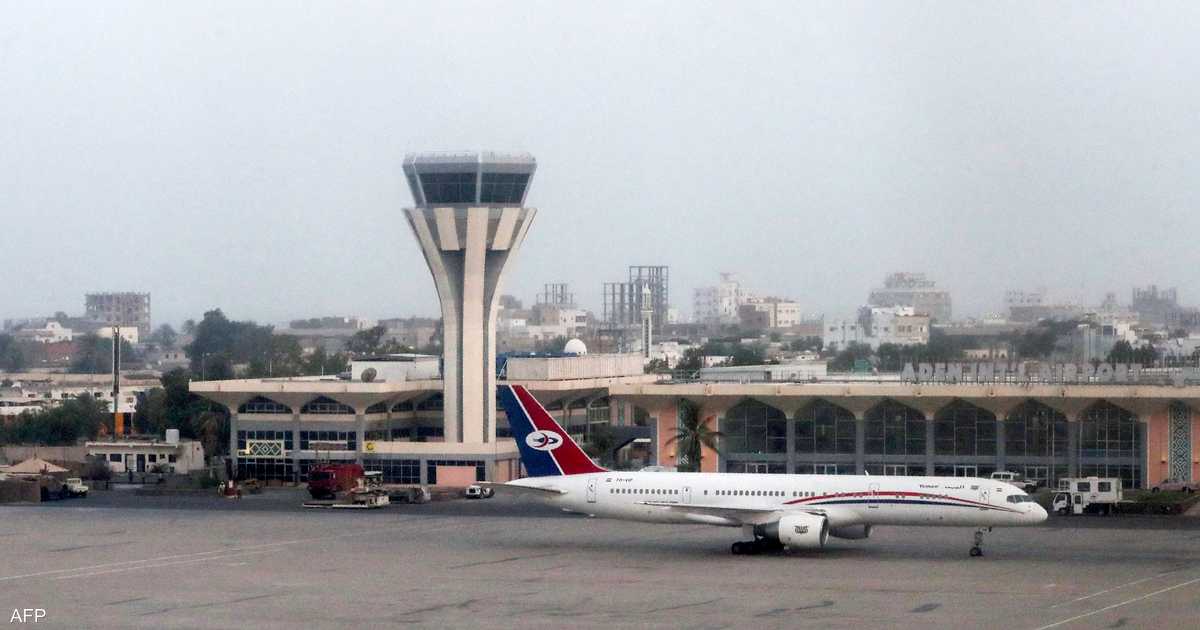
The recent decision to close Aden International Airport has sparked intense debate regarding its implications for Yemen‘s already precarious situation. Dubbed a state of emergency by the Yemeni authorities, this move raises questions about whether it is a necessary precautionary measure or a strategic blockade that could plunge the nation back into a cycle of hardship. In this article, we explore the ramifications of the airport closure, shedding light on the perspectives of various stakeholders and the potential consequences for the Yemeni populace.
The Yemeni Ministry of Transport and Civil Aviation asserts that this step imposes new restrictions on air traffic, contradicting the principles governing international civil aviation. It cautions that the implications of this decision extend beyond technical concerns, bearing immediate humanitarian consequences that could exacerbate the suffering of the Yemeni people.
Emergency Declaration and Its Implications
According to Khaled Al-Kathiri, a member of the Executive Office of the Southern Journalists and Media Syndicate, the emergency declaration issued by the President of the Presidential Leadership Council from abroad represents an effort to assert authority that is largely absent on the ground. He criticizes the decision as lacking consideration for its humanitarian impact, stating that the closure of Aden Airport, compounded by the ongoing technical closure of Seiyun Airport, has paralyzed air travel, effectively creating a blockade that recalls earlier periods of hardship.
Internal Crisis of the Leadership Council
Al-Kathiri attributes the internal crisis within the Presidential Leadership Council, which he describes as a “four versus four” conflict, to the council’s failure to fulfill its responsibilities. He analyzes that, instead of uniting efforts to confront the Houthi militias, the council has become preoccupied with internal power struggles, redirecting its decisions towards the south rather than focusing on the primary goal of combating the Houthis. This diversion could ignite new conflicts in the southern governorates.
The Yemeni People as the Greatest Losers
Emphasizing that the only real victims of these measures are the Yemeni people in both halves of the country, Al-Kathiri stresses that closing air travel routes worsens humanitarian conditions, placing further burdens on citizens, especially those needing medical attention and those with foreign commitments. He dismisses any genuine security justifications for the closure, affirming that the current security reality does not warrant such drastic actions. Instead, he argues that the decision creates opportunities for the Houthi militias and terrorist cells to exploit any resultant void or tension.
The Coalition and UAE’s Role
In his discussion about the Arab Coalition, Al-Kathiri urges Saudi Arabia not to engage in what he characterizes as arbitrary measures, calling for a reassessment of its strategy in line with the coalition’s original objective of facing the Houthi militias and restoring stability. He also highlights the significant role played by southern forces, supported by Saudi Arabia and the UAE, in fierce battles against the Houthis, contributing to substantial sacrifices that reached the outskirts of Hodeidah.
Hadhramaut Valley: Between Stability and Potential Threats
Shifting focus to developments in Hadhramaut Valley, Al-Kathiri notes that the removal of the so-called First Military Region has eliminated safe havens for terrorist cells and supply routes for the Houthis, leading to unprecedented levels of security and stability. He points to the Southern Transitional Council’s decision to incorporate the “National Shield” forces in securing the valley and the desert strip bordering Saudi Arabia as a sign of goodwill and the potential for unified efforts against shared threats.
Ultimately, Al-Kathiri warns that the airport closure represents a severe political and humanitarian error, reflecting a troubling shift in priorities. He stresses that rectifying the situation necessitates reorienting focus towards the fundamental objectives for which the Presidential Leadership Council and the Arab Coalition were established.