
In 2025, the United Arab Emirates launched a wide array of initiatives and quality projects aimed at environmental protection, transitioning to clean energy, and innovating in green technologies. These efforts underscore the UAE’s global leadership in sustainability and its commitment to addressing climate challenges. The initiatives not only reflect the nation’s vision to establish a low-carbon economy but also enhance its role in international efforts toward a cleaner energy future, biodiversity conservation, and innovation in sustainability.
Innovative Clean Energy Projects
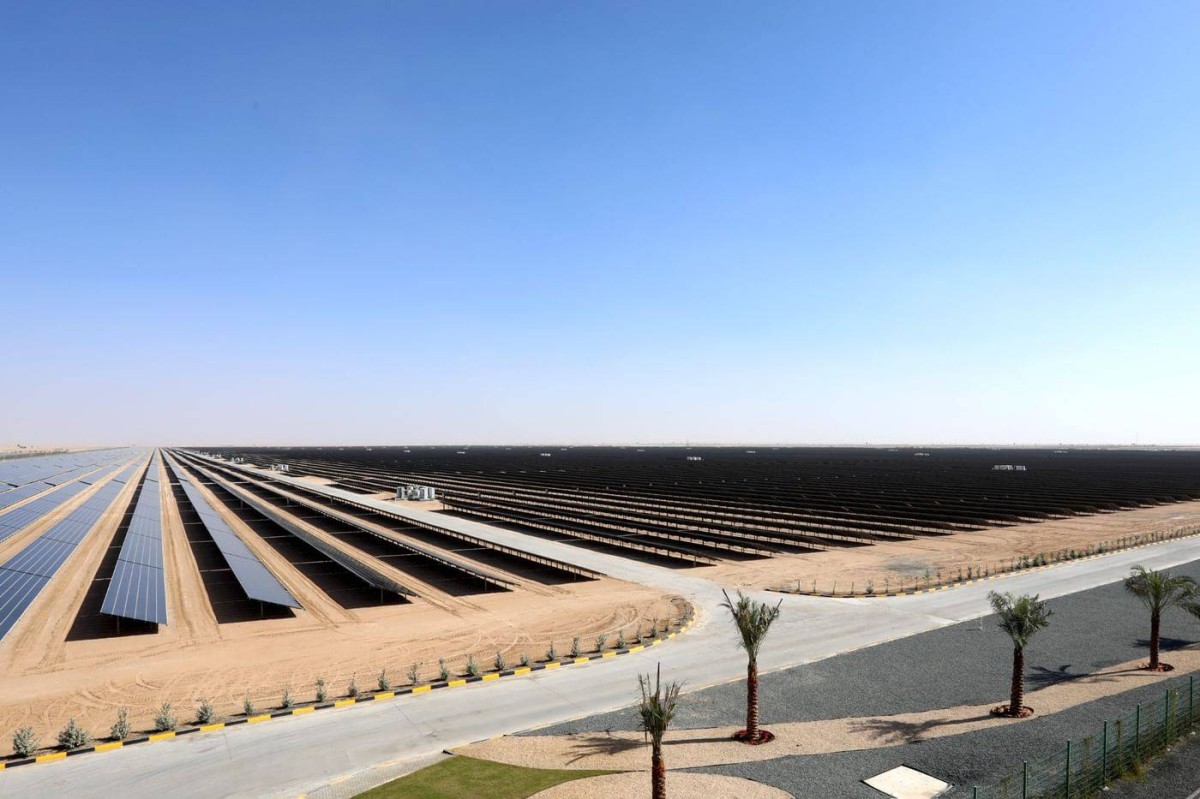
The UAE kicked off 2025 by unveiling the largest and first-of-its-kind project in the world that integrates solar energy with energy storage batteries in Abu Dhabi. This groundbreaking initiative will ensure round-the-clock access to renewable energy, providing approximately 1 gigawatt of daily baseload energy from solar sources, marking it as the largest solar power station equipped with storage solutions globally.
Additionally, the UAE embarked on its first marine exploration expedition to create a comprehensive geological map of the seabed within its waters, utilizing the “Gion” research vessel, which is the first specialized research ship in the country.
Advancements in Circular Economy
In the realm of circular economy initiatives, the company “Bee’ah” announced the development of the first facility in the Middle East dedicated to converting waste into green hydrogen, with an expected production capacity of 7 tons per day by 2027. Simultaneously, the Ministry of Industry and Advanced Technology launched a national project aimed at recycling used tires and repurposing them into materials for new industries.
Furthermore, the Ministry of Energy and Infrastructure introduced a geospatial data platform intended to enhance water resource management, targeting a 2% reduction in groundwater consumption and an increase in the use of unconventional water sources to 13% by 2027. The “Mohammed bin Zayed for Water” Initiative also signed a memorandum of understanding with the World Bank to foster innovation in addressing global water scarcity challenges, alongside launching the “Water for Agriculture Challenge,” which highlights innovative solutions with prizes reaching up to 8 million dirhams.
Environmental Protection and Biodiversity
The country’s progress in environmental protection and biodiversity was notable, with the Sharjah Environment Authority announcing the discovery of three new plant species. The Khor Kalba Mangrove Center joined the Global Ramsar Wetland Network, while the “Khor Fakkan Reef Project” was launched to support fish populations in Sharjah. Furthermore, the Abu Dhabi Environment Agency initiated the “Abu Dhabi Coral Gardens” project, covering an area of 1,200 square kilometers, with the installation of 40,000 artificial reefs and plans to cultivate over 4 million coral colonies by 2030.
The announcement of expanding protected areas in the Emirate of Abu Dhabi to comprise 20% of its total area also signifies major strides in conservation efforts.
Transportation and Global Energy Expansion
In the sustainable transportation sector, the UAE continues to enhance its green infrastructure. The Ministry of Energy and Infrastructure confirmed the installation of 500 electric vehicle charging stations by the end of this year, while “DP World” launched the first fleet of electric vehicles at the Jebel Ali Port, facilitating the transport of over 204,000 containers annually, which is expected to result in a reduction of more than 14,600 tons of emissions. Additionally, Etihad Rail completed its solar energy project at the Al Ghwaifat station, expected to be operational by the end of 2025.
The UAE’s ambition extends globally with solar energy projects across Albania, Italy, and Spain, totaling 446 megawatts, alongside floating projects in Indonesia and the Saudi “Sadawi” project with a capacity of 2 gigawatts. Other initiatives are underway in Madagascar, Yemen, Egypt, Chad, and a solar power station in Comoros funded by the Abu Dhabi Development Fund.
During this year, an agreement was signed between “Masdar” and “OMV” to establish a green hydrogen production facility with a capacity of 140 megawatts in Austria, positioning it as one of Europe’s largest initiatives in this sector. In Saudi Arabia, “Masdar” was awarded the development of two new solar power stations in Najran and Jazan, totaling an output of 2 gigawatts.
Moreover, Mubadala Investment Company announced a €300 million investment through a partnership with “Actis,” a leading global investor in sustainable infrastructure in emerging markets, aimed at enhancing the renewable energy sector in Central and Eastern Europe.
The Emirates Nuclear Energy Corporation celebrated a year of full operation of the Barakah Plant, which now supplies 25% of the country’s electricity needs and helps mitigate 22.4 million tons of emissions annually. An allocation of $10 million was set aside to launch a program that enhances communities in Asia and the Pacific to adapt to natural disasters and support climate-resilient infrastructure.