
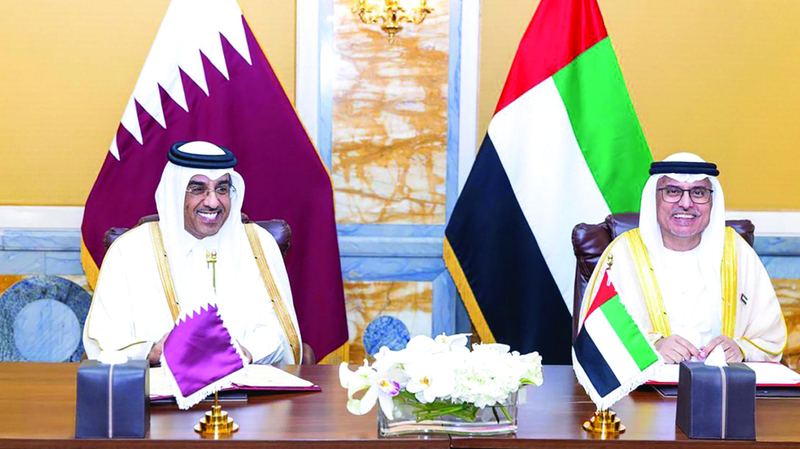
The United Arab Emirates and Qatar have taken a significant step toward enhancing collaboration in labor and human resource development by signing a memorandum of understanding. This agreement, formalized during the 11th meeting of the Ministers of Labor of the Gulf Cooperation Council (GCC) held in Kuwait, underscores a mutual commitment to optimize work-related legislation and share expertise across both nations. This partnership aims to create a framework for more efficient human resource management and labor practices, ultimately benefiting the economies of both countries.
Details of the Memorandum
The memorandum was signed by Dr. Abdulrahman al-Owais, Minister of Human Resources and Emiratization and Minister of Education in charge of Higher Education and Scientific Research, along with Dr. Ali bin Smeikh al-Marri, the Minister of Labor of Qatar. This agreement exemplifies the shared commitment of both nations to deepen cooperation in areas that serve their mutual interests.
Enhancing Labor Exchange
One of the key goals of the memorandum is to stimulate the exchange of expertise among GCC nations. This will involve improving the methodologies and requirements for the registration and employment of job seekers, as well as initiatives focused on training and the reintegration of the national workforce. Furthermore, the agreement will support the ongoing Abu Dhabi and Doha dialogues by fostering regional and international cooperation aimed at enhancing the governance of migrant labor flows between Asia, Africa, and the GCC countries.
Joint Initiatives and Expert Collaboration
Both parties will form specialized committees to initiate joint ventures and facilitate expert exchanges for technical advisory roles. This collaboration will also promote the sharing of best practices and the latest labor market data and statistics. Such efforts are expected to significantly enhance the effectiveness of labor management and human resource development within the region.
A Vision for the Future
This memorandum of understanding represents more than just an agreement; it reflects a visionary approach to future labor cooperation between the UAE and Qatar. By aligning their goals and resources, both nations aim to create a robust system of labor and human resource management that not only addresses current needs but also anticipates future challenges. The commitment to developing cooperative frameworks will undoubtedly contribute to their ongoing economic growth and workforce resilience.
As the collaboration unfolds, it will be interesting to observe how these initiatives transform labor practices in both the UAE and Qatar, benefiting their populations and enhancing regional stability.