
22 August 2026 20:05
|
Last updated:
22 August 20:08 2026

Summary

10,000 coins removed from the Giant’s Causeway in Ireland over 200 hours; erosion threatens the basalt, while visitors continue to insert coins.

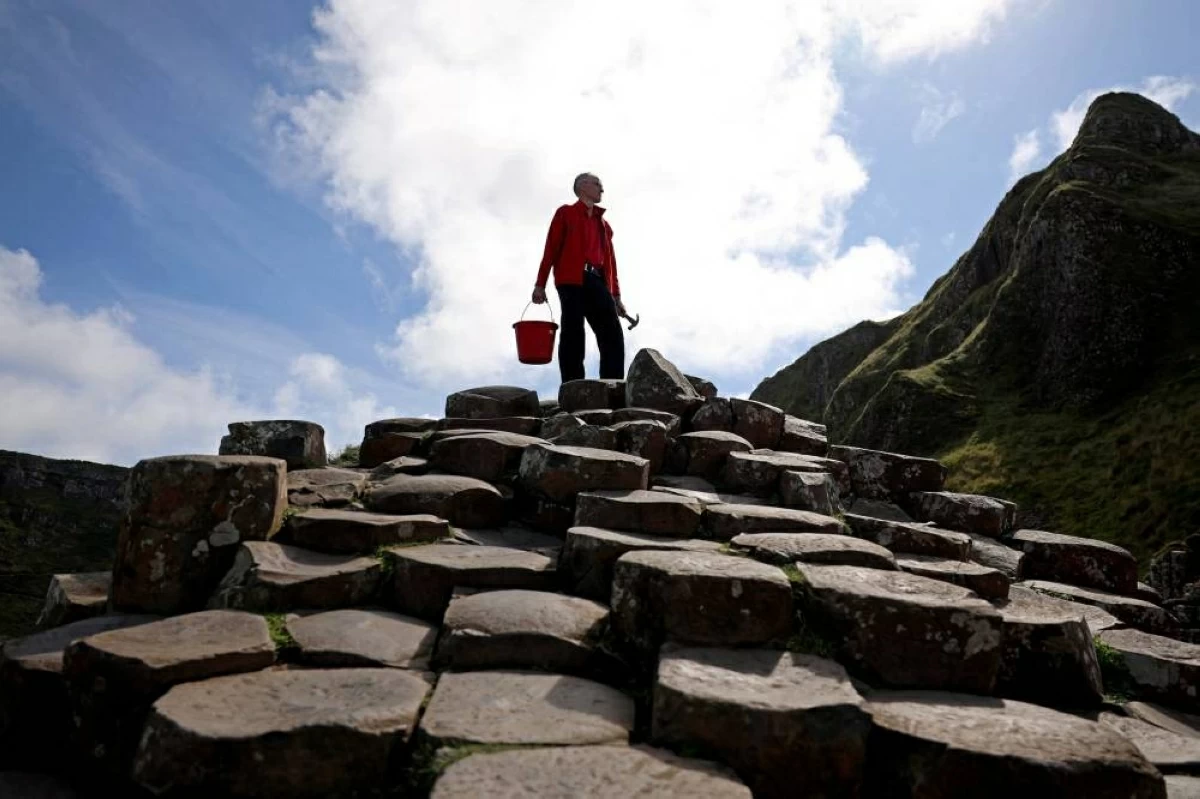
Searching for coins wedged in basalt columns (Reuters)
After 200 hours of specialised work, a team has successfully removed 10,000 coins inserted by tourists into the rocks of the Giant’s Causeway, a UNESCO World Heritage site in Northern Ireland. However, thousands more coins remain lodged within the basalt formations.

Tourists gathering on the basalt columns of the Giant’s Causeway (Reuters)
According to Cliff Henry, a National Trust nature interaction officer, the team managed to extract 20 kilograms of coins embedded in the famous basalt columns, which visitors had wedged in hopes of attracting luck or love.
Henry explained that a specialist builder was recruited, who employed pliers and precise tools to carefully reach the coins. While some coins were removed relatively quickly, others took over 20 minutes to free. “Coins erode rapidly in salt and moisture-laden air, making it impossible to identify their type or date after just a few years. Only 5% of the extracted coins remain usable, while most have suffered corrosion or bending,” he noted.
Of the retrieved coins, 95% were British pounds or euros, followed by American coins. Yet, numerous coins still remain trapped in the crevices, some of which are too deep to reach, while others are so corroded that moving them risks damaging the surrounding rock.
Despite the conclusion of the main removal project, visitors continue to insert coins, with Henry recently retrieving 42 new coins. The National Trust plans to periodically survey the site and remove newly added coins.
Geological reports warn that the erosion of metals and their expansion within the cracks due to sea spray pressure might compromise the stability of the basalt. The Giant’s Causeway contains over 40,000 basalt columns formed by volcanic activity around 60 million years ago.