
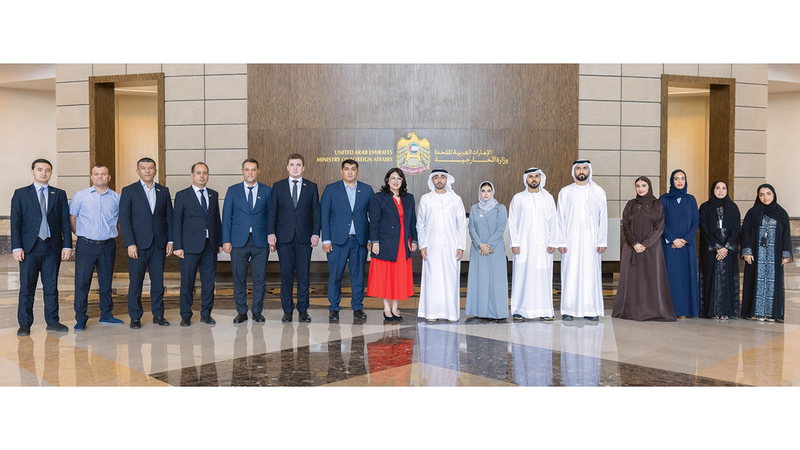
A government delegation from Uzbekistan recently embarked on a formal visit to the United Arab Emirates (UAE) to explore innovative strategies aimed at reducing bureaucracy. This visit is part of a broader initiative focused on knowledge exchange between the two nations, underpinned by a strategic partnership committed to governmental modernisation.
Objectives of the Visit
The primary aim of the visit was to showcase best practices and success stories related to bureaucratic reduction. Delegates also focused on adopting and developing artificial intelligence applications within government operations.
Workshops and Engaging Sessions
During their stay, the Uzbek delegation participated in extensive workshops that detailed the methodology behind the UAE’s bureaucratic reduction programme, highlighting various successful projects and initiatives. These sessions were complemented by informational tours of prominent government bodies, allowing for a closer examination of effective practices in streamlining bureaucratic processes.
Delegation Composition
The delegation consisted of officials and leaders from several key government entities in Uzbekistan, including the Strategic Development Agency and the Ministry of Justice, among others. They engaged in a series of discussions and workshops with Emirati officials and experts, receiving insights from various teams such as the UAE’s Ministry of Finance and the Emirates Post.
Strategic Insights and Goals
Mohammed bin Taliah, Assistant Minister for Cabinet Affairs for Government Knowledge Exchange, emphasised that the partnership between the UAE and Uzbekistan exemplifies how knowledge transfer can yield tangible results, enhancing government efficiency, adaptability, and future readiness. He noted that bureaucratic reduction signifies a strategic transformation in governmental methodologies, focusing on redesigning human-centric services that elevate service quality and user experience.
Achievements and Future Directions
Vice President of Government Services at the UAE government, Hisham Amiri, highlighted the accomplishments of the bureaucratic reduction programme, including award-winning initiatives and the goals of its third cycle. The discussions also considered the UAE’s strategies for boosting community involvement and shared success stories from the programme’s second cycle, which aimed to recruit innovative solutions to enhance public services.
Exploring Model Experiences
The visit featured informative sessions regarding the official government services programme, showcasing initiatives like the High Stars system for service classification and various AI-integrated tools. The delegation also visited leading institutions like the Ministry of Foreign Affairs to observe initiatives such as ‘Smart Missions and Digital Document Validation’ and explored police service innovations in Ajman.
Shared Vision for Governmental Modernisation
Launched in November under the auspices of the Uzbek President and in collaboration with the UAE, the Uzbekistan Bureaucracy Zero programme draws heavily from the UAE’s successful model for enhancing governmental efficacy and customer satisfaction. The programme’s focus is on simplifying governmental procedures and minimising administrative red tape, thereby improving service efficiency and fostering a culture of innovation within government entities.
Extensive Training and Collaboration Efforts
Through their collaborative partnership, the two governments have conducted 381 workshops, with 2.7 million trainees engaging across ten key areas, including governmental services, competitiveness, and digital transformation. Looking ahead to 2023-2026, cooperation will extend into 14 focus areas, encompassing industrial development, social advancement, and urban planning, among others, thereby supporting Uzbekistan’s ambition to learn from global best practices.
Strengthening Strategic Partnerships
This collaboration between the UAE and Uzbekistan in government modernisation began in 2019 and was renewed in April 2021 for an additional six years. The extension in 2025 further broadened the scope of their joint initiatives and enriched opportunities for knowledge sharing.