
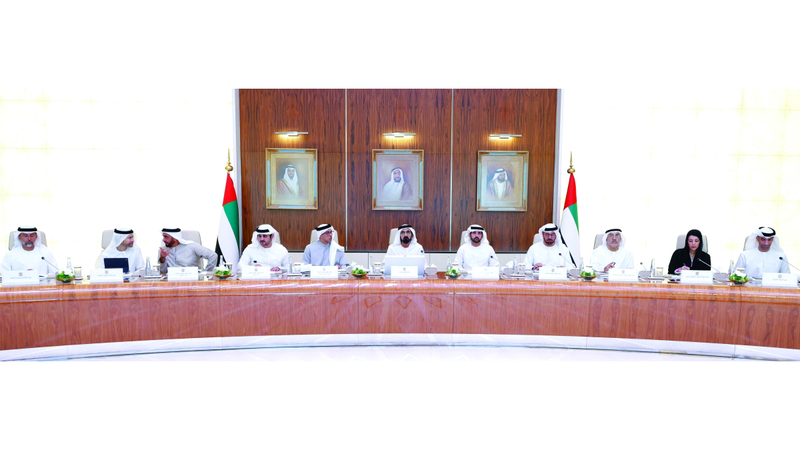
In a significant move for the future of the UAE, the budget for 2026, with expenditures amounting to 92.4 billion dirhams, was officially approved during a meeting held at the Qasr Al Watan in Abu Dhabi. This budget signifies a balanced approach to government expenditures and revenues, reflecting the administration’s commitment to sustainable growth and economic resilience.
Record Budget Approval
Under the leadership of His Highness Sheikh Mohammed bin Rashid Al Maktoum, Vice President and Prime Minister of the UAE and Ruler of Dubai, the Council of Ministers convened yesterday to finalize the federal budget for the fiscal year 2026. Joining him were key leaders, including Sheikh Mansour bin Zayed Al Nahyan, Deputy Prime Minister, along with other high-ranking officials.
In a post on social media platform X, Sheikh Mohammed announced, “We approved the annual union budget for 2026, with expected revenues and expenditures of 92.4 billion dirhams. This budget is the highest since the establishment of the union and reflects our ongoing commitment to balanced development.” His statement also highlighted the creation of a program aimed at supporting the federal financial center, which will ensure financial sustainability for state institutions.
Fiscal Planning and Growth
The newly adopted budget is part of a comprehensive financial strategy covering the years 2022 to 2026, amounting to 347 billion dirhams. The 2026 budget is characterized by a significant growth of 29% for both revenues and expenditures compared to the previous year’s budget. This increase supports the national economy and ensures that resources are adequately allocated for ongoing developmental, economic, and social projects.
Significantly, the budget is distributed across various sectors, including substantial allocations for social development, government affairs, infrastructure, and financial investments, aligning with national priorities and the UAE Vision 2031 objectives.
Investment and Export Growth
The meeting also covered the outcomes of the National Agenda for direct foreign investment for 2024, showcasing a cumulative investment balance of 1.05 trillion dirhams, reflecting a 9% growth from the previous year. The UAE continues to stand out as a leader in the Arab world and ranks among the top 20 economies globally for foreign direct investment.
Moreover, 2024 saw a remarkable increase in non-oil trade between the UAE and target countries, which surged from 469.3 billion dirhams in 2019 to 952.6 billion dirhams, marking an impressive growth rate of 103%. This boost in trade is attributed to comprehensive economic partnership agreements with various global markets.
Environmental and Food Safety Initiatives
Alongside fiscal discussions, the Council took important decisions regarding environmental stewardship and food safety. A national guideline was approved to assess the economic value of groundwater resources, aiming to enhance sustainability and security for future generations.
The Council also reviewed the work of the National Food Safety Committee, announcing initiatives aimed at improving food safety regulatory frameworks and training personnel to ensure compliance with food safety standards across the region.
As the UAE gears up for 2026, the budget approved under the guidance of Sheikh Mohammed bin Rashid represents more than just numbers; it encapsulates a vision for a prosperous future, balancing economic growth with sustainability and social welfare.