
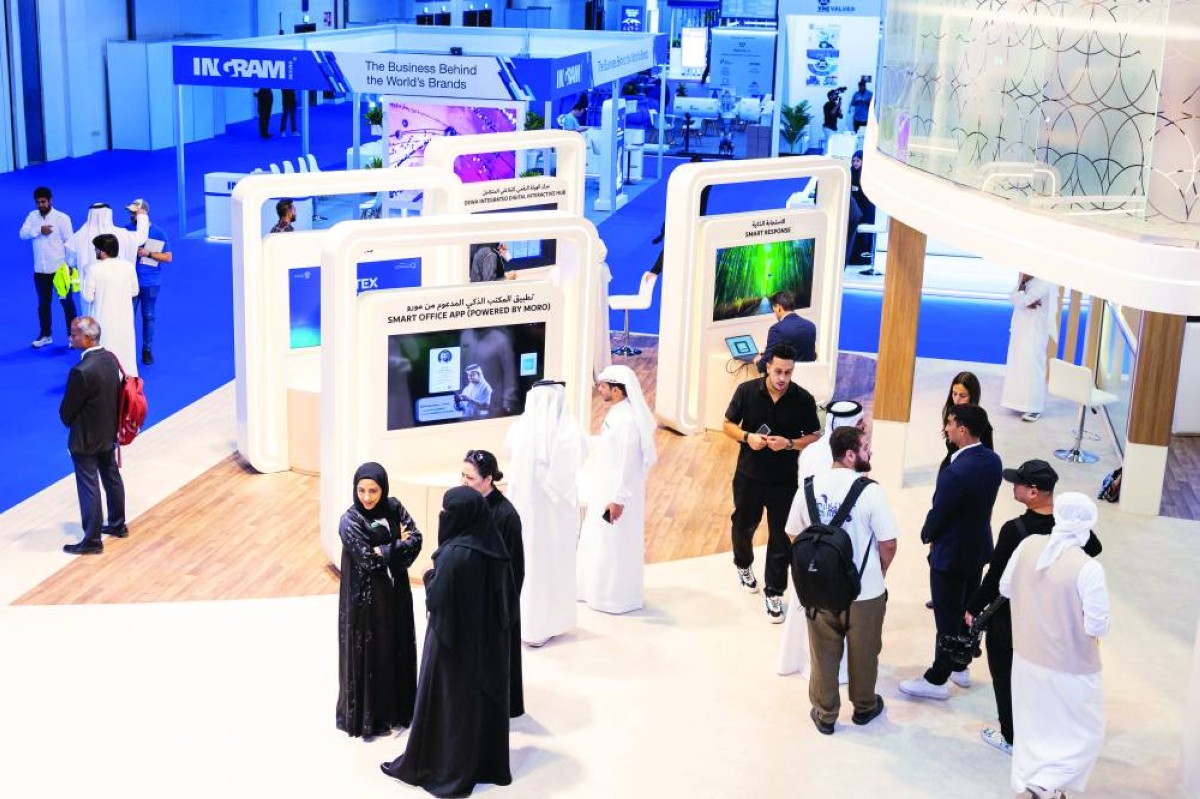
The Dubai Electricity and Water Authority (DEWA) recently showcased a comprehensive array of its most significant projects, initiatives, and innovative solutions at its main platforms (A1) in Za’abeel Hall 1 and (A2) in Sheikh Saeed Hall 1. The exhibition highlighted DEWA’s pioneering role in implementing major projects aimed at diversifying energy production sources, encompassing various technologies and renewable energy sources.
This initiative aligns with Dubai’s Clean Energy Strategy 2050 and the emirate’s Carbon Neutrality Strategy 2050, which aim to provide 100% of Dubai’s energy production capacity from clean sources by 2050. Additionally, it supports the UAE’s Water Security Strategy 2036 and Dubai’s Integrated Water Resource Management Strategy 2030, as well as the UAE Artificial Intelligence Strategy 2031.
Global Recognition and Achievements
DEWA proudly occupies the top position globally in 13 key indicators within its operational areas, alongside advanced regional indicators. With an average annual electricity interruption time of just 0.82 minutes (49 seconds) per customer, DEWA has recorded the lowest electricity loss rate in transmission and distribution networks at 2%, and a similarly low water loss rate of 4.4%. Furthermore, the reliability and availability of Dubai’s electricity system exceed 99.99%.
Major Projects Highlighted
At Platform A1, DEWA presented a model for the seventh phase of the Mohammed bin Rashid Al Maktoum Solar Park, the world’s largest single-site solar energy project. This phase will feature 2,000 megawatts of photovoltaic solar energy systems and 1,400 megawatts of battery energy storage systems for six hours, providing a total storage capacity of 8,400 megawatt-hours. It is poised to be one of the largest solar power projects enhanced with storage systems globally, developed under an independent power producer model.
Architectural and Technological Innovations
DEWA’s new headquarters, known as the “Sail Building,” stands as the tallest, largest, and smartest government building with positive energy globally, receiving the Leadership in Energy and Environmental Design (LEED) certification at the platinum level from the US Green Building Council (USGBC).
Hydrogen and Water Projects
The Green Hydrogen project is the first of its kind in the Middle East and North Africa, producing approximately 20 kilograms of green hydrogen per hour, with a hydrogen storage tank capable of holding 12 hours’ worth of solar-generated hydrogen.
The Hassyan Water Desalination Project is the world’s largest reverse osmosis sea water production facility and DEWA’s first independent water project, boasting a production capacity of 180 million gallons per day, involving an investment of AED 3.377 billion.
DEWA Global and Innovative Solutions
DEWA Global is a fully owned independent subsidiary of DEWA, focused on developing both conventional and clean energy projects worldwide, transferring Dubai’s successful energy and water infrastructure model to global markets.
Additionally, the Hatta Pumped Storage Hydropower Plant is the first of its kind in the Arabian Gulf, with a production capacity of 250 megawatts and a storage capacity of 1,500 megawatt-hours, boasting an operational lifespan of 80 years.
Smart Initiatives
The Smart Distribution Network Centre enhances advanced functionalities available through smart networks, enabling automatic decision-making capabilities. It oversees DEWA’s three smart initiatives: the advanced infrastructure for smart meters, the Shams Dubai initiative that allows building owners to install photovoltaic panels for solar energy production, and the Green Charger initiative for electric vehicle charging.
The Unified Operating Technologies Laboratory integrates existing operational technology labs in the energy transmission sector, developing a central facility with unified procedures for protection, SCMS, RTU, RTDS, and operational technology security.
AI and Advanced Project Management
The AI-backed Knowledge Centre for Energy Transmission offers users rapid access to operational and technical information through advanced conversational AI tools. This includes a chatbot that provides quick access to operational methodologies and specifications, enhancing operational efficiency and reducing time spent on support inquiries.
The Virtual Protection, Automation, and Control Systems (vPAC) project advances conventional protection systems at substations by replacing numerous dedicated hardware components with virtual software applications that operate on a unified computing platform based on IEC 61850 standards.
Secondary Reserve Calculation System
This system combines a probabilistic-based algorithm with classifications of solar energy forecasting errors to provide users with secondary reserve values, utilising standard input data typically available to service businesses. It enhances calculation speed, reliability, governance, and operational decision-making support.
Technical Guidelines and Smart Control Systems
The Technical Guidelines for Non-Objection Certificates for Infrastructure Projects encompass 67 projects and serve as a reference for all licensed contractors, consultants, and developers with DEWA, outlining standard and specific criteria for water assets, technical specifications, protection details, and electrical assets.
Moreover, DEWA has developed the world’s first self-controlled smart gas turbine control system using artificial intelligence, which improves the operational efficiency of gas turbines and increases the production capacity of 14 gas turbines at the Jebel Ali Power and Water Production Complex.
Digital Excellence and Sustainable Solutions
DEWA Digital, the digital arm of DEWA, highlighted its latest advanced products and programs, including the Moro integrated solutions data centre, which is recognised by the Guinness World Records as the largest solar-powered data centre globally, alongside InfraX and Digital X.
The Green Charger initiative has installed 2,826 electric vehicle charging points across Dubai, including DEWA’s charging stations and independently managed charging points, in collaboration with both government and private partners. DEWA offers four types of Green Charger stations: ultra-fast, fast, public chargers, and wall-mounted chargers.
DEWA operates the Space-D programme, leveraging nanosatellites and modern space technologies to enhance the planning, operation, and maintenance of electricity and water networks. It recently launched DEWA Sat-1 and DEWA Sat-2, becoming the first utility in the world to use nanosatellites to boost the performance of its utilities.
Research and Development Initiatives
By the end of 2025, the Research and Development Centre will have published 347 scientific and research papers and filed 65 patents, 19 of which have been granted, covering areas such as solar energy, water, artificial intelligence, and 3D printing. The centre also developed the two nanosatellites launched by DEWA, alongside a ground station capable of tracking and communicating with the authority’s satellites in low earth orbit.
Emirates Water Foundation works to alleviate the plight of communities facing the global water scarcity crisis, assisting approximately 15 million beneficiaries across 37 countries since its inception in 2015, through sustainable water projects.
Rammas: Virtual Assistant
Rammas, DEWA’s virtual employee powered by generative AI and ChatGPT technology, responds to customer inquiries in both Arabic and English and offers a range of procedural services. It is built on the latest AI model to generate real-time responses by extracting relevant information directly from DEWA’s website content.