
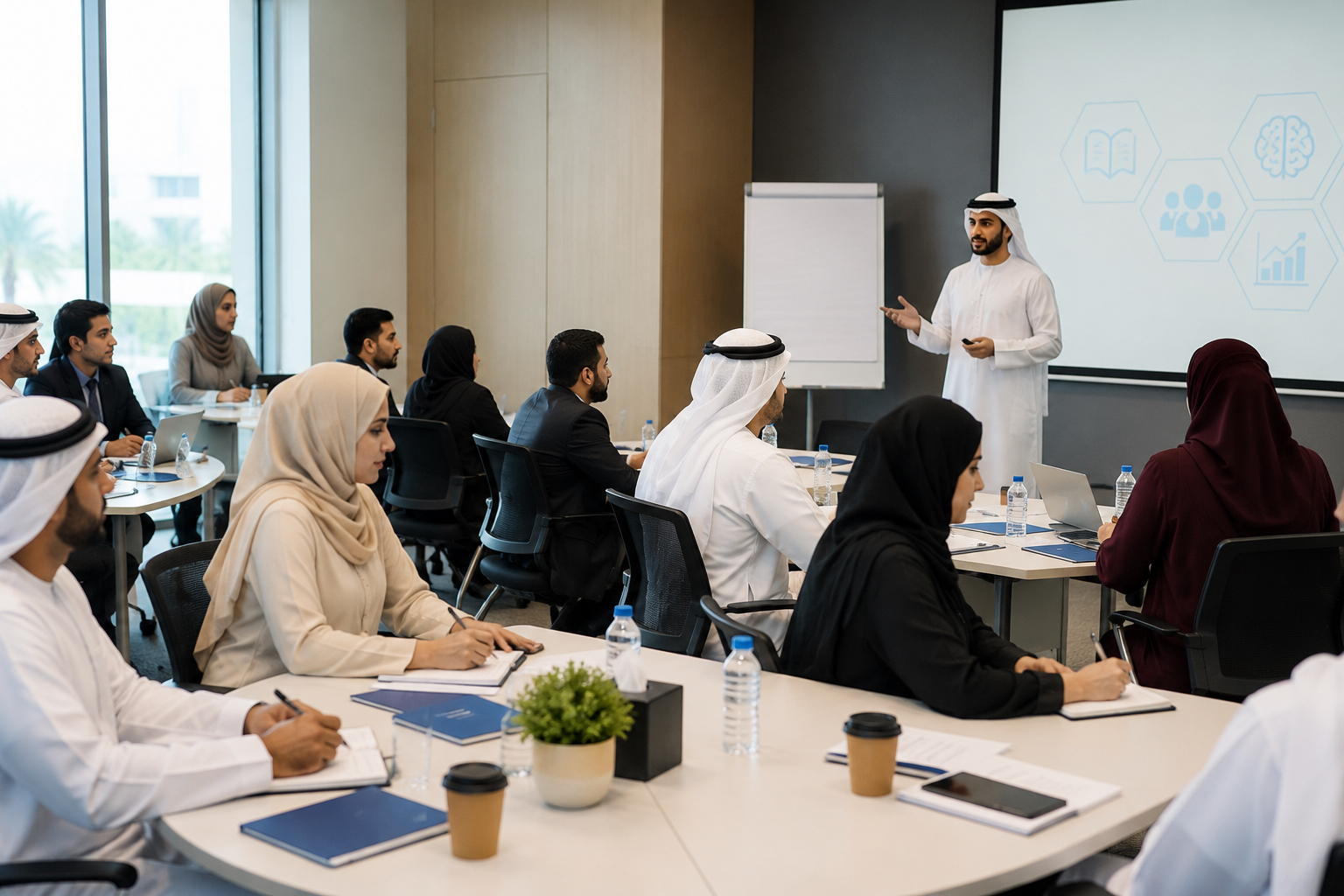
In a proactive move to enhance educational standards, the Ministry of Education is set to launch a week of specialised training for educational professionals starting tomorrow, Monday. Over 24,000 participants, including school leaders, teachers, and educational staff, will engage in more than 80 specialised programmes and workshops spread across five days. This initiative marks the first step in preparing for the 2026-2027 academic year, with key focuses on artificial intelligence, school leadership, data-driven assessment, quality of life, and inclusive education as central pillars of educational practice development.
Schedule of Specialised Training
The specialised training week runs from August 24 to 28 and aims to enrich the professional experiences of educational staff. Participants will be introduced to the latest educational practices, applications, and technologies, ensuring they are well-equipped to navigate the rapidly changing global education landscape. This initiative is designed to enhance the readiness of educational institutions for the upcoming academic year and to support the overall quality of learning outcomes.
Target Audience and Methodology
The training programmes are tailored for a diverse range of educational professionals, including school leaders, teachers, assistant principals, academic advisors, social specialists, and special education teachers among others. The delivery methods will vary, incorporating in-person, remote, and hybrid training formats to provide greater flexibility and maximise the benefits of the training content for all participants.
Investing in Educators
Education Minister Sarah bint Youssef Al Amiri emphasised the importance of continuous professional development as a key driver for modernising the educational system. She affirmed that investing in the expertise of educational staff—and ensuring they have access to the latest global practices and experiences—contributes to enhancing educational quality and fostering a culture of innovation and sustainable development within schools.
Focus on Technology and Innovation
This week of training encompasses a broad array of topics that reflect the priorities for advancing education in the upcoming period. Notably, the integration of artificial intelligence in education, academic and career guidance, school quality of life, inclusive education, gifted student care, assessment practices, and school safety are highlighted. In addition, the topics include leadership, innovation, institutional excellence, learning sciences, data-driven assessments, and multiple support models—aimed at transferring cutting-edge educational practices to schools and enhancing the professional tools available to educational staff.
Empowering School Leadership
A specific pathway is designated for the development of over 1,700 school leaders across the nation, comprising 500 school principals and 1,200 deputy principals and coordinators. This initiative seeks to strengthen the capabilities of those directly overseeing schools and leading developmental processes within them. Key initiatives include the “Leadership Competencies Laboratory,” in addition to specialised programmes that focus on cultivating a school culture rooted in national identity and Emirati values, alongside employing artificial intelligence in decision-making to enhance school performance.
Translating Training into Practice
The objectives of the week extend beyond theoretical knowledge dissemination; the Ministry seeks to translate training outcomes into daily school practices through hands-on training, interactive laboratories, case studies, and experience sharing among field professionals. This approach aims to convert professional development outputs into actionable tools and practices, effective from the start of the new academic year, thereby fostering improved learning environments and enhanced student experiences while reinforcing continuous professional learning as an integral part of educational practice.
The specialised training week exemplifies the Ministry of Education’s commitment to investing in educational human capital and aligning professional development with technical and educational advancements, addressing field requirements. This approach supports the establishment of a more prepared, innovative, and competitive educational system while anticipating future needs.