
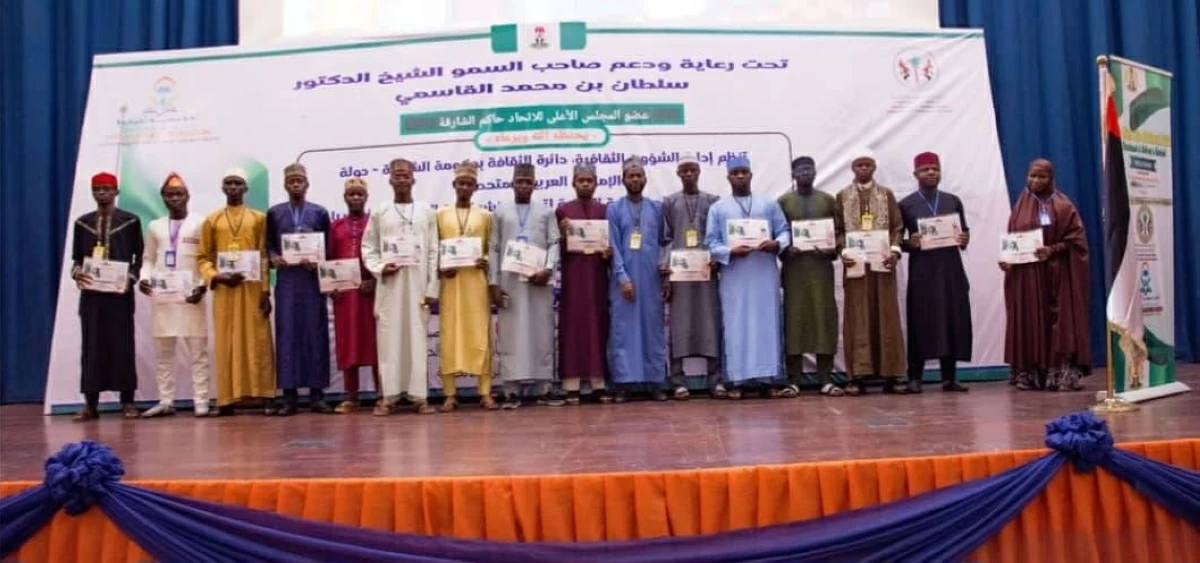
Abuja recently hosted the fifth edition of the Arabic Poetry Forum, which was held under the auspices of His Highness Sheikh Dr Sultan bin Muhammad Al Qasimi, a member of the Supreme Council of Sharjah. Organised by the Cultural Affairs Department of the Sharjah Culture Department in collaboration with the Charity Foundation for Teaching and Promoting the Arabic Language in Nigeria, this year’s forum bore the theme “Arabic Poetry… A Bridge of African Civilisations.” It gathered a multitude of poets, intellectuals, and enthusiasts of the Arabic language, poetry, and literature.
A Cultural Initiative from Sharjah
This forum is part of a series of Arabic poetry gatherings across Africa, reflecting Sharjah’s ongoing cultural efforts to enhance the presence of the Arabic language, support poets and literary talents, and create platforms for creatives to interact with academics and language enthusiasts. The aim is to invigorate the cultural and literary movement, establishing Arabic poetry as a bridge for communication and understanding among diverse peoples and cultures.
Prominent Attendees
A number of notable figures from the academic and cultural realms attended the event, including Dr Saleh Musa Jibo from the Islamic Studies Department at Jumira University in the Emirates, Dr Hajar Haroun Khams from the Graduate Studies College at Katisina University, Dr Ibrahim Abubakar Imam, head of the Academic Association for Arabic Language and Literature in Nigeria, and Dr Maher Haroun Maher, acting president of the Nigerian Association of Teachers of Arabic and Islamic Studies. Their participation, alongside various university professors, intellectuals, and poets, enriched the event significantly.
The Essence of Poetry in Cultural Memory
During the forum, Dr Saleh Musa Jibo emphasised the pivotal role of poetry in preserving the memory of nations and expressing their values and sentiments. He remarked that poetry transcends mere wordplay and adherence to rhythms and rhymes; it serves as a record of people’s experiences and a medium for articulating aspirations and values.
He highlighted that the Arabic language has played a vital role over the centuries in fostering cultural exchange, facilitating the transfer of knowledge, and preserving heritage. Notably, the ongoing prominence of Arabic poetry in Africa attests to the vitality of the Arabic language and its adaptability to diverse cultural contexts. Dr Jibo praised His Highness the Ruler of Sharjah for his unwavering support of the Arabic language and literature as well as the cultural initiatives that provide opportunities for creatives.
Continuing the Legacy
Dr Omar Adam Muhammad, the general coordinator of the forum, remarked that this edition reflects a continuity of cultural efforts that have fostered the development of poetic talents and broadened communication among poets, academics, researchers, and enthusiasts of the Arabic language in Nigeria. He explained that the choice of the theme “Arabic Poetry… A Bridge of African Civilisations” signifies the forum’s vision of positioning poetry as a tool for creativity, dialogue, and intercultural relations.
Poetic Readings
The forum featured poetic readings from notable poets including Muhammad Al-Siddiq Ismail, Noah Muhammad Noah, and Hussein Muhammad Sani. These contributions underscored the rich diversity of the Arabic poetic experience in Nigeria and its capacity to convey values, emotions, and spiritual themes, all while remaining connected to the Arab poetic tradition and interacting with the African cultural landscape.
The Future of Arabic Poetry in Africa
The Arabic Poetry Forum in Nigeria, through its successive editions, continues to nurture the literary and cultural movement, fostering literary talents, and expanding the network among poets, intellectuals, and researchers. This aligns with Sharjah’s vision to use culture as a bridge for connection among peoples, enhancing the presence of the Arabic language across Africa and supporting new generations of creatives dedicated to Arabic literature.